Advertisement
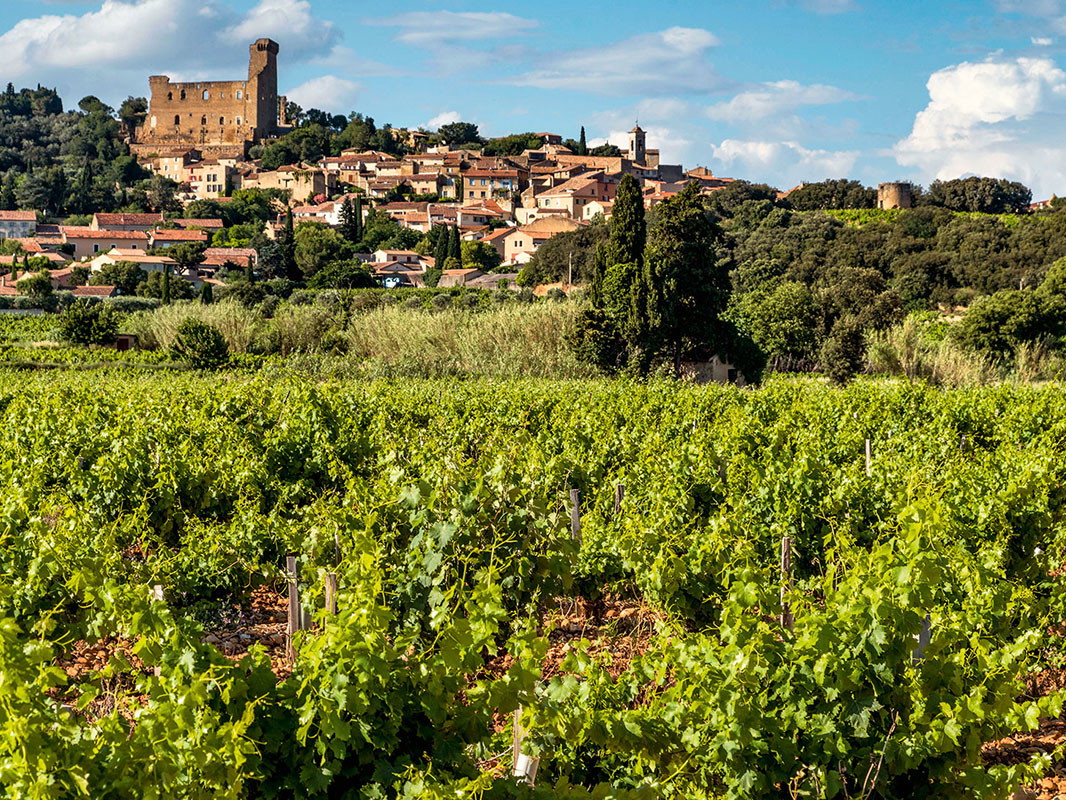
The vineyards of Châteauneuf cover an area of about 3,200 hectares, spread over five communal areas. About half of it is located directly in the village of Châteauneuf-du-Pape on the left bank of the Rhone, after which the entire appellation is named. To the north is Orange with 381 hectares, followed by Courthézon to the north east with 663 hectares; in the east is Bédarrides with 353 hectares, while Sorgues in the south has the smallest share with 128 hectares. The most recent ten-year average production was about 95,000 hectolitres, of which just 5,000 hectolitres were white wine. Two-thirds of the production is exported abroad, 95 percent of the quantities produced come from wineries and private cellars, and five percent of the appellation wines are produced by cooperatives. There are 13 grape varieties permitted for the production of Châteauneuf-du-Pape AOC, but Grenache makes up the majority with about three quarters. Not all wines are cuvées; there are also single-varietal bottlings made from Grenache, Syrah, Mourvèdre and Cinsault. In the vineyards, the composition of the red varieties is currently as follows: 74.5 per cent Grenache noir (of which 2.47 per cent is Grenache blanc), 10.84 per cent Syrah, 6.61 per cent Mourvèdre, 2.57 per cent Cinsault, 0.44 per cent Cunoise, 0.34 per cent Muscardin, 0.13 per cent Vaccarèse and 0.03 per cent Terret. The white wine varieties are as follows: 2.31 per cent Clairette, 1.11 per cent Roussanne, 1.06 per cent Bourboulenc, 0.06 per cent Picpoul, and 0.001 per cent Picardan.
Advertisement
