
Advertisement
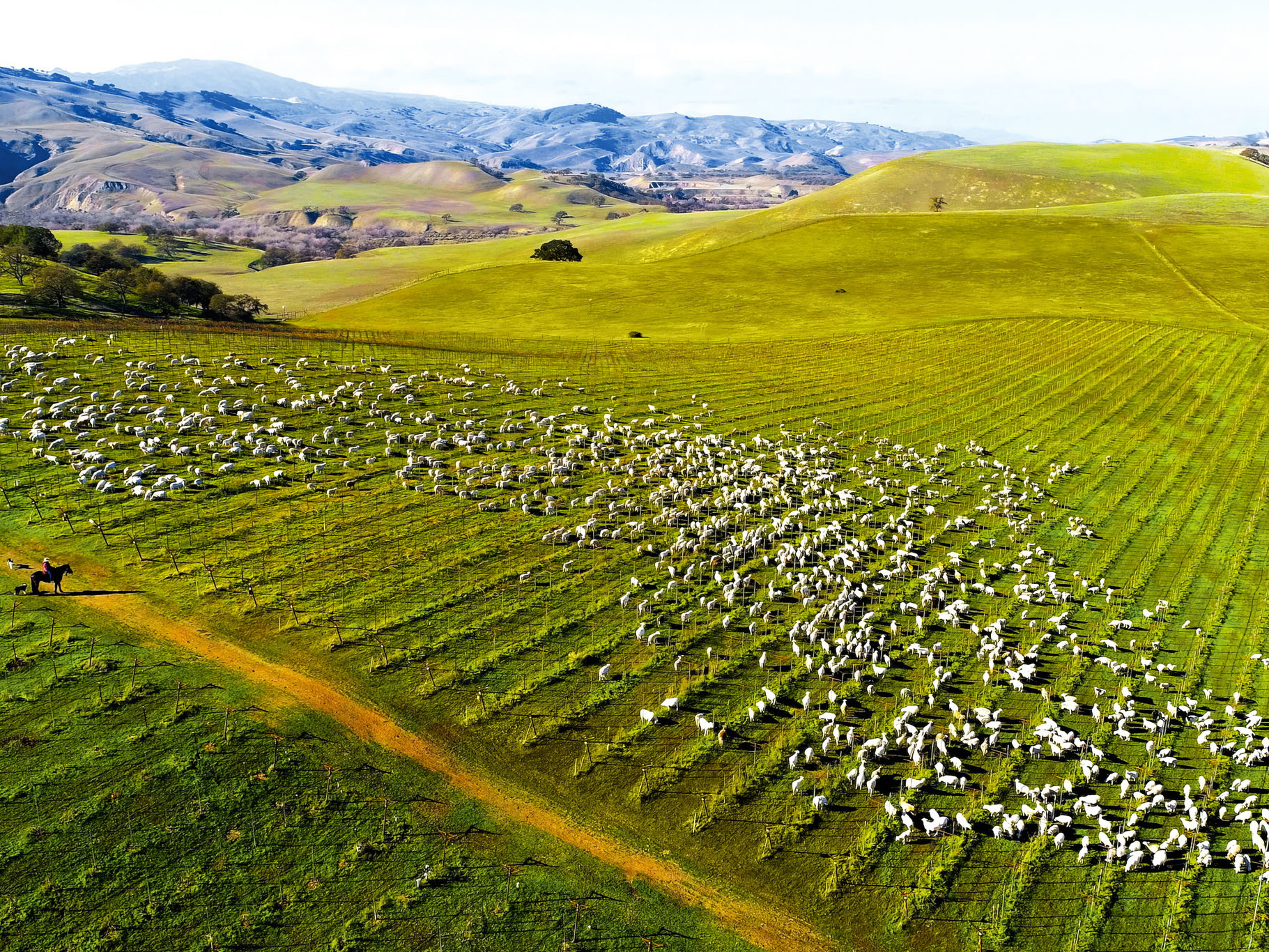
The Paicines Ranch vineyard appears rather unspectacular at first glance. Located an hour's drive south of San José in California's Central Valley – much of which is now intensively farmed often referred to as the "salad bowl of America" –it only reveals its uniqueness upon closer inspection. The vines climb up large wire frames, the grape zone sits at head height, the rows are wide, the ground is densely covered with grass and a flock of sheep bleats in the distance. Vineyard Director Kelly Mulville has created his vision of an ideal vineyard here: One that requires minimal insputs and little human labor while delivering high-quality yields, improving soil health, sequestering carbon, increasing biodiversity and ensuring strong economic returns.
Advertisement
