Lapland: The Enchanting Allure of a Trip to The North
Racing through a snow-covered forest on a dog sled and relaxing by the fireplace by candlelight: Frosty winter days in Lapland have their own unique magic. Even the darkness holds no fear here, as the northern lights and shooting stars light up the sky and lift the spirit.
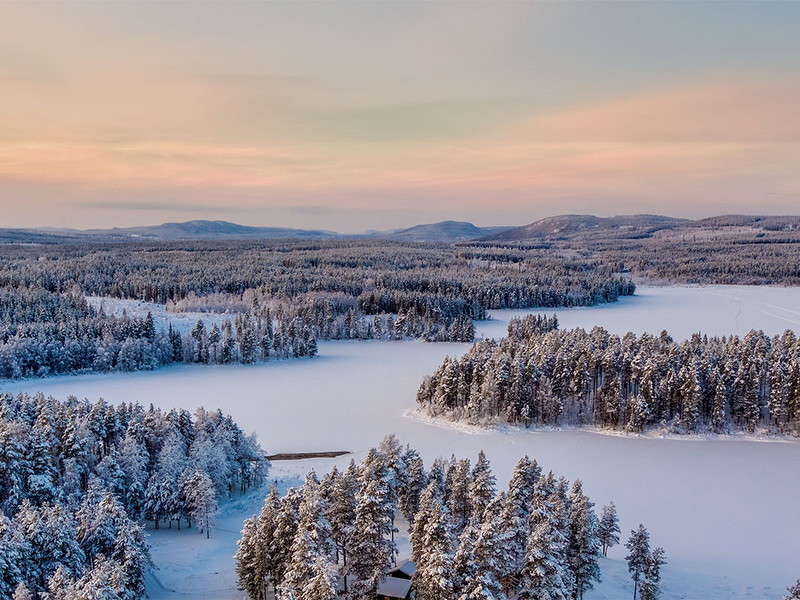
Expansive Forests
The morning starts late. It’s already past nine when the bluish glow in the sky gives way to a faint brightness, and a pinkish hue spreads across the horizon. Early risers, bundled in snowsuits, scarves, and heavy boots, stomp in from outside, bringing with them a blast of icy air— the weather report: minus 18 degrees, with a recommendation of four layers of clothing.
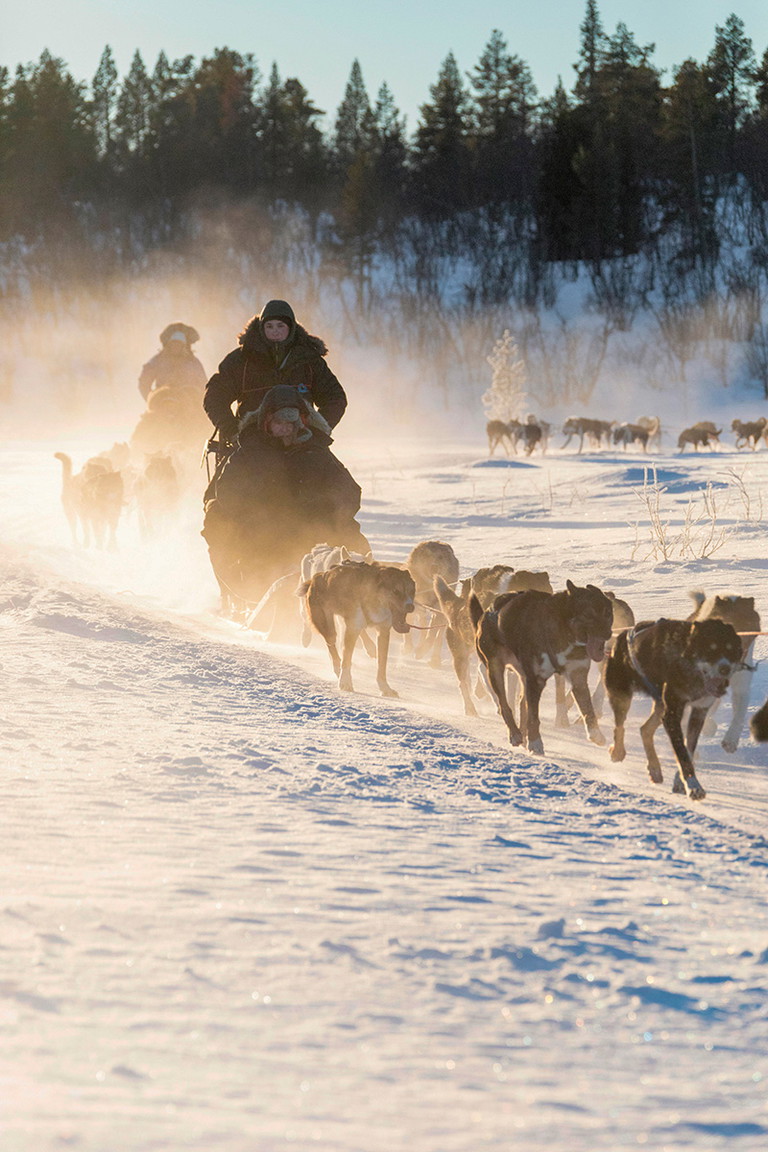
Human triumph over the polar night’s cold is most evident (aside from the sauna in every home) in the delightfully overheated wooden cabins; much of the day is spent peeling in and out of multiple layers of warm clothing. For those feeling overheated, there’s always the option of descending a ladder into an ice hole or even sleeping outdoors. Some hotels have constructed ice palaces where guests sleep wrapped in reindeer hides. In the distance, dogs bark—the huskies, eagerly and deafeningly excited for their run. That’s where the guests come in: six well-rested dogs harnessed to a featherlight wooden sled are as easy to manage as a spirited thoroughbred. The team can pull up to 1,000 kilograms—far more than any sled driver or passenger could weigh. While the driver can influence direction by shifting their weight on the runners, it’s more of a fine-tuning adjustment. When the leader in the first sled gives the signal to start, the only way to hold back the eager huskies is for the driver to plant both feet and their entire body weight on the brake, pressing it firmly into the snow. Release the brake, and the team takes off in an instant.
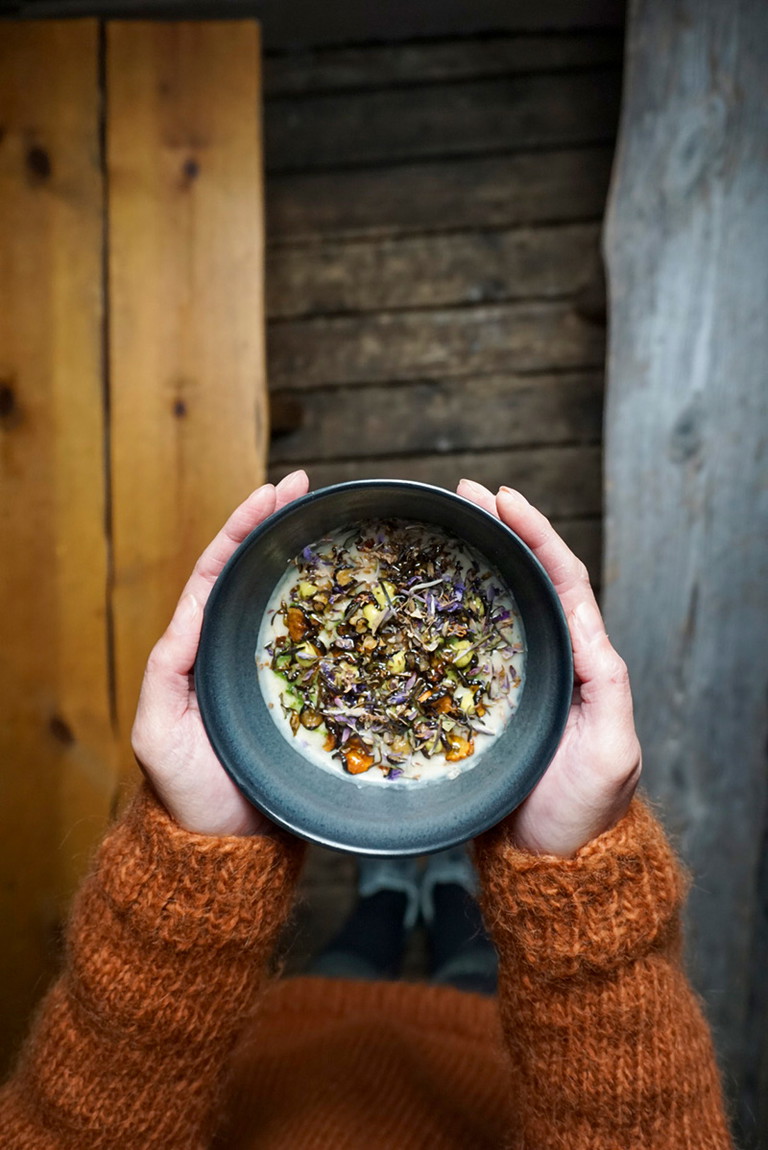
Reindeer broth by the fire
The sled flies around the first corner, and anyone still standing on the runners has a real shot at making it through. Those seated in the sled are helpless anyway—and might as well enjoy the glittering snow and the endless morning twilight, which gradually shifts into a fiery orange evening sky. The adrenaline rush keeps frostbite at bay, the landscape sparkles in the perpetual dim light, and a few long uphill stretches remind the huskies that even their energy has its limits. Sure enough, after 17 kilometers, not a single dog is barking anymore. Back at the kennel, the once-spirited huskies are as docile as lazy basset hounds, happily soaking up affection. Meanwhile, the drivers warm up by the fireplace with reindeer broth. Outside the window, the snow-covered river lies still, and soon greenish northern lights will dance across the sky. The moon shines high above.
177,000 people live in the Finnish part of Lapland. Similar to the Swedish and Norwegian regions, that’s about two residents per square kilometer. “But everyone has a friend,” the tour guide explains—or several, as there are far more reindeer here than people. Swedish Lapland is home to 326,000 residents, though in some areas, huskies outnumber humans. In the Norwegian part, most people live in small coastal towns, while the interior is nearly uninhabited. There are no large cities, but there are vast forests, open spaces, and snow starting in October. From mid-November to early January, the sun doesn’t rise above the horizon for six weeks. When it finally reappears, it stays up ten minutes longer each day.
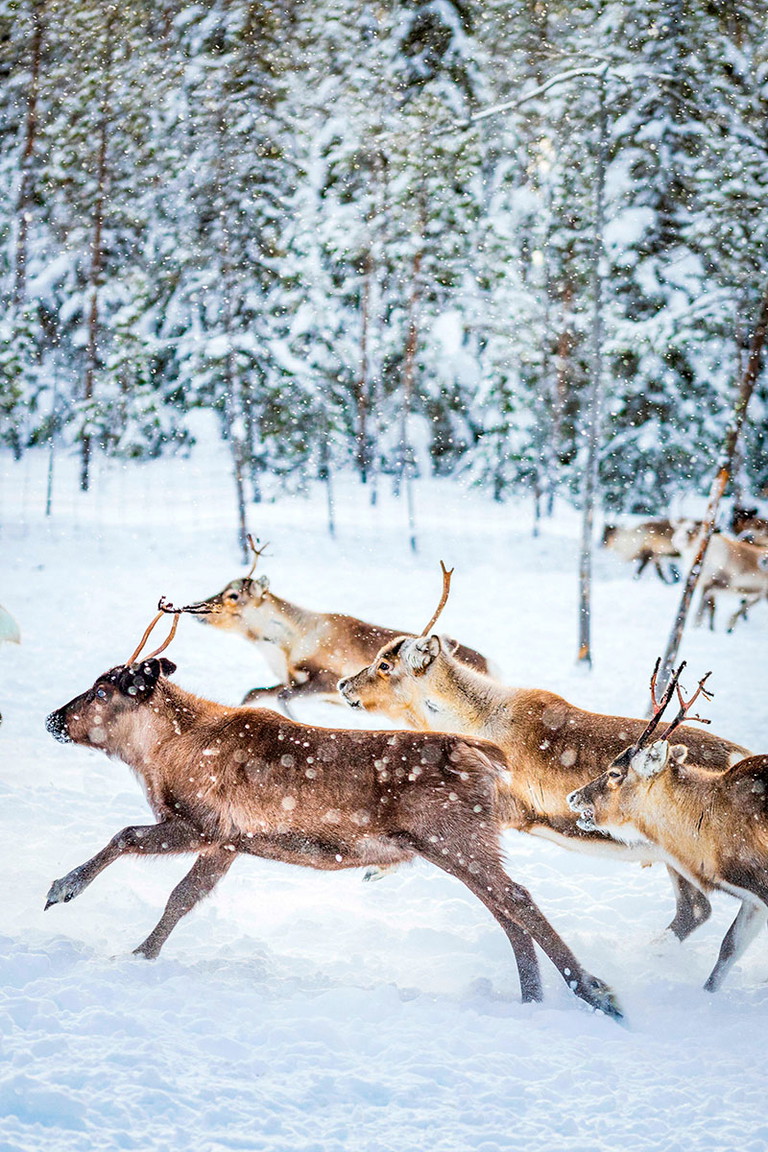
The Sámi, Lapland’s Indigenous people, have 50 words for reindeer—an animal deeply intertwined with their lives—and 300 for snow. Reindeer herding is a complex practice: it takes three winters for a “reindeer man” (the Sámi term for the profession) to gain an animal’s trust before it’s ready to pull a sled for tourists—a much calmer experience than with huskies. On farms, visitors can feed fluffy reindeer, herded into enclosures for this purpose, with tree lichens while stroking them with the other hand. Their fur is thick and soft.
With light through the polar night
Today, reindeer—once Lapland’s most important means of transportation—are primarily raised for their meat, a delicacy that is expensive and reserved for special occasions. Herd owners mark their animals with ear tags and then release them into the wild. Over 3,000 reindeer are hit by vehicles each year, exceeding the number lost to lynxes, foxes, wolves, wolverines, bears, and eagles. Additionally, it’s not uncommon for male reindeer, known as hirvas, to become fatally entangled during rutting season when their antlers lock together in fights.
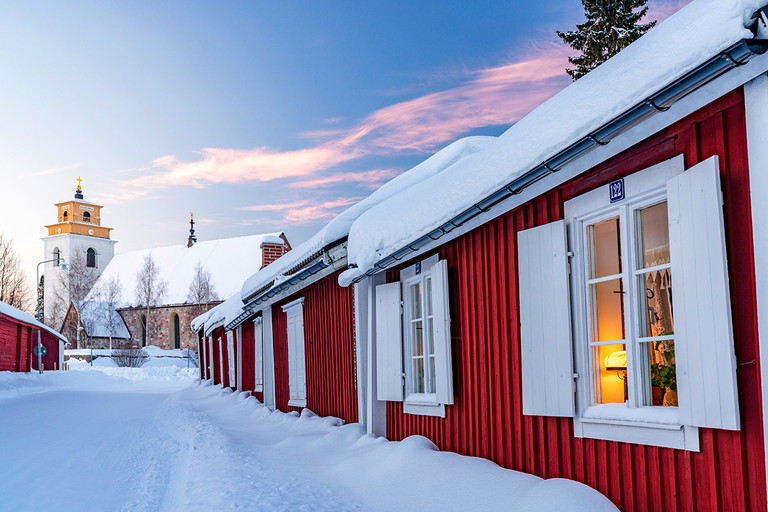
The winter darkness is met with light: Warm glows shine from every window into the night. Candles flicker on tables and windowsills, and each room is illuminated by numerous small lamps—so subtle that at the hotel buffet, you have to lean in close to distinguish pickled herring from desserts. The few houses cast a soft glow into the polar night. When the snow crunches underfoot and the air feels almost too cold to breathe, they appear so cozy that the thought of weeks of darkness loses its fearfulness—leaving only a sense of romance.