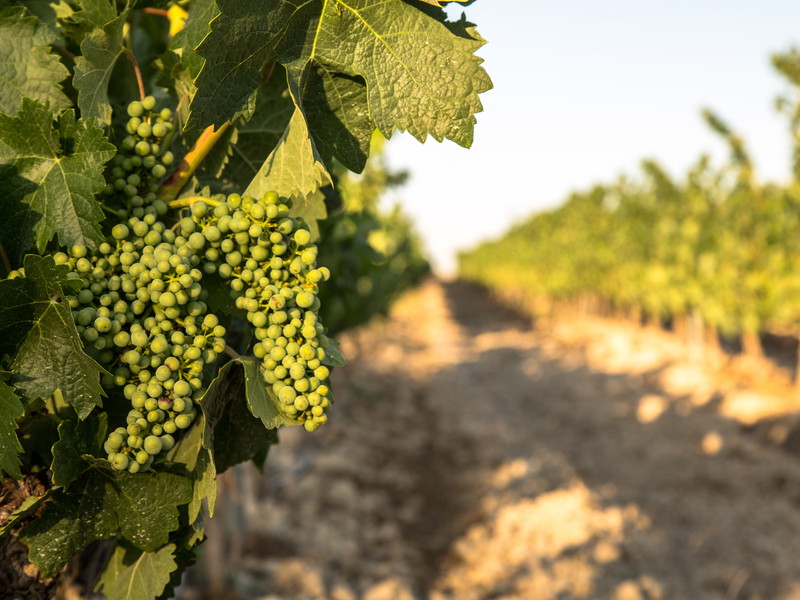
Curiously - it is believed - the Muscat-Ottonel variety was created in Angers/Loire in 1839 with the intention of developing a table grape. Based on the location where it happened, it was assumed for almost 160 years that it was a cross between Chasselas and a Muscat variety from the Loire, the Muscat de Saumur Gross. However, it has been known for several years that the parents of the Muscat Ottonel are formed from the Chasselas and Muscat d'Eisenstadt Gross varieties. The variety is only moderately vigorous and ripens early, which makes it particularly suitable for cooler locations and regions. Large parts of the Muscat areas in Alsace are therefore planted with Muscat Ottonel. However, the wines are paler compared to the top Muscat variety Muscat à Petit Grain, and the aromatic structure is also less intense and complex. Occasionally, excellent Beerenauslese and Trockenbeerenauslese wines are also achieved. It feels most comfortable on clayey, limestone soils, but is prone to powdery mildew and downy mildew as well as trickling. In Western Europe, Muscat Ottonel still occupies significant vineyard areas outside Alsace in Austria, mainly on Lake Neusiedl. Another center of cultivation is in Eastern Europe, mainly in Hungary with around 1,300 hectares, in Romania with around 2,800 hectares and Moldova with almost 1,600 hectares. Bulgaria is the front runner with well over 5,000 hectares.
This grape variety is also known by the name of:
Chasselas Saint-Fiacre, Muscat de Craciunel Tîrnave, Muskat Ottonel, Mirisavka, Muskat Ottonel, Muskotály, Muscadel Ottonel, Mirislavka, Muscat Ottone, Muscat Ottonel weiß, Muscat-Ottonel, Misket Ottonel, Moscato, Ottonel, Ottonel Frontignan, Ottonel muskotály, Mozzonel, Tamîiosa Ottonel