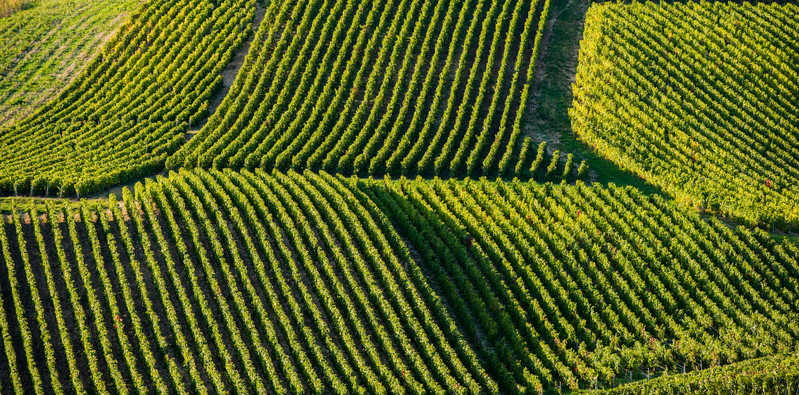
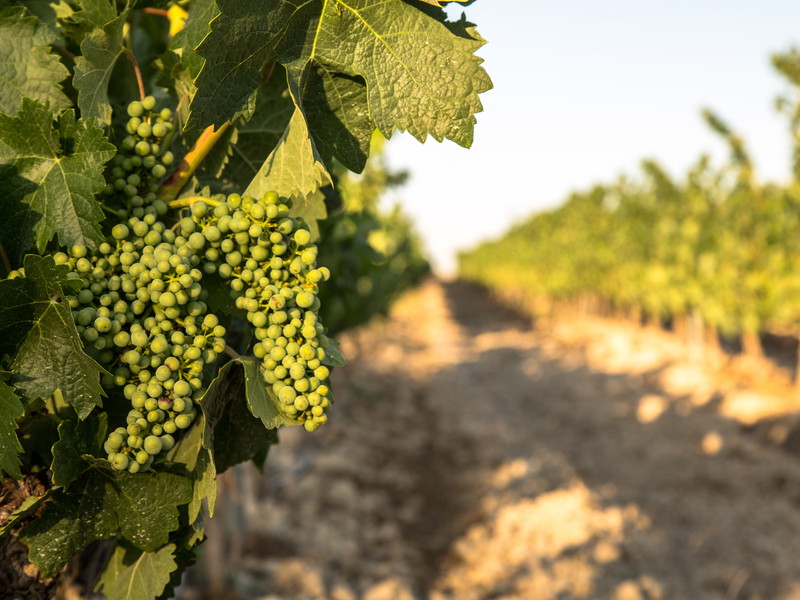
Today, Verdicchio, which is primarily important in the Marche region, is a very long-established grape variety. With the help of modern DNA analyzes it was possible to decipher that the Verdicchio is identical to the Trebbiano di Soave, which is widespread in the Veneto, and therefore must also come from the Veneto. Further research has shown that the variety probably migrated from there to the Marche in the 15th century, where it was first mentioned in 1569 under the name Verdicchio. A member of the Trebbiano family, Verdicchio is also found in small quantities elsewhere in Italy under various synonyms. The medium to late maturing variety is particularly susceptible to both powdery mildew and downy mildew, as well as black and sour rot. The most famous wine comes from the Verdicchio dei Castelli di Jesi origin, where it forms the main component of the wine of the same name, if it is not made as a single variety at all. There are also significant areas in other regions, such as Umbria, Lazio and Abruzzo, whose yields are either pure varieties or developed into cuvées. In addition, Verdicchio also provides good base wines for the production of sparkling wines. Outside Italy, only Brazil can boast a small area of 20 hectares in the south of the country.
This grape variety is also known by the name of:
Marchigiano, Mazzanico, Maceratese, Peloso, Verdone, Verdello duro persico, Verdicchio Scroccarello, Turbiana Moscato, Torbiana, Turbiana, Uva Marana, Verdicchio Peloso, Verzaro, Verzello Verde, Turviana, Uva Aminea, Verdicchio Dolce, Verdicchio Doratel, Verdicchio Doratello, Verdicchio Seroccarello, Verdicchio Giallo, Verdicchio Marchigiano, Verdicchio Marino, Verdicchio Straccione, Verdicchio Verdaro, Verdicchio Stretto, Verdicchio Verde, Verdicchio Verzello, Verdicchio Verzaro, Terbiana, Trebbiano di Soave, Trebbiano Verde, Trebbiano Veronese