
The best restaurants in Tyrol

At Stüva, international impulses meet Parth's precise craftsmanship: a gourmet menu full of focused flavors, elegant depth and a cuisine that speaks with its own confident voice.

Great gourmet restaurant with the clear signature of Joachim Jaud. He stands for precision, product focus and creative finesse. Signature dish: sturgeon with caviar and vin jaune sauce.
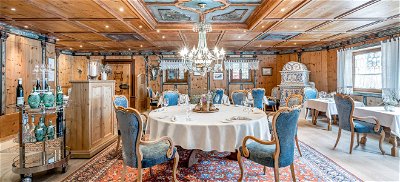
Martin Sieberer combines Tyrolean classics with fine haute cuisine. In the royal surprise menu, he demonstrates his entire tasty range. Exceptional wine selection with over 800 items.
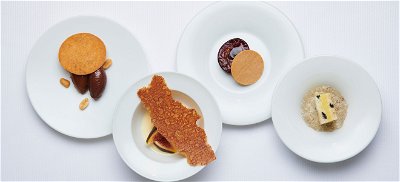
Johannes Nuding can look back on many international careers and has developed his own unique style. He elegantly combines both worlds and also brilliantly implements unusual ideas.
In the exclusive gourmet restaurant Tannenhof, top chef Dennis Ilies spans the arc from alpine origins to creative openness. Unexpected pieces of Tyrolean gray cattle, for example, are a surprise on the menu.

It is usually the most sumptuous room in the house - the "Stube" or its Vorarlberg equivalent "Stuba", where the best food is served in the mountains of western Austria. This is also the case in Ötztal, where the "Ötztaler Stube" in the hotel "Das Central" is considered the top dog. Since 1969, officials and dignitaries have gathered at the log table under the Falkner family coat of arms. Cards were played here, but politics and the construction of the cable car were also discussed. Every change therefore costs patron Angelika Falkner an effort - she approved a "gentle relaunch". The old benches and Herzerl armchairs gave way to more comfortable furniture, the lighting was optimized to better showcase the performances of the new head chef Stefan Speiser. He already knows the place - Speiser was a sous-chef here twenty years ago and most recently ran the kitchen at the "Apron" in Vienna. The evening starts with a ritual. The guests gather in front of a fireplace, where aperitifs and canapés are served. Then it's over to the sanctuary, where they are presented with a Piatnik playing card set "Doppeldeutsche 36 Blatt" as a reminiscence of old times. And then Speiser gets started - again accompanied by the popular ingredient cards. Attention - danger! The delicious Buchteln invite you to drink up the delicious mixture of butter candle and roast pork juice - restraint is advised. Because the first highlight is approaching with Ikejime char - as tartare and fried - surrounded by purple radish plus Oscietra caviar, which, despite its intense frame, does not go under aromatically. Luxury is followed by plant-based dishes. Crispy magnolia blossom, chervil bulb with amarillo cream, fermented asparagus and Piedmont hazelnuts create a dish with earthiness and yet elegance. Stand-out: red mullet - briefly fried in tempura batter, filled with farce and carabinero tartare, creamed rice, salty fingers in paella broth and garum - a subtle dish full of maritime umami. To accompany the pulled goose, restaurant manager Marcel Altmann serves one of the many treasures from the 30,000-bottle cellar - a Kollwentz special bottling "40 years of Das Central" 2009 from the best Steinzeiler barrels. Anyway, there's always a glass of the "PINOT 3000", the in-house three-country cuvée invented here in the parlor, which matures in the "ICE Q" mountain dependency. Which, by the way, could be reconsidered: Background music with hits such as "Careless Whisper" in corny soft ice cream versions and the dignity of this room - that doesn't really go together. quite right.
Sophisticated gourmet cuisine with Tyrolean roots and international standards. Unusual multi-course menus, high product quality, great flavors and one of the best wine lists in the country.
Akami tuna from the Binchotan grill and other fine ideas form Patrick Müller's menu at Alps & Ocean. Rainer Müller also has wine ideas that are precise rather than pretentious. Grandiose wine list.
Anyone who associates fine dining in the Paznaun Valley exclusively with Ischgl and its many gourmet restaurants needs to fill a gap in their culinary knowledge. Well before Ischgl lies the small village of See, where in 2017 an investor from Bonn built an exclusive chalet hotel high up on the hillside with the lovely name “Bergwiesenglück.” Over time, a restaurant was added—named “Hermanns Kitchen” after the farmer who had once worked the land. And because hotel director Rudolf Schuchter is a well-traveled foodie, wine enthusiast, and hunter, a restaurant serving good Tyrolean cuisine wasn’t enough for him. So he asked his friend Gustav Jantscher—a legendary chef and, more recently, executive chef at “Arlicious” in St. Anton—to set up a small, refined à la carte restaurant in the hotel’s “Jagdstube.” Jantscher brought along his longtime sous chef, René Zangerl—for fifteen years, the two had worked as an inseparable team at establishments such as “Aiola” in Graz, the “Post” in Dalaas, and the “Tannenhof” in St. Anton. Then, in the fall, came the big step out of the shadows—Zangerl took over and, three evenings a week, presents a menu that fuses Tyrolean cuisine with that eccentric style for which the restaurant has been famous for years—a distinctive Far Eastern touch, without cooking Asian cuisine in the strict sense. One of the many bite-sized dishes: bao buns with lamb heart. A lightly smoked pigeon breast with wild broccoli, spruce oil, and a robust jus is followed by black hake, briefly seared and stuffed into gyoza, with oyster, miso, and Nashi pear. Zangerl raises the quail himself—he serves the breast with kimchi and sesame in lemongrass foam. And one has to agree with Schuchter when he says, “Game and Asian flavors work well together!” At least when someone with Zangerl’s flair takes on the owner’s favorite theme. For this course, the local repertoire of flavors is more than enough: roe deer and duck liver, served with pointed cabbage strudel. Game “at its best.” Anyone who might wonder about the sources of some items on the wine list—Schuchter sources a significant portion of his selection from the London market, which is virtually unmatched in its diversity. He serves a Ligurian orange wine made from the rare Pigato grape variety with the salty Gambero Rosso, paired with char caviar. And to accompany the game, a magnificently aged 2006 Cabernet Römigberg from Lageder is poured into the glass. Paznaun has yet another exciting new spot to recommend.

At the Beefclub, everything revolves around fine dining: fine cuts, selected fish and a menu with veal sweetbreads with morels at its heart – created with great flair by Klaus Kneringer and Josef Schöndorfer.
In the Gourmetstüberl, Armin and Alexander Gründler show their signature style: bold, precise, deeply rooted. Regional ingredients are transformed into elegant menus, accompanied by Caroline Gründler's fine wines.

Max Stock always succeeds brilliantly in integrating local accents into creative menus at a high level. In the intimate and cozy parlor, he serves wild-caught zander and Zillertal wagyu, for example.

Historic ambience with a modern twist. The cuisine builds a bridge from traditional classics to contemporary elegance. The focus is on regionality - grandma's cuisine, rethought and finely staged.

Three years ago, you could read here about the relocation of "Oniriq" - Innsbruck's best restaurant - to a new location. Regulars from the real estate industry created a place for the team at the time that was reminiscent of Copenhagen's "Geranium". After some confusion, things settled down with a new team. And now there has been another change: following the departure of the head chef, sous chef Ben Glowacz has taken over, while his twin sister Nadine - previously at Hangar-7 - is the new sommelier. The meal starts with a varied "prelude" - Tyrolean "Blattl" with carrot and marjoram, fried Romaine lettuce with fermented garlic and the legendary liver cassemmerl with egg yolk mayo, pickled kohlrabi and mustard seeds - all really good. The mushroom cream with the bread is addictive. The menu (four or seven courses) starts with the most elaborate dish - a plum mixture in the style of umeboshi at the bottom, followed by Alpine prawns with chard, peanut cream, trout caviar on top and prawn foam from the carcasses all around. Ideally mixed vertically, the layers create a wonderfully complex whole. Then purist: sweetbreads - the best part of the thymus gland - blanched for a long time and fried until crispy, topped with blanched cabbage sprout leaves with cranberries in a chervil sauce. Pink saddle of venison comes with a porcini mushroom croquette and oriental-spiced spinach strips with a nut butter and raw liver cream. A glass of the excitingly well-aged Blaufränkisch Bühl 2013 from Preisinger goes well with this. Depending on the budget, the great Krug vineyards, top Bordeaux, Loire rarities or a magnum of Dom Pérignon P3 Rosé 1988 are also in stock.

Christian Winkler and his refined cuisine have finally arrived in the intimate and historic setting of the old town hall. An enjoyable experience in twelve courses with corresponding drinks.
In the Alpin Gourmet Stube, Paul Markovics creates small works of art from regional ingredients - precise, surprising, full of depth. Sophia Jehle complements them with wines that turn every course into an experience.
Verena Stattmann cooks as if she were painting the mountains on her plate - clear, sensual, genuine. When Maximilian Steiner pours the right wine, every course becomes unforgettable and enjoyable.
The Gannerhof is an institution as a complete package. The authentic Villgrater farmhouses offer a unique ambience for ambitious cuisine that is deeply rooted in tradition and nature.
The ambience of the 400-year-old parlor is unique, and the gourmet experience is correspondingly intense. Sophisticated cuisine, aesthetically presented. No large menu - the cooking is intuitive and seasonal.
Rustic and cozy, pure Tyrol and at the same time stylishly elegant - matching the delicate culinary art. The menus are clearly structured, the sequence of courses and wine pairings are always harmonious and well thought out.