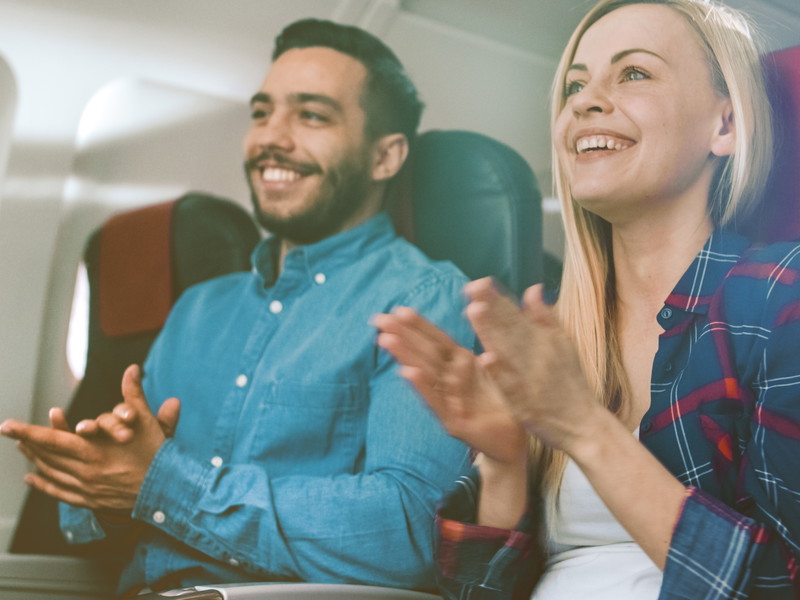
The Wizz Air survey suggests that when it comes to clapping after landing, air travelers from Eastern and Western Europe behave differently.
Spontaneous applause after landing is particularly widespread in Georgia (where an average of 75% of passengers clap) and Bulgaria (70%). In Hungary and Romania, too, almost one in two people applaud.
The situation is very different in Western Europe: in countries such as Switzerland and the UK, only around 30% of passengers say they applaud at touchdowns. Many are simply uncomfortable with the gesture - or it is perceived as outdated.
Interestingly, around a fifth of respondents say they don't clap out of conviction, but because others start doing it. In these cases, applause is less an emotional need than a social reflex - a "join in because everyone is doing it".
Young passengers: surprisingly eager to applaud
Contrary to some expectations, the survey also shows that the younger the travelers, the more often they applaud. In the 18 to 24 age group, around 64% clap after landing, while half of 25 to 34-year-olds still do so.
Why do we clap at all?
Psychologists interpret the behavior as "collective relief", a moment in which tension is released and gratitude towards the crew (and the technology) is discharged. This can be particularly true on longer or turbulent flights.