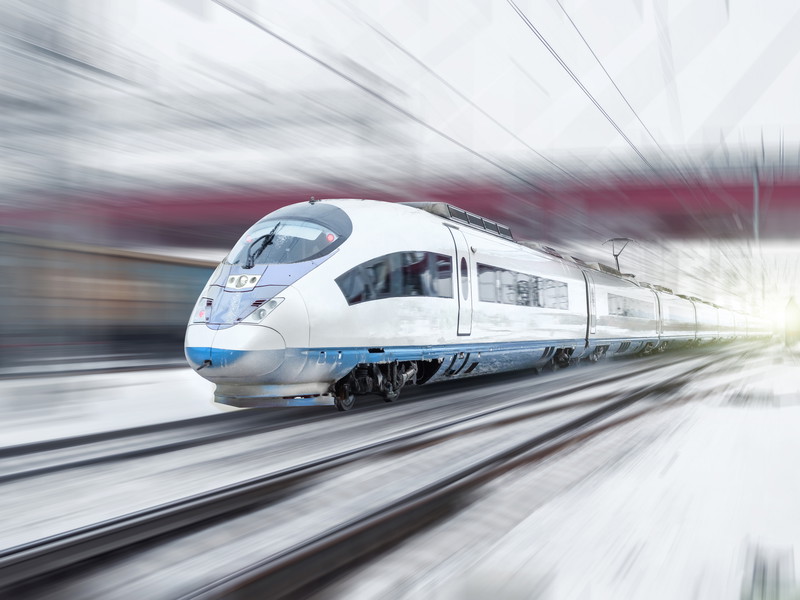
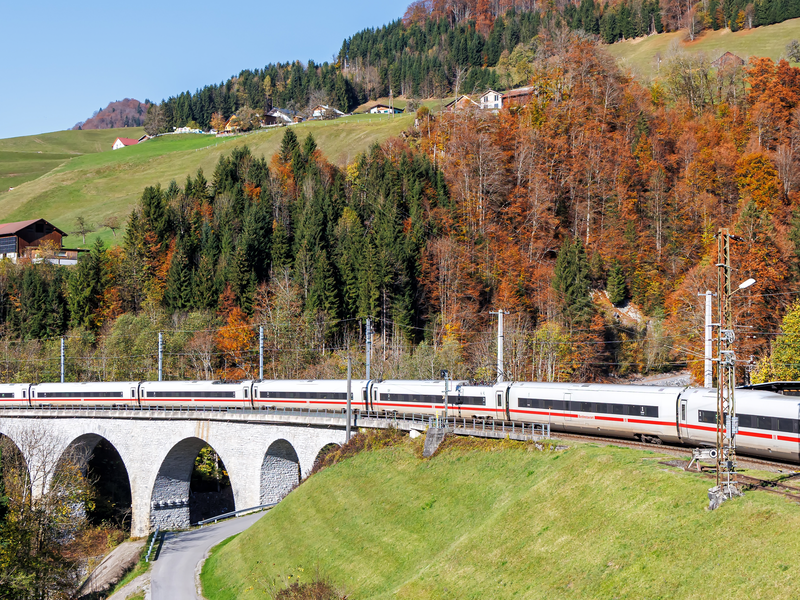
The EU Commission has big plans to make rail travel across Europe much more attractive. By 2040 the most important European cities are to be connected by a continuous network of high-speed trains - a project that should finally make the train a climate-friendly alternative to flying.
Faster from city to city
The vision is ambitious: in future, the journey from Berlin to Copenhagen should only take four hours instead of seven. Brussels also wants to speed things up between Berlin, Prague and Vienna - instead of the previous eight hours, travelers should be able to make the journey in four and a half hours. The Budapest-Bucharest connection is to be shortened from 15 to just over six hours. Even the Baltic states are to be directly connected to the Western European high-speed network for the first time with the "Rail Baltica" project.
Billions for more speed
At the heart of the initiative is the "TEN-T project", with which the EU intends to modernize its most important transport arteries. Around 345 billion euros are to be invested in this by 2040. If trains travel at over 250 kilometers per hour in the future, the total costs could add up to 546 billion euros by 2050. The mammoth project is being financed by EU funding, private investors and loans from the European Investment Bank and national development banks. A "high-speed rail deal" is to set out the binding obligations of all parties involved from 2026.
Great ambitions - many hurdles
The road there is long. The existing high-speed train network is very unevenly distributed across Europe: France, Spain, Italy and Germany have most of the approximately 12,000 kilometers, while many regions of Central and Eastern Europe are still barely developed. Different power systems, signaling technology and safety regulations make cross-border transport even more difficult. In future, therefore, technical standards are to be harmonized and the European Railway Agency (ERA) given more powers.
More competition, easier booking
In addition to new routes, the EU Commission also wants to further open up the rail market. Competition between providers, such as already exists in Spain and Italy, has led to lower prices and higher passenger numbers, according to Brussels. In future, operators are to be given easier access to stations, depots and booking systems in order to lower the barriers to entry.
Things are also set to change when it comes to buying tickets: a new EU regulation will oblige digital platforms to combine tickets from different providers and standardize passenger rights across Europe. Deutsche Bahn, for example, plans to make almost all cross-border connections bookable in the DB Navigator by the end of 2026 - a further step towards a truly networked European rail area.