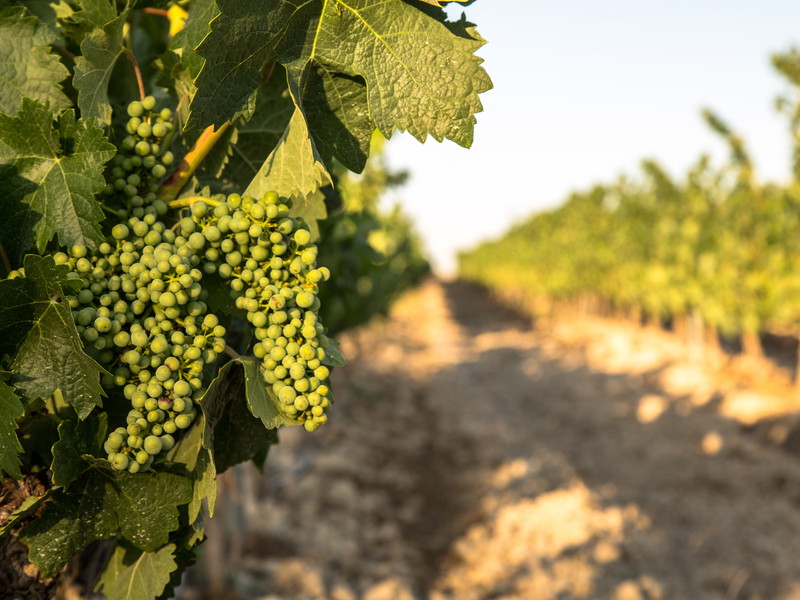
Criolla is a common name in Latin America for a variety of grape varieties that were introduced by the Spanish during their conquests of the South American continent during the 16th century. The name is the Spanish term for "Creole". As Criolla, these grape varieties first appeared in Peru, from where they next spread to Chile and then Argentina. Today Criolla, known as Criolla Grande, is one of the most widely grown grape varieties in Argentina, ranking third behind Malbec and Cereza. It occupies its largest area in Mendoza. He is considered the godfather of some Argentine grape varieties, such as Torrontes Riojano and Torrontes Sanjuanino, and is also considered a half-brother of Italian varieties such as Grillo or Malvasia del Lazio. The Criolla Grande ripens medium to late and develops large clusters with relatively large berries that produce good yields. In Argentina it is mostly made into inexpensive rosé wines or delicately colored white wines, which are sold in liter bottles or in bag-in-boxes. The vast majority of these wines are consumed in Argentina itself.
This grape variety is also known by the name of:
Criolla Sanjuanina, Sanjuanina Rosada, Uva Tierna