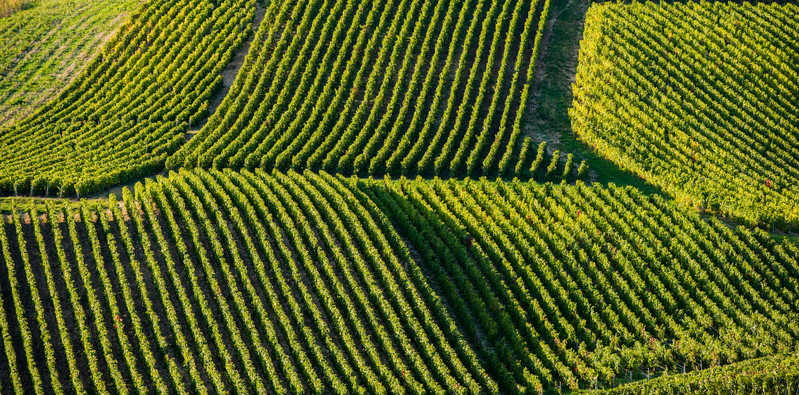
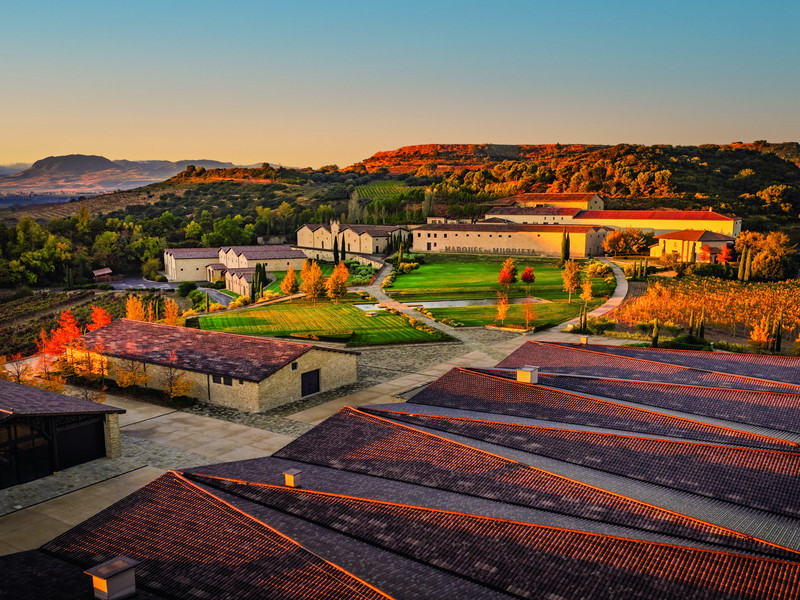
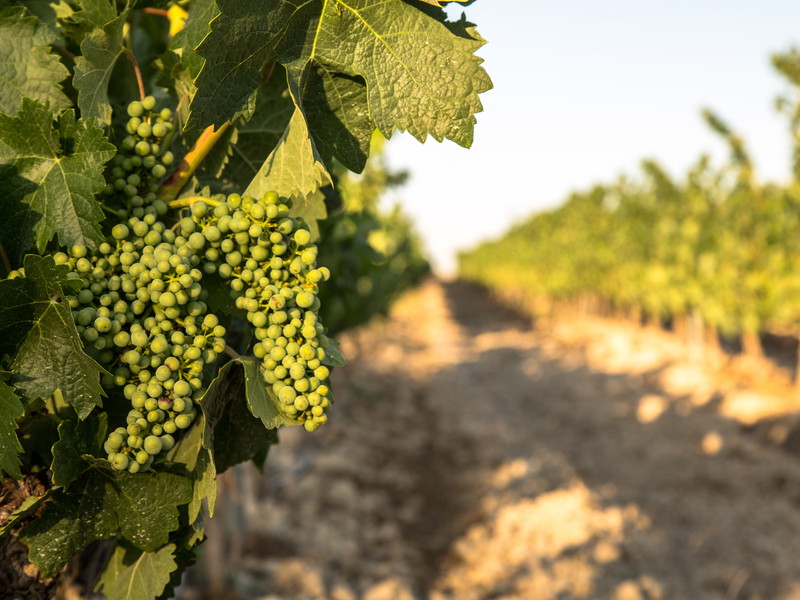
The Garnacha Blanca is one of the mutations that the Garnacha Tinta has undergone. In this respect, its origins probably lie in Aragon in northeastern Spain. From there it emigrated to France, where it plays a special role under the name Grenache Blanc, particularly on the Rhone. However, there it is mostly in the shadow of the Viognier. It sprouts later than the Garnacha Tinta, but ripens a little earlier, so you can speak of a medium-long ripening period. The Garnacha Blanca is less susceptible to dripping than its red relative, with which it shares its susceptibility to bacterial diseases, sour rot and downy mildew. Similar to the red variant, the Garnacha Blanca develops high sugar and extract values with a very mild acid structure as it fully ripens. He achieves his best results in classic bush vine training, where he develops strong and disease-resistant wood. It is ideal for poor and dry regions as it hardly suffers from drought stress. It usually doesn't come into the bottle as a pure variety, but is blended with other varieties such as Clairette or Viognier. It is ideal for producing fortified wines or Vin Doux Naturel, which is why it plays a very special role in the wines of Banyuls, Maury or Rivesaltes in France. In general, it is most widespread in France, but also plays a certain role in Spain. The Republic of Macedonia and Croatia have small areas of Garnacha Blanca cultivation, as do California and South Africa.
This grape variety is also known by the name of:
Grenache Blanc / Garnatxa Blanca