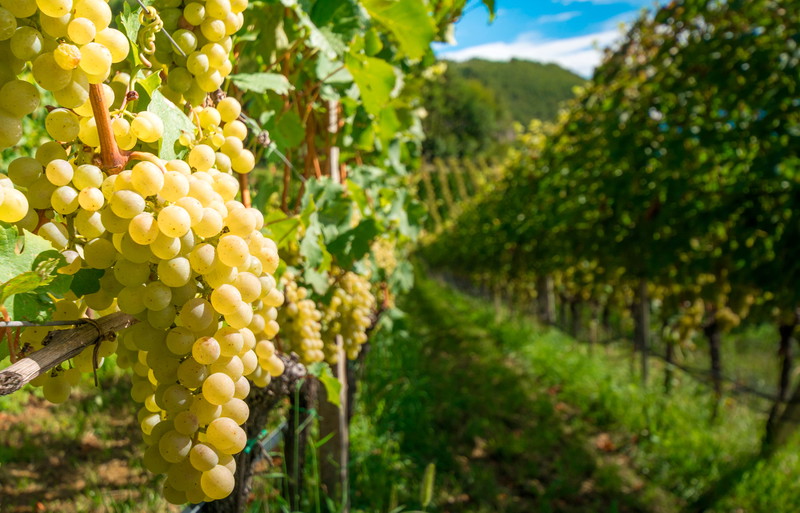
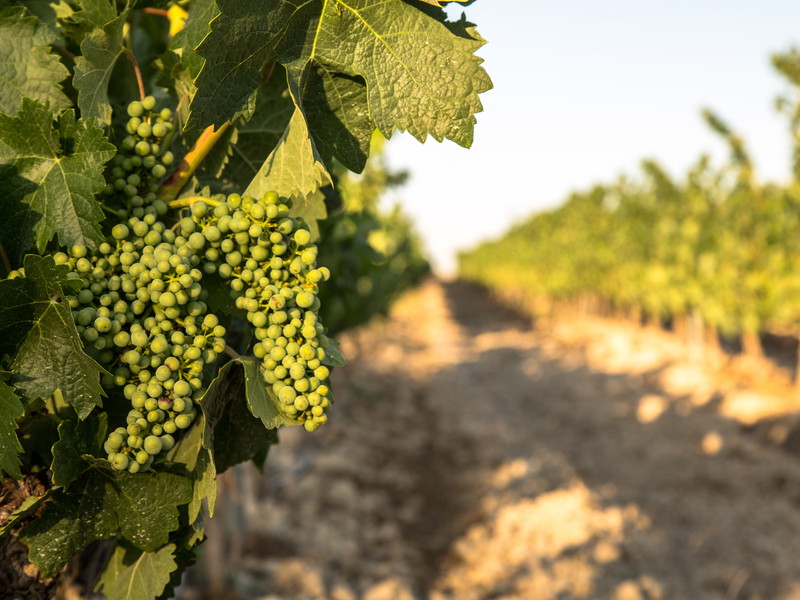
There are numerous misunderstandings surrounding Müller-Thurgau, both regarding its origin and its quality. The fact is that it is the cross of a Swiss researcher named Hermann Müller from the Swiss canton of Thurgau. It was originally assumed that he had crossed Riesling with Silvaner, which led to the synonyms Rivaner or Riesling X Silvaner, which are still used today. Thanks to modern DNA analyses, we now know that it is de facto a cross between Riesling and Madelaine Royal, a grape variety that no longer exists today. The early-sprouting Müller-Thurgau variety grows primarily in Germany, where it now occupies a good 13,000 hectares. It tends to produce high yields, which many winemakers gratefully accept and thus produce simple, fruity wines without much potential. Müller-Thurgau is also the main component of the simple brand wine “Liebfrauenmilch”, which is particularly popular in England. However, some winemakers who are uncompromising in their quality standards have recently proven that you can get much more out of Müller-Thurgau. With around 3,000 hectares, the variety is well represented in the wine district of Lower Austria, and small areas can also be found in Switzerland and South Tyrol.
This grape variety is also known by the name of:
Müller-Thurgau/Rivaner, Mullerovo, Miler Turgau, Myuller Turgau, Rivaner, Muller Thurgau, Rizanec, Mueller Thurgau Blanc, Mueller Thurgau Bijeli, Mueller Thurgau Bianco, Mueller, Mueller Thurgau Rebe, Mueller Thurgau White, Mueller Thurgau Weisser, Mueller Thurgaurebe, Mueller Thurgeaux, Mueller Thurgeau, Muellerka, Muellerovo, Riesling Silvaner, Riesling Sylvaner, Riesling X Silavaner, Riesling X Silvaner, Riesling X Sylvaner, Muller Thurgeau, Riesvaner, Rizlingsilvani, Rizlingsylvany, Rizlingszilvani, Rizlingzilvani, Rizvanac, Rizvanac Bijele, Rizvanac Bijeli, Rizvanec, Muller Tourgau, Mullerka, Rizvaner