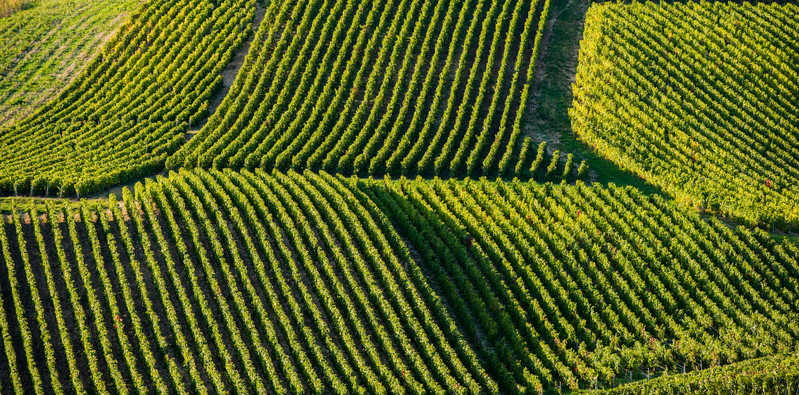
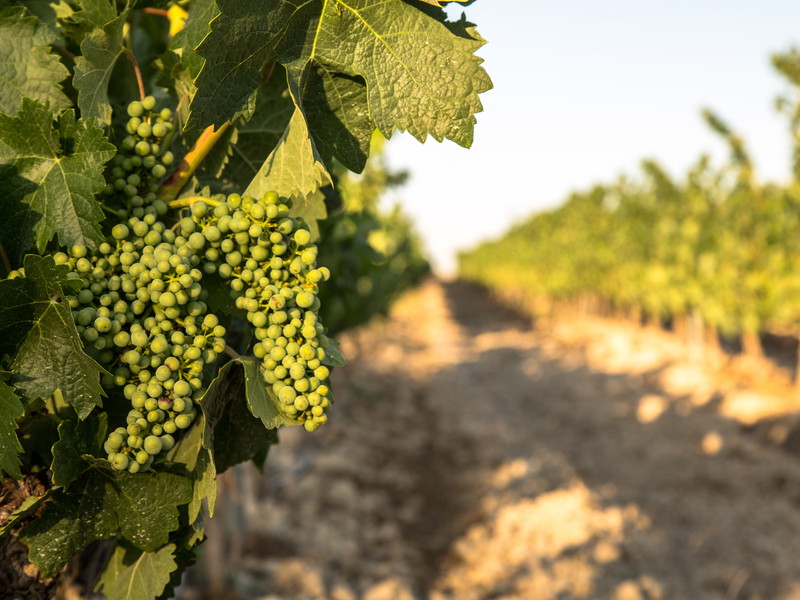
Although the name may suggest it, Muscadelle has no relation to the nutmeg family, although it does in fact have a fine nutmeg aroma. Scientific studies place it more in the environment of the grape varieties around Gouais Blanc. Its ancestral homeland is the southern left bank of the Gironde, the Entre-Deux-Mers between Garonne and Dordogne and Cadillac. Here it is usually cuveted with Sauvignon Blanc and Sémillon for dry white wines to give them even more fragrance and structure. In Sauternes, Barsac and Cadillac it also enriches the cuvée of the same grape variety for noble sweet wines, which in the case of the wines from Sauternes can be extremely high quality. The Muscadelle requires a very precise choice of location because if the noble mold Botrytis cinerea fails, it is susceptible to other types of rot, and wasps and moths can also severely affect it. However, vineyard areas in Bordeaux are declining. Outside of Bordeaux, it only plays a larger role in Australia: in the Riverlands, a simple, dry white wine is produced from it, and in Victoria, following an old tradition, it is made into a very sophisticated fortified wine, which until recently came onto the market under the name “Liqueur Tokay”. At the urging of the EU, primarily to protect the Tokaj origins in Hungary, this fortified wine is now sold under the name “Topaque”.
This grape variety is also known by the name of:
Angelico, Angelicaut, Blanc Cadillac, Blanche Douce, Cadillac, Catape, Buillenc, Doucanelle, Douzanelle, Colle musquette, Bouillenc Muscat, Boullience Muscat, Muscadet doux, Muscalea, Guepie, Guilan doux, Guilan muscat, Guilan musqué, Guillan musqué, Muscadela, Muscat fou, Musquette, Guinlhan musqué, Marmesie, Pedri Ximenes Krimsky, Raisimotte, Raisinote, Raisinotte, Rousselou, Raisin de musco, White Angelica, Sauvignon à gros grains, Sauvignon muscadelle