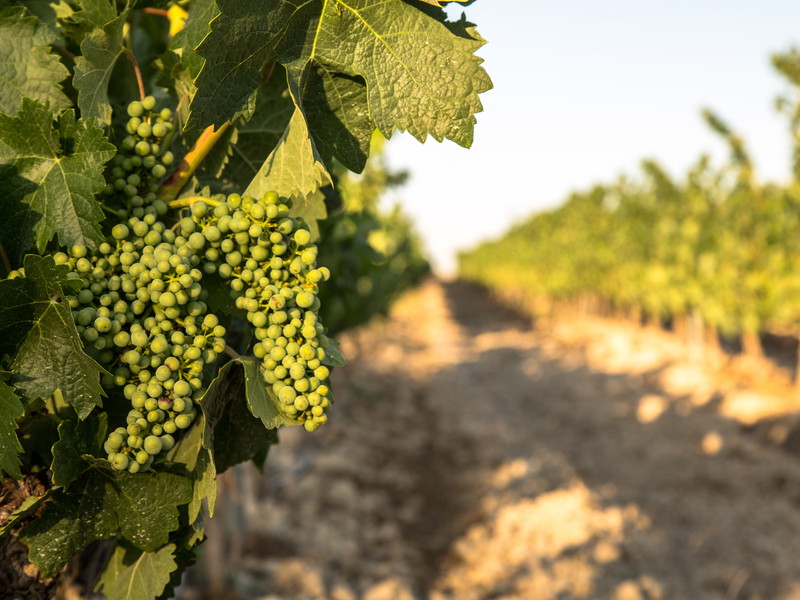
Many winemakers and experts claim that Scheurebe is the better Sauvignon Blanc, and given the many expressive, racy and fruity dry Scheurebe wines, this statement is not even wrong. That wasn't always the case. Before 1985, these wines were consumed more in the sweet range, and this high-class grape variety has not completely shaken off this reputation to this day. The Scheurebe was originally attributed to a cross between Silvaner and Riesling, but it is true that it came from a cross between Riesling and a grape variety that is still unknown today. The creator and namesake of the Scheurebe, Georg Scheu, developed this variety particularly with the sandy soils of Rheinhessen in mind. So it's no wonder that today it also occupies well-known areas around Lake Neusiedl, where it is called Sämling 88. The Scheurebe ripens relatively late and proves to be less frost-resistant than, for example, the Riesling. Unfortunately, it is also quite susceptible to downy mildew. Today, 1,500 hectares in Germany are planted with Scheurebe, mainly in Rheinhessen, the Palatinate and Franconia, where it is processed into piquant, fruity, dry wines. But there are also excellent Beerenauslese or Trockenbeerenauslese wines available in small editions.
This grape variety is also known by the name of:
Dr. Wagnerrebe, Sämling, Sämling 88, Scheu, Scheu 88, S88