Martino Gamper: The Art of Sitting
The Merano-born designer Martino Gamper loves experimenting with furniture—whether it's giving new life to discarded items or repairing broken pieces as part of exhibitions. His surprising designs showcase a sense of humor.
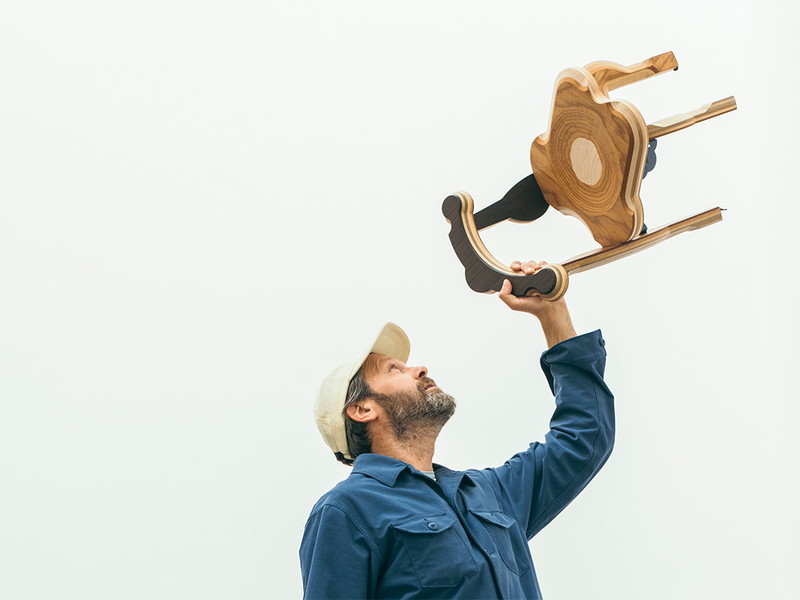
Martino Gamper began his career as a scavenger of discarded furniture. In the 2000s, the Merano native moved to London, which was the place to be for creatives at the time. No unwanted IKEA armchair from friends or abandoned chair on the street was safe from him. Starting in 2007, he rescued 100 abandoned chairs over the course of two years before his real work began: he took them apart—and reassembled them in new and unexpected ways. His innovative project, 100 Chairs in 100 Days, was a bold statement against our throwaway culture.
Why does everything always have to be new? Gamper proved that fantastic design can be created from existing resources—design that doesn’t come off the rack. Of course, there’s also a certain defiance in his approach: rather than aiming for marketable objects, he prefers to experiment with materials and explore social themes. He calls his philosophy "from waste to taste", breathing new life into existing objects. With his sustainable approach, Gamper was ahead of his time, yet his work remains lighthearted and ironic. He designs furniture with humor—revealing aspects that had previously gone unnoticed.
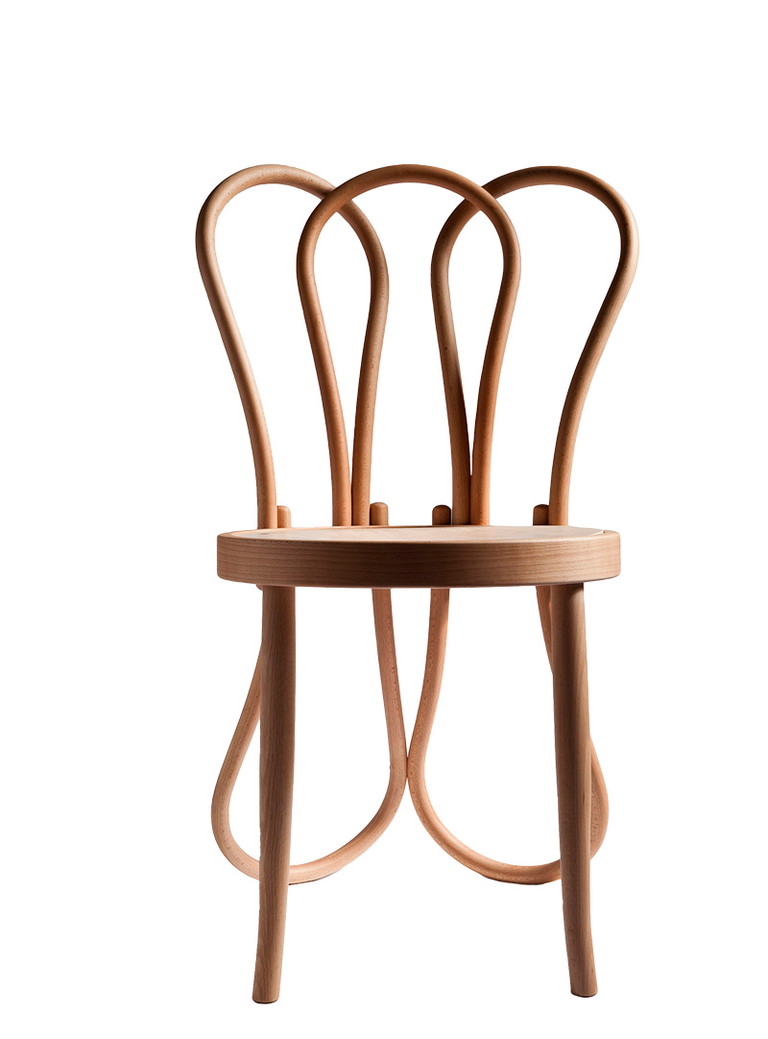
A great example of this is Post Mundus chair, which Gamper designed in 2012 for Wiener GTV Design—famous for its woven cane and elegantly curved backrests. With a touch of irony yet a keen eye for form, he simply added a few extra curves to the classic Thonet chair. Like a mirrored reflection, the bentwood backrest repeats itself on the underside, creating a kind of visual echo. Gamper stays true to his approach: he builds on what already exists, blending it in a contemporary way. He is particularly drawn to traditional techniques and how they can be used to create new forms. For the renowned Austrian glass manufacturer Lobmeyr, he explored engraving, sandblasting, painting, and gilding techniques for the NEO drinking glass in 2016. The most intriguing pieces are those with unexpected breaks, resembling ice cubes chipped away in unusual spots.
Following small rules
Gamper is an explorer. For him, the process is just as important as the result. Design principles exist to be thrown overboard. He doesn’t follow rules, yet he remains endlessly curious. His design motto? Learning by doing. Craftsmanship fascinates him—it’s in his roots. At 14, he began an apprenticeship as a carpenter before embarking on a world tour at 19 that took him all the way to New Zealand. In Vienna, he first studied sculpture at the Academy of Fine Arts before switching to product design at the University of Applied Arts under Matteo Thun. In 1996, Gamper returned to Italy to work as a freelancer for various Milan-based designers. Two years later, he moved to London to study under Ron Arad at the Royal College of Art. He has lived and worked in London ever since.
“I like using everyday materials in a different context to give them new life,” he emphasized in an interview with The New York Times. Gamper’s imaginative and thoughtful concepts have also found a growing presence in the exhibition world. Last year, he brought 100 chairs into Munich’s Haus der Kunst. Visitors were encouraged to rearrange them—creating new interactions and sparking conversations. For Gamper, these chairs were not just products but rather “a means of exploring the act of sitting itself,” as he shared with AD Magazin.
Sustainable makes you happy
For Gamper, a pioneer in sustainability, the concept extends far beyond what it means to most other designers. “We talk a lot about green materials, recycling, and so on, but not much about how sustainable our work is for ourselves. Does it express who we are?” he asks on the website of Milan’s Salone del Mobile furniture fair.
He remains deeply connected to his Italian homeland. For Museion, the Museum of Contemporary Art in Bolzano, he created the Passage, an event space featuring larchwood benches and colorful plywood chairs designed by him. As is often the case with Gamper, the focus is on interaction—it’s a versatile space meant for people to come together. For three-star chef Norbert Niederkofler and his Cook the Mountain concept, Gamper designed the interior of AlpiNN, a restaurant perched atop Kronplatz, accessible only by cable car. The two are a perfect match, sharing a sustainable, locally rooted, yet globally minded philosophy. “I love working with other people—I think it’s great when it’s not just about me,” Gamper says. And you immediately believe his unpretentious, open-minded approach.
Read more: Architecture in Northern Italy: So Close to Heaven