Miso scrambled eggs: A classic with a twist
Miso paste gives this breakfast classic an unmistakable Japanese touch.
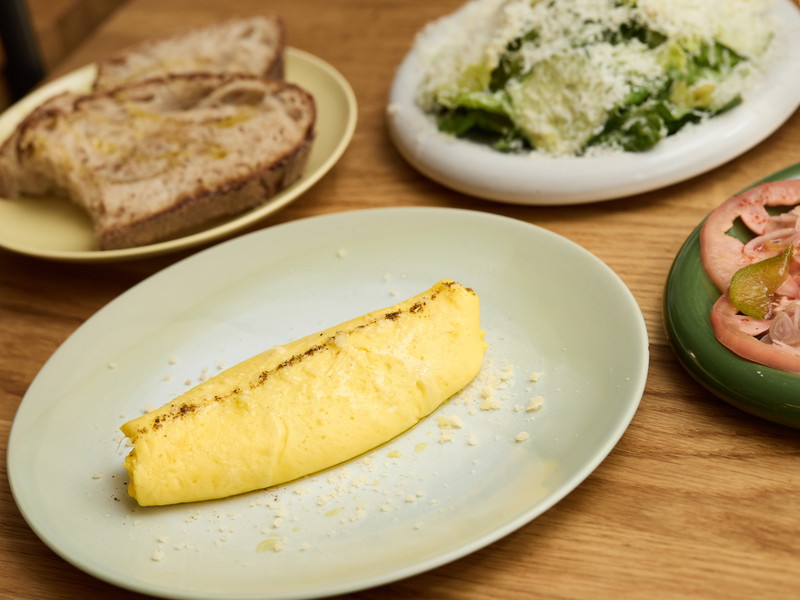
At “Amator” (English: amateur) in Copenhagen, Polish chef Mateusz Sarnowski has transformed the humble egg into the cornerstone of an ambitious dining concept—an elegant tribute to simplicity, innovation, and culinary craftsmanship.
In a small, minimalist space on Nordre Frihavnsgade in Copenhagen, Polish chef and former advertising professional Mateusz Sarnowski—better known by his culinary alias Mati Pichci—has created one of the city’s most distinctive breakfast destinations. Here, everything revolves around a single ingredient: the egg, elevated into omelets of remarkable precision and personality.
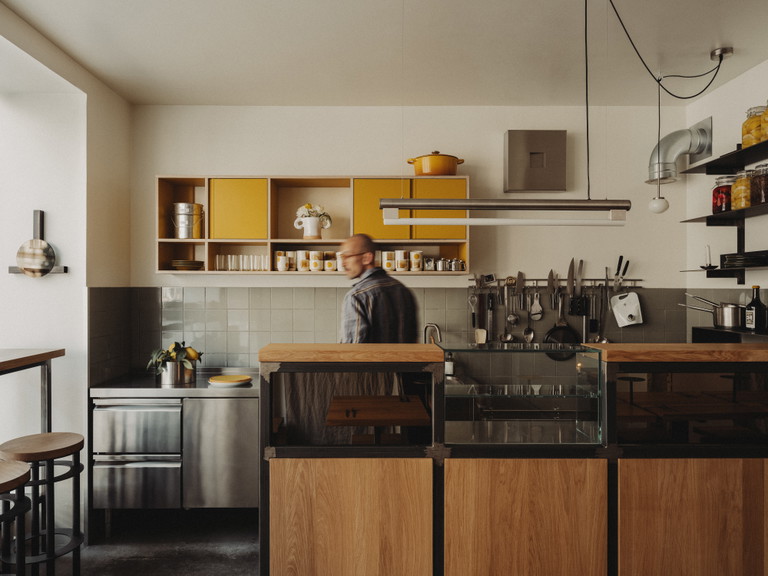
When Sarnowski stands over the small pans in Amator’s open kitchen, he is dialed in. Despite the restaurant’s modest size and tightly curated menu, his ambition is unwavering—to cook each omelette with the same discipline and technical finesse that others might devote to a perfectly seared tournedos or an immaculate seafood dish.
“On the one hand, it’s just two eggs cracked and folded,” he says. “On the other hand, these two eggs also pay my rent. So I treat them with great respect.”
Sarnowski still describes himself—as he once was—as a kind of amateur, though now he’s anything but that. When he arrived in Copenhagen in 2019, his professional kitchen experience was limited. Even so, he secured a three-month internship at Noma, the globally acclaimed temple of New Nordic cuisine.
“I had a growing interest in and passion for food, and Denmark really allowed me to unfold that enthusiasm,” he says.
He continued feeling like an amateur even years after his time at Atelier September, a stylish and much-photographed café where he managed the team, cooked, and helped shape Copenhagen’s evolving breakfast culture. It was there that his fascination with omelettes began to take form—sparked by a simple French omelette he had once had in Warsaw and influenced by the classical techniques of legendary chef Jacques Pépin, whose precision and restraint still define Amator’s philosophy today.
“There’s something beautiful about an omelette,” Sarnowski explains. “It’s like scrambled eggs, but with form and intention. And it demands an exact understanding of heat, timing, and texture.”
Although Sarnowski continuously experimented with omelettes during his time at Atelier September, they never quite found a natural place within the café’s rhythm. After leaving, he dedicated himself entirely to mastering the craft—initially through a series of pop-ups across Europe and Asia, from Paris and Berlin to Milan, and even Tokyo.
Word spread quickly among chefs and culinary insiders. Despite the apparent simplicity of his medium, Sarnowski’s technique was so precise that seasoned professionals began traveling specifically to taste his work.
“Omelettes can be easily repurposed and reveal immediately whether you truly have an understanding for the heat you’re working with.”
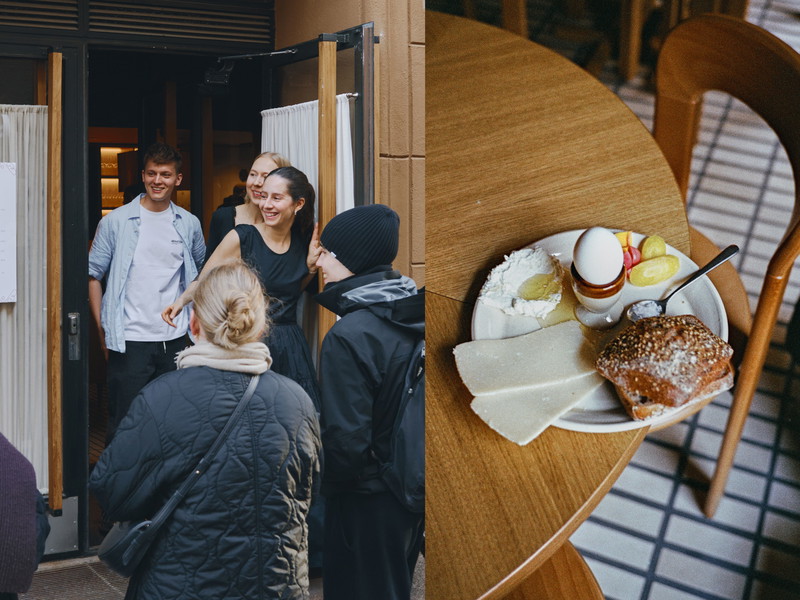
After his international pop-ups, Sarnowski returned to Copenhagen and, in May 2024, opened Amator in Østerbro—a place he deliberately avoids calling a café. Instead, he refers to it as a home dining place. The space reflects his understated philosophy: a single communal table, an open kitchen, Japanese-Scandinavian minimalism, and oak furniture handmade in Poland. For Sarnowski, the design isn’t about aesthetics or following a trend, but about cultivating calm, focus, and timelessness as integral parts of the dining experience.
And then, of course, omelettes are a staple on the menu which is purposefully concise: three variations (including “the sexy,” a pure omelette with no filling), a few sides, a citrus tart, and a short list of beverages. There’s no espresso machine, no pastries, no granola.
For “Mati,” Amator represents a quiet rebellion against the sugary, chilled breakfasts that dominate modern brunch culture.
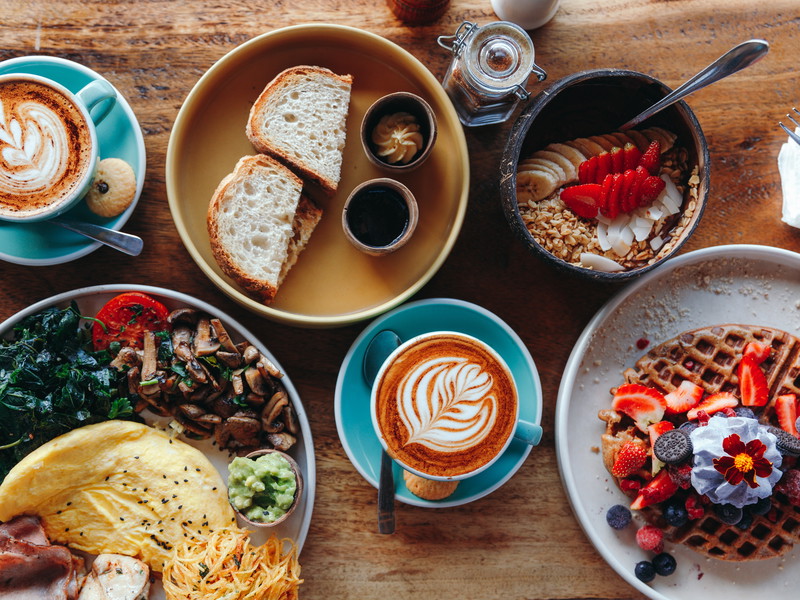
“We serve warm, savory breakfast. That’s what I grew up with–and it makes sense in a cold climate. When two guests share two omelettes and three side dishes, they get a brunch experience that’s completely different from the classic Copenhagen yoghurt-and-avocado model,” he says.
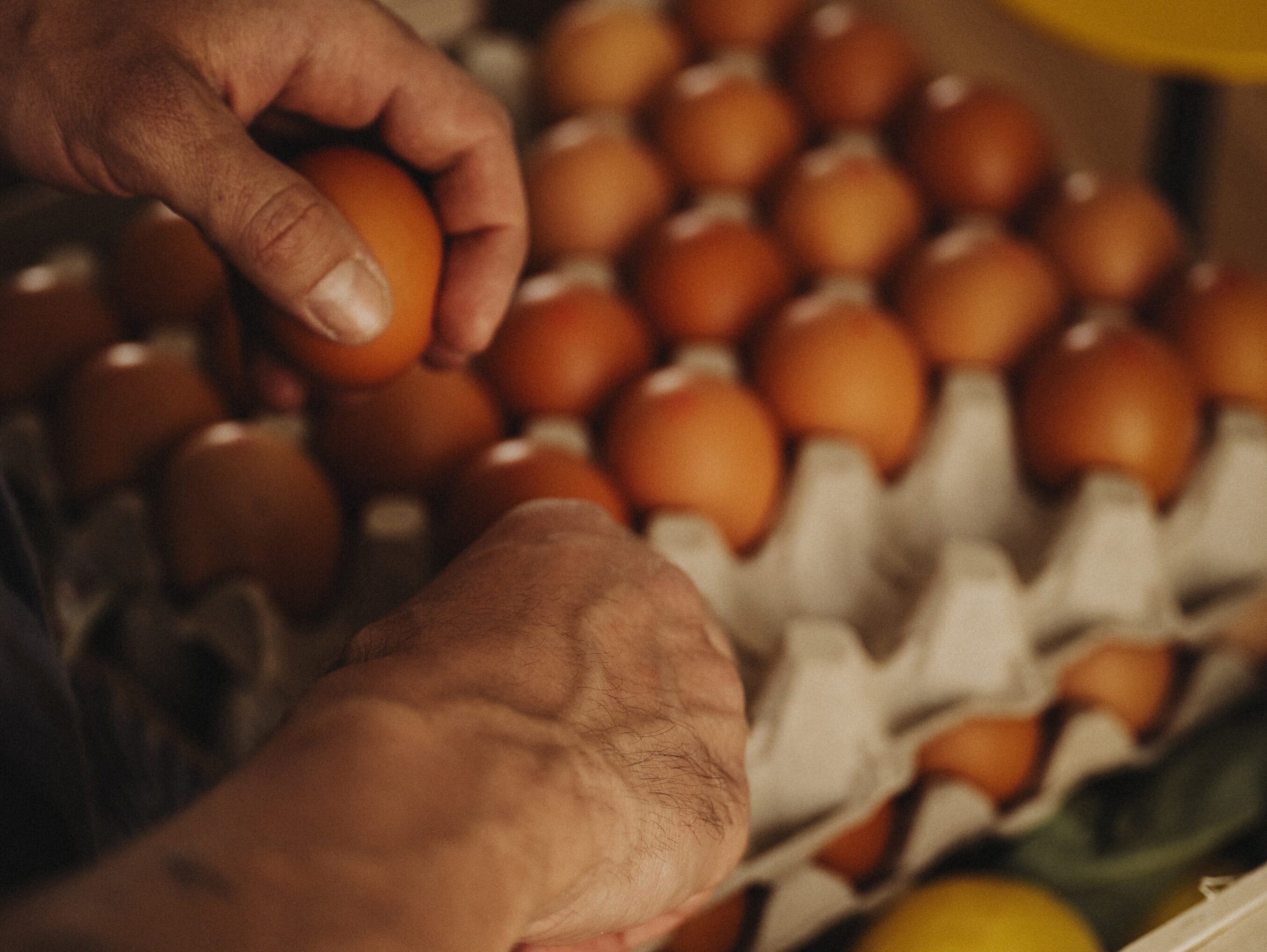
According to Sarnowski, a perfect omelette begins with the raw ingredient itself.
“If you buy cheap eggs, you might as well refrain from making an omelette as it is a naked product that can't hide anything–you can taste everything.”
At Amator he uses Swedish organic eggs supplied via Natoora, a high-end greengrocer, and, in season, adds duck eggs from a small farm near Stevns. These he blends them 1:1 with hen eggs to create greater depth and complexity.
“Duck eggs have a larger, more intense yolk, and a deeper, more rustic flavor. On their own, they’re too much, but combined with hen eggs they create a far more complex omelette,” the chef explains.
Each omelette is whisked individually only seconds before it hits the pan. This creates tiny air bubbles which contribute to the omelette’s creamy structure. Butter and olive oil are used in equal parts, and the pan must never overheat.
“It takes about a minute. Maybe a minute and a half. You have to work fast, but with control. An omelette collapses if you’re too slow–and sets if you’re too aggressive.”
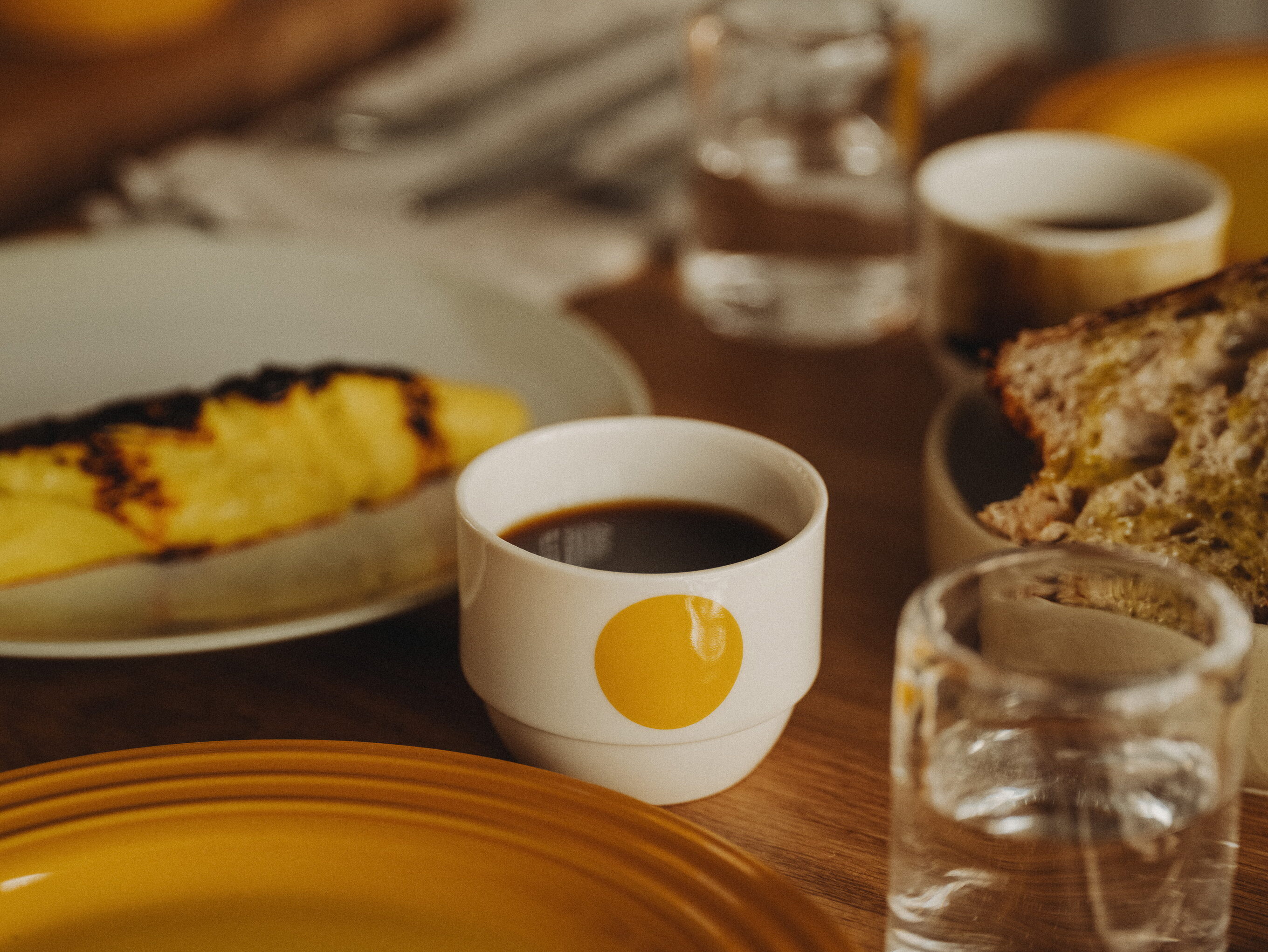
The technique is so consistent that on a busy day Sarnowski can work his way through 300 eggs without compromising quality. Guests appreciate the effort. Many are regulars, and chefs from top restaurants–including Alchemist–reportedly send guests to Amator specifically to try the omelette.
Despite the informal setting, the kitchen communication follows classic fine-dining discipline: “two omelettes–yes, chef.” It’s a working language Sarnowski adopted from the high-end restaurant world.
“On paper, our job may look silly–we entertain people, we play music, we serve eggs. But we take it seriously. That’s why it looks effortless,” he says.
And perhaps that is what makes Amator unique: even the simplest dish can become a gastronomic high point when technique, intention, and discipline are unwavering.
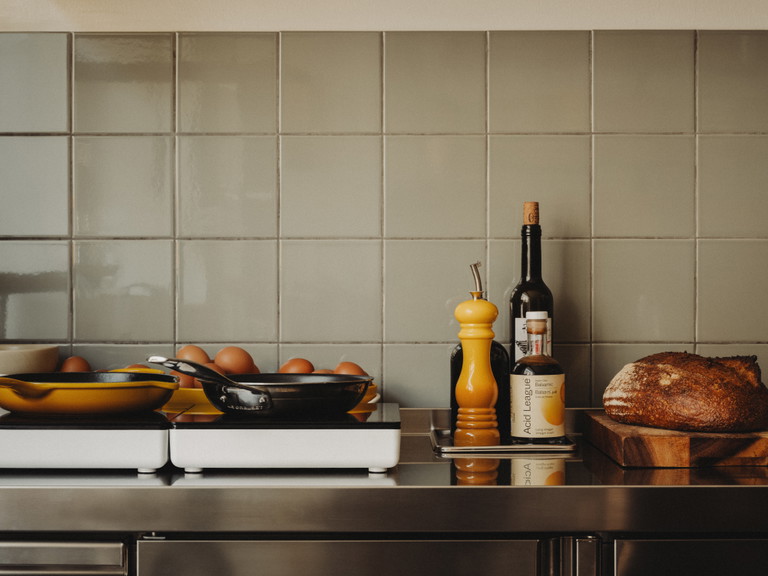
A perfect omelette is simple–but only if executed with care and technique. Here are Mateusz Sarnowski’s five essential rules:
Use high-quality eggs only
An omelette is a naked product. Everything can be tasted. Differences in feed, fat composition, and freshness directly affect texture.
Whisk eggs à la minute
Never use pre-whisked eggs in large containers. Fresh whisking creates micro-bubbles that give the omelette its creamy lightness.
Use one dedicated non-stick pan–only for eggs
A quality pan that is never overheated and never used for anything else ensures even heat and a flawless surface.
Medium-low heat, short cooking time
The egg should be about 70°C and the temperature in the pan no higher than 110°C. Too much heat dries the proteins; too little results in a flat, watery texture.
Keep the technique minimalist
No heavy fillings to distract. A pure omelette with butter, olive oil, black pepper, and perhaps a mild chilli allows for full focus on texture and folding.