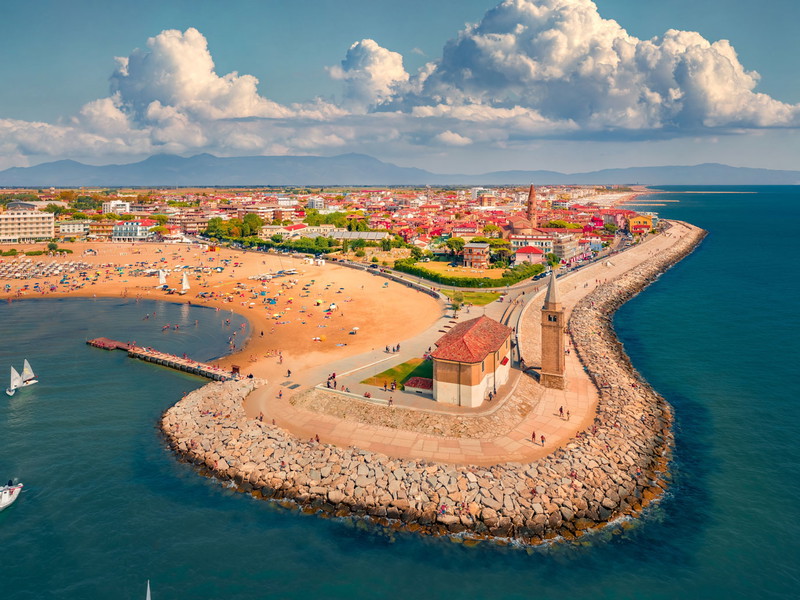
Kulinarik in Caorle: Es tut sich was in Klein-Venedig
Die besten Adressen am beliebten Ferienort an der Mündung der Livenza.
The 2016 European Championship provided a good opportunity to take another look at Parisian kitchens, where haute cuisine traditions are cultivated and bistro culture is being revived.
Whether behind prestigious facades or at the tiny bistro tables of countless brasseries: Parisian chefs and cooks set gastronomic standards.
Champagne corks will pop when the final of the European Football Championship is celebrated in Paris on July 10. France's capital has long been a culinary master. After all, the first restaurant in the modern sense was opened on the banks of the Seine at the end of the 18th century, and French culinary art even made it onto the UNESCO World Heritage List in 2010.
Paris is still a city to the rhythm of clattering plates and clattering cutlery. Whether behind the prestigious facades of bourgeois city mansions or at tiny bistro tables in the countless brasseries: Paris continues to set gastronomic standards, even if in recent years other cities such as London, Lima or Copenhagen have become the focus of lovers of innovative, high-quality cuisine.
This year, the legendary "Guide Michelin" has chosen 68 of 600 starred establishments in the Seine metropolis alone. Some are considered true institutions with internationally renowned chefs like Joël Robuchon. With his "Ateliers" in the 5th and 8th arrondissements, he is represented twice on the star list. The multi-award-winning Chef of the Century is world-renowned for his half-butter mashed potatoes. Today, his creations are lighter and more modern, although the master, known as a perfectionist, still uses seasonal ingredients from all corners of the hexagon. His credo is that you can be relaxed in a top restaurant; the furniture and service of the "Ateliers" are unpretentious, because the only thing that matters is the taste experience.
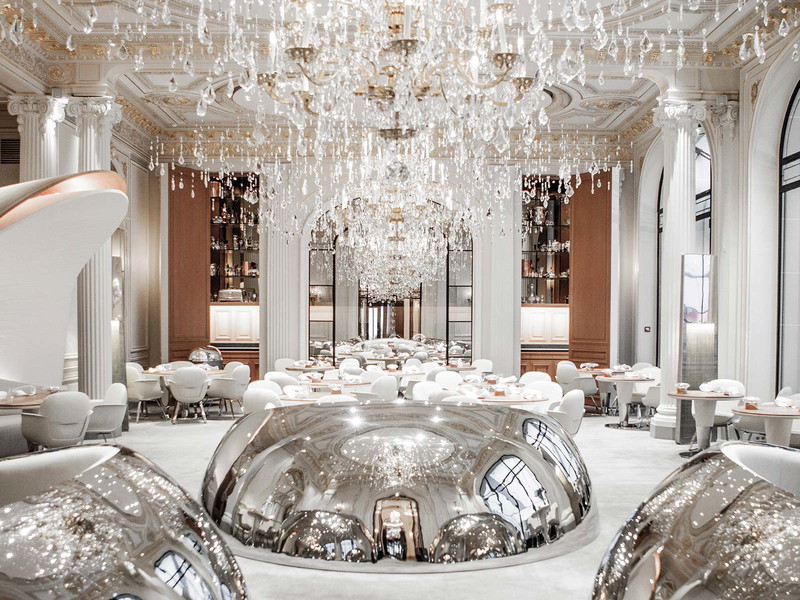
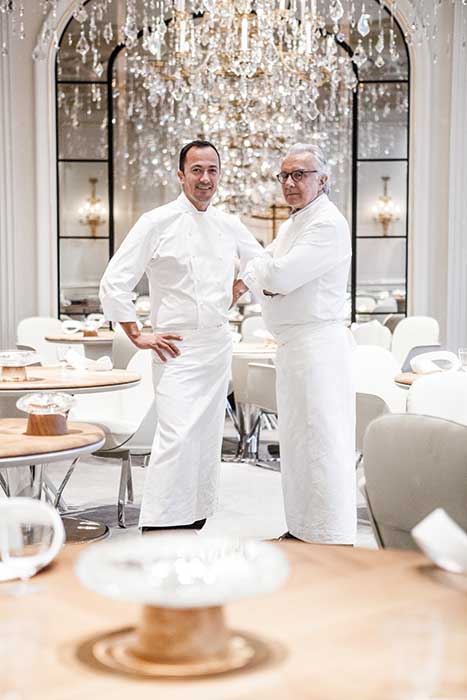
The canon of legendary grand chefs also includes Alain Ducasse and Guy Savoy, whose meticulously prepared delicacies are served at the Plaza Athénée and Palais Conti and are considered the epitome of luxury. Both chefs have long since exported their savoir-faire to Asia and North America and have made a name for themselves worldwide as authors of cookbooks. Nevertheless, their culinary hearts continue to beat in Paris, according to the motto "If I can make it there, I'll make it anywhere.
Alain Ducasse is also considered an innovative and sought-after entrepreneur, and in April he opened the brasserie Champeaux in the recently reopened famous Parisian "Halles," which Émile Zola once described as the "belly of Paris." "We want to keep the popular character of the Halles with our concept," Ducasse says.
So you can find all the classics of French cuisine, whether Cuisse de Canard, Entrecôte or Tartare de Bœuf, but at affordable prices and excellent quality. Ducasse is also behind the new "Café Ore" in the Palace of Versailles, together with Stéphane Courbit. An excellent café now also awaits visitors to the castle.
A long-invisible "haute cuisine féminine" can now also be experienced and tasted in the City of Lights. Men still predominate in the Parisian gastronomy scene, "but that will change," predicts Julia Sedefjian. Sedefjian is the chef of the restaurant Les Fables de la Fontaine. Exquisite seafood is at the top of the menu. Combined with citrus, green apple or curry, Sedefjian's original fish dishes enchant Paris visitors and regulars alike.
Not least because affordable prices and casual ambience right next to the Eiffel Tower are rare. The 21-year-old chef imported the southern flair and the taste inspirations from her native Nice. Today she is the youngest holder of a Michelin star and embodies the new self-confidence of female chefs. "When I started working in the kitchen, I was almost a baby, but in this profession you have to grow up very quickly," she notes. Currently, female chefs make up only three percent of Michelin award winners. One of them, Hélène Darroze, a former Alain Ducasse student, was named the world's best female top chef by the British magazine Restaurants. As with soccer, persistence and ambition are needed to get a table at the 49-year-old's home during the European Championship.
But the culinary summer fairy tale can also be experienced beyond the big star restaurants. For a long time, an invisible wall ran through Paris in terms of gastronomy: In the west, around the Champs-Élysées and the Boulevard George V, the posh restaurants lined up next to each other, and on the left bank of the river, on the Rive gauche, haute cuisine conquered the former artists' quarter Saint-Germain-des-Prés. Only the northeast of the city was considered a gastronomic desert for a long time. But for some years now, it is precisely here - between Canal Saint-Martin, République and Pigalle - that the scene of young talent has been blossoming rapidly.
Therefore, you should not miss to visit the so-called neobistros in the 9th district, 10. or 11th arrondissement to discover. The new movement stands for a mix of bistro and upscale cuisine. Thus the term "bistronomy" was born. The annual magazine "Le Fooding" is considered the bible of neobistro fans. It recommends worthwhile addresses throughout France, above all, of course, in Paris: a kind of "Guide Michelin" for the so-called bourgeois bohemians, or bobos for short.
Simple ambience, flavorful influences from all over the world, from South Africa to Korea, paired with quality consciousness and conviviality. They have names like "Yard," "Mensae" or "Le Richer. The kitchen is laid out as a visible part of the restaurant, and the young savages swirl around their plates like DJs at mixers. 44-year-old Inaki Aizpitarte, for example, has achieved international fame with his almost inconspicuous "Chateaubriand" and 21st place on the list of the "50 World's Best Restaurants.
The nearby "Septime" with its charming young chef Bertrand Grébaut has recently been awarded a star. However, the newcomer star admits, "The downside of success is the immense stress and pressure. But we're a team and we cope with the emotions together." Meanwhile, you have to wait longer for a table at the 35-year-old student of the legendary Alain Passard than at the big names on the other side of town.
Paris is also surprising in other respects these days. For a long time, in a country where meat is an almost indispensable part of traditional cuisine, vegetarians were left with only a choice of sometimes less than spectacular side dishes. Beyond green beans or a gratin dauphinois, one searched in vain for imaginative dishes without animal ingredients, while elsewhere they had already found their way into upscale gastronomy.
During a detour to the "Gentle Gourmet Café" or the "Brasserie Lola", visitors to Paris can now discover that French haute cuisine can also be vegan. Served are creations of shiitake, morels and seitlings, with numerous grain variations. And even the finest desserts such as macarons and lemon tarts convince without eggs and milk with loving refinement.
If you don't want to dine green, but you do want to dine in the countryside, you can discover exquisite establishments far from the hustle and bustle of the capital. On the picturesque estate "Le Manoir de Rétival," for example, German chef David Görne runs the one-star "G.a." restaurant. The cryptogram from "J'ai grand appétit" comes from Voltaire. The young talent conjures up seasonal 3- to 8-course menus on the plate and does not skimp on truffles and other exquisite ingredients.
So if you want to enjoy an exciting post-match experience after your visit to Paris, you shouldn't shy away from a trip to the provinces or to one of the other nine cities hosting the European Championship. After all, neither the hunger for goals nor the "grand appétit" should be neglected during the French summer fairy tale.
More exciting stories about France and the European Football Championship as well as a detailed conclusion on Bordeaux en Primeur can be found in the current Falstaff Magazine 04/2016!