Kulinarik in Caorle: Es tut sich was in Klein-Venedig
Die besten Adressen am beliebten Ferienort an der Mündung der Livenza.
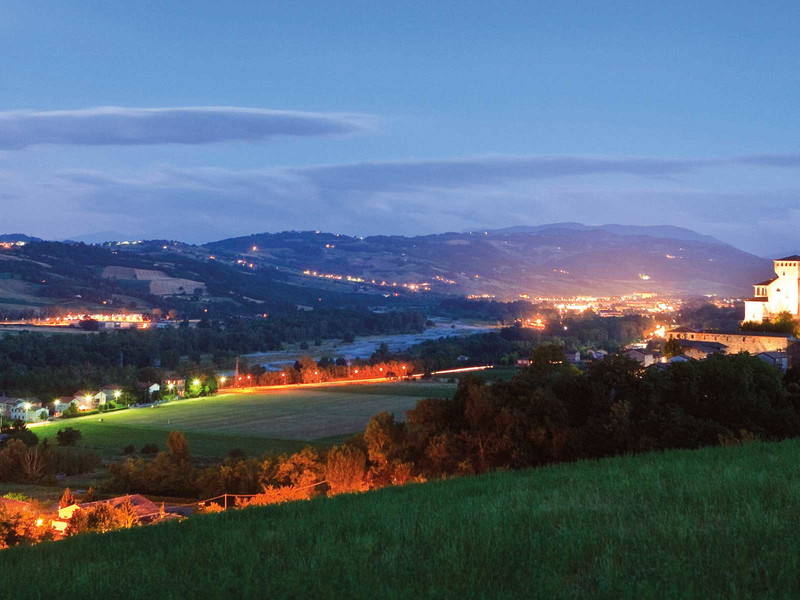
The region around Modena, Reggio Emilia and Parma is considered the "belly of Italy". A glimpse of world-famous delicacies, first-class restaurants and cozy osterias.
One of my dreams is to make my avant-garde cuisine understandable to everyone," explains Massimo Bottura. Thanks to him and his "Osteria Francescana," Modena has become a fixed point in Italy's starry gastronomic sky. In 2002 he won his first star, followed by a second in 2006, and in 2011 the "Osteria Francescana" was awarded three stars. This year, it landed in third place on the list of the world's 50 best restaurants - Bottura's success is growing on a solid foundation.
Modena and Reggio Emilia are among the richest provinces in Italy, producing mainly machinery and pharmaceutical products, and it is also home to the world's largest concentration of ceramic and tile manufacturers. But the area is also known as "Food Valley". Some typical products of the Italian cuisine have their origin here: Parmigiano Reggiano, Aceto Balsamico Tradizionale, Parma ham, tortellini and ravioli anyway. This culinary still life is framed by foaming Lambrusco.
Even when Giovanni Boccaccio described the "Paese di Bengodi", the land of milk and honey, in his "Decamerone", he thought that the mountains there must be made of pure Parmesan. So it is not surprising that the cuisine of Emilia also enjoys an excellent reputation. This is based first and foremost on a high standard of inn culture. Classics like tortellini, tagliatelle con ragù, lasagna or cotechino, the thick pork rind sausage, are prepared there day after day. This is the soil on which some top restaurants have also grown in recent years.
Like the "Osteria Francescana" in Modena. Massimo Bottura combines the taste memories of his childhood with the knowledge and techniques of avant-garde cuisine. Some of his dishes have long since become modern classics, such as "Panino alla Mortadella" (mortadella and parmesan cream served in a jar) or "Five stages of aging Parmigiano Reggiano in different temperatures and textures". Massimo Bottura is a chef who shows not only creativity but also wit and irony in his dishes. The title of the current tasting menu is "Vieni con me in Italia" - "Come with me to Italy".
In a twelve-part symphony of taste, the guest completes a virtual journey through the culinary landscapes of Italy. Even the opening is grandiose and is called "The Key to Italy." Bottura serves a granita of Sicilian almonds interspersed with capers, oregano and candied bergamot. It's accompanied by macarons with oyster and anchovy tartare. An expression of Bottura's wit is the dish "A Charred Sardine." He's taking the piss out of the widespread Italian custom of cooking sardines on the grill. What appears on his plate looks like a grilled sardine, but is actually a red mullet stuffed with langoustine mousse and brushed with ash from lemon peel.
Irony also shines through in "Ravioli that a French chef can only dream of": Ravioli with paper-thin dough filled with leeks, foie gras and black summer truffles from the hills near Bologna. A typical element of French cuisine - foie gras - becomes part of a new Italian classic. Delicious is the "millefoglie of real leaves": freeze-dried young leaves are lightly coated with caramel and layered with mushrooms, truffles, hazelnuts, chocolate and pumpkin cream. A poem!
Massimo Bottura manages to give his creations great flavor intensity while remaining light. Even after the twelfth course, you don't feel full, just finely satiated. For Bottura, fine cusine also means social responsibility. He proved it with his creation "Riso con Cacio e Pepe". Pasta with cheese and pepper is a common dish in Italy.
Bottura took rice instead of pasta because it is more in line with the culinary tradition of the northern part of Emilia, and presented this dish together with Slow Food on the Internet on October 7, 2012, under the title "Solidarity with the victims of the earthquake." 40,000 participants worldwide recreated the dish that evening. By the end of 2012, this campaign had sold 400,000 molds of Parmesan cheese that had been broken by the earthquake in May 2012 and could therefore no longer be sold as Parmesan.
The contrast to the high cuisine in the "Osteria Francescana" can be found in the "Franceschetta 58". In collaboration with Marta Pulini, Massimo Bottura is implementing his idea of an osteria with light and down-to-earth cuisine there. If you want it more rustic, you have to go out to Rubbiara di Nonantola. Time seems to stand still in the osteria run by the Pedroni family for generations. The tortellini are strong and intense, the broth could awaken the dead. The other dishes on the pleasantly concise menu are also hearty. Don't be put off by the somewhat brash manner of host Italo Pedroni. He is an original who knows his job very well. Only cell phones at the table, he does not like that at all, so better leave it in the car.
"Il Rigoletto" was a well-known restaurant in Reggiolo, brought to two-star level by Gianni D'Amato. In May 2012, the villa where "Rigoletto" was located was badly affected by the devastating earthquake. As a replacement, Gianni D'Amato has opened the "Rigolettino" in the Hotel Villa Nabila, which also belongs to the family, and offers there inn cuisine at a high level.
Some classics from the "Rigoletto" kitchen can also be enjoyed at "Caffè Arti e Mestieri" in Reggio Emilia, run by Gianni's son Federico D'Amato and his long-time sous chef Sauro Antonioli. Directly from the central Via Emilia, a passageway leads to a shady garden that surrounds the restaurant. Polesine Parmense is a secluded place directly on the course of the Po River. Here lies the realm of Massimo Spigaroli and his family. The Spigarolis are famous for their mastery in the production of sausages and hams. Ancestors of Massimo Spigaroli once served the Princes Pallavicini as butchers. In twenty years of painstaking work Massimo Spigaroli has restored the old palace. Today the great cellars are full of culatello, the king of hams.
Alain Ducasse, the Prince of Wales, Giorgio Armani, and of course Massimo Bottura as well as many other celebrities are among Spigaroli's customers. Hams and sausages, he tells us, find ideal conditions for maturing in the humid climate by the river. You can enjoy the delicious culatello right on the spot. Either in the "Cavallino Bianco" a few minutes walk away or directly in the restaurant of the Antica Corte Pallavicina. Massimo Spigaroli conjures up star-level dishes here. On the upper floor of the palace there are six individually designed rooms, so you don't have to leave this romantic place right away.
There is much to discover in Emilia that is worth more than one trip. What is the apt title of the current tasting menu of the "Osteria Francescana"? "Come with me to Italy!" And if you don't want to try anything culinary from the "belly of Italy," you can always visit the Museo Enzo Ferrari in Modena to see the sleek red cars.
Lambrusco is by far the most produced wine in Italy, the talk is of 200 million bottles. A good three quarters can be forgotten right away, the wines are sweet or cloying - good Lambrusco is exclusively dry. With its bright color, fine bubbles, fragrant nose and light alcohol content, Lambrusco is very suitable for the modern wine connoisseur. The price of usually well under ten euros also contributes to its success. Its racy acidity and mild tannins make Lambrusco a welcome accompaniment to a variety of dishes. There are about ten producers who dominate most of the market. In addition, in recent years, a large number of small, ambitious producers have emerged, who increasingly produce Lambrusco using the Champagne method, or allow it to undergo a second fermentation in the bottle, but then leave the yeast in the bottle, according to local custom. These can often be exciting, individual wines.
Centers of the Lambrusco universe are the provinces of Modena and Reggio Emilia. Lambrusco from Modena is divided into three types: Lambrusco di Sorbara is grown mainly in the area north of Modena. It is the classic Lambrusco type, pale in color and with striking acidity. Lambrusco Salamino is found in the area towards the Po River and has the lowest acidity levels. Lambrusco Grasparossa is cultivated on the hills between the plain and the Apennines.
With its dense violet color and sometimes unexpectedly high tannin content, it suits Lambrusco novices very well. Lambrusco Reggiano is similar in style to Salamino and generally more full-bodied than the Modenese types. While those are produced varietally, Lambrusco from Reggio is mostly a cuvée. The permitted yields are high for all Lambruscos and are 18 tons per hectare.
Parma ham is famous for its mild, sweet taste. It is produced from pigs that come from the northern and central regions of Italy. It matures in the air for ten to twelve months and, after a quality control, it receives the five-pointed crown with the word Parma branded on it. The king of hams in Italy is the Culatello, produced around the town of Zibello on the Po River. For Culatello, only the central, low-fat part of the ham is used, which comes from free-range pigs of the Nera Parmigiana and Mora Romagnola breeds.
King of the Culatello is Massimo Spigaroli of the Antica Corte Pallavicina. In the cellar vault of the palace, where ham and salami have been produced since the Middle Ages, the culatello gets the right mold that is necessary for a good maturation. Culatello usually matures for 13 to 20 months. However, Spigaroli also offers qualities with 36 to 40 months of aging. Culatello used to be given exclusively to the European high nobility by the Pallavicini princes, which is why it remained unknown to the general public for a long time.
Parmigiano Reggiano is the king of cheeses. Its origin is in the area of Modena, Reggio Emilia and Parma, Bologna and Mantua. What makes Parmigiano Reggiano special is that silage feed for the cows is prohibited, as is the addition of enzymes or colorants. Cheeses are made every day. The milk is boiled in large copper kettles, then the rennet is added so that the protein precipitates. A loaf weighing around 40 kilograms is produced from 550 liters of milk. After a salt bath, the loaves enter the ripening room. After a year, employees of the Consorzio, to which all Parmigiano cheese dairies are affiliated, check each loaf for defects. If everything is in order, the loaf receives the stamp of the Consorzio, otherwise it is discarded and sold as young cheese. Parmigiano Reggiano must have a minimum ripening period of 12 months, but most ripen for 20 to 24 months.
Common Aceto Balsamico is a mass-produced industrial product that is increasingly being poured over salads, while genuine Aceto Balsamico Tradizionale (ABT) is an artisan condiment that has been aged for many years in barrels made of various woods. ABT is an exquisite rarity.
A few drops of a Tradizionale aged for 30 to 50 years unleash a veritable firework of aromas on the palate. The starting product is always cooked grape must. In Modena there are two categories ABT: the conventional (aged at least 12 years) and the "Extravecchio" (aged at least 25 years). For an "Extravecchio" one must count with prices of € 70, - per bottle upward. In Reggio Emilia, Aceto Balsamico Tradizionale is divided into three categories: "Aragosta" (long - 12 years), "Argento" (silver - 18 years) and "Oro" (gold - 25 years). The higher the predicate, the more concentrated, complex and sweet the ABT.
From Falstaff Magazine No. 05/2013