Discover Scandinavia: a dream vacation in the warm north
Scandinavia is known for its pioneering cuisine, picturesque cities, and breathtaking natural landscapes. But what many don’t know is that in summer, the far north transforms into a true beach paradise. Fine sandy beaches and sparkling coves just outside the major cities invite visitors to experience the lightness of Nordic summer living.
Dreamlike Denmark
You'll find the widest beach in Europe right here. In 2021, the tallest sandcastle in the world to date was even built on it—and nowhere in the country is more than 50 kilometers from the coast. Where are we? In Denmark! That might come as a surprise, since Scandinavia isn’t usually the first place that comes to mind when we think of beach vacations—but it should be, because this region has a lot to offer.
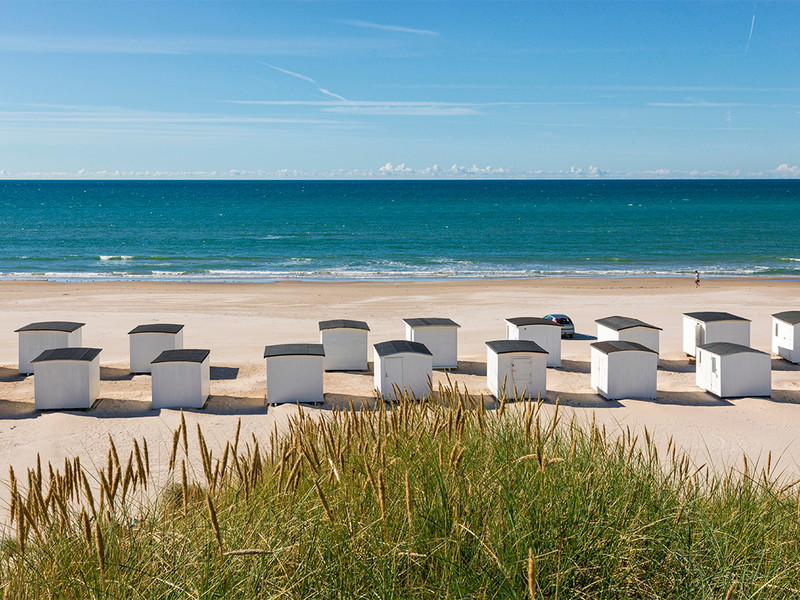
Take sand, for instance—plenty of it. The sandcastle mentioned earlier stood seven stories tall and was built using 4,800 tons of the finest sand. It was erected in the Danish seaside town of Blokhus, all the way at the northern tip of the country. A beach straight out of a postcard—and one of many you’ll find across Denmark: endless stretches of white sand, with the shallow, shimmering sea in front and gently rolling dunes behind, shaped by the wind and dotted with tall grasses.
Where beaches in the south are often packed towel to towel and sun lounger to sun lounger, in the north you’ll often have the shore almost entirely to yourself—space to breathe, space to dream. The sand is soft, the water clean, the coastline untouched. Many beaches have even been awarded the Blue Flag, a global symbol of excellence for water quality and sustainability.
Still not convinced? Then head south. Everyone else: join us on a sun-soaked journey along the Scandinavian coastlines, where the days are longer, the light lingers, and the air tastes of salt and freedom.
Natural moments to marvel at
Let’s start in the north of Denmark, at what is probably the most photographed beach in the country: Skagen Sønderstrand. This is where the North Sea and the Baltic Sea meet—where the waves of the two seas, one rough and the other calm, clash and ultimately merge in a stunning natural spectacle.
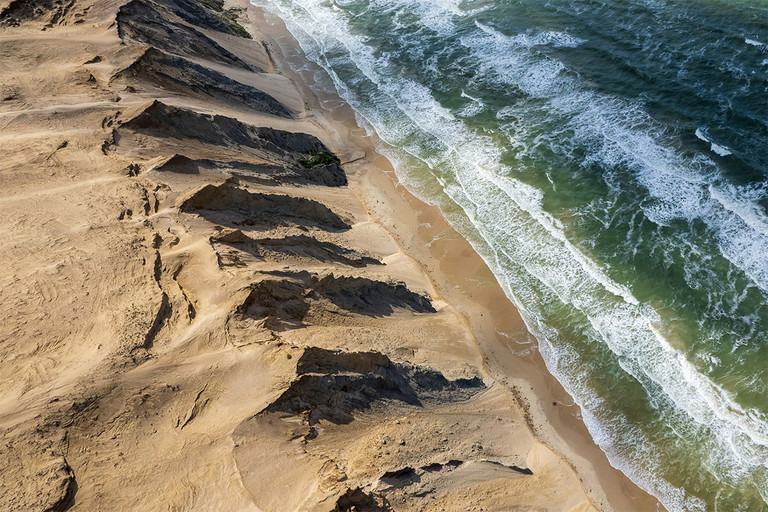
Not far from here you'll find Denmark’s largest shifting sand dune, Råbjerg Mile. This massive dune moves about 15 meters northeast every year. Visitors can stroll along wide trails through the fine, powdery sand.
The Danish coastline is a paradise for anyone looking to combine beach relaxation with outdoor activity. The land is flat, the shoreline diverse. One moment you're hiking through Sahara-like dunes, the next you're passing dramatic cliffs. In addition to countless hiking trails, there’s an extensive network of roughly 12,000 kilometers of bike paths—so if you’re up for it, you can cycle the entire length of the coast.
Surfing hotspot
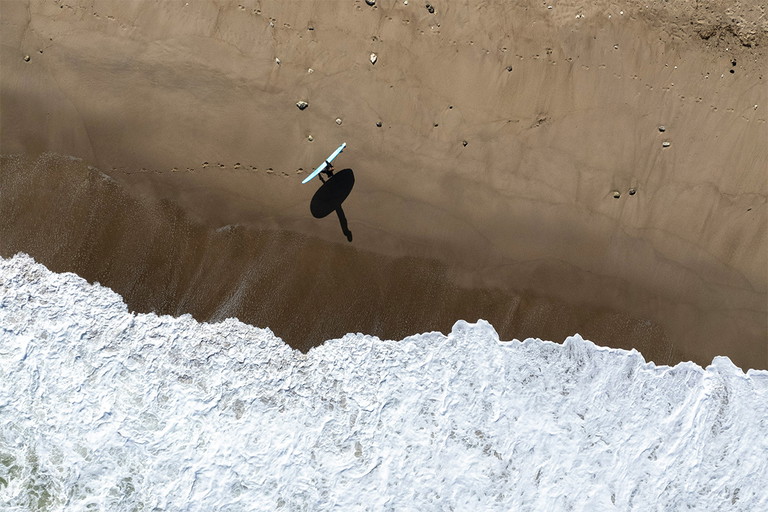
Water sports enthusiasts will feel right at home in and around Klitmøller—nicknamed “Cold Hawaii.” That’s because the waves and wind here, locals say, are every bit as good as those in Hawaii.
“The summers up here aren’t as cold as many people think,” says Mor Meluka. Originally from Israel, he moved to Klitmøller nearly 20 years ago and now runs the Cold Hawaii Surf Camp with his partner. In recent years, he explains, more and more visitors have been coming from France and Spain—many looking to escape the stifling heat of the south. While daytime temperatures there often make any activity beyond lying on the beach unbearable, Denmark and southern Sweden typically enjoy a comfortable 77°F (25°C) in the summer.
Surf instructor Meluka raves about the vibrant community, the crisp sea air, and the long summer days. In Denmark, the sun shines for up to 200 hours a month during the summer and doesn’t slip below the horizon until late in the evening—night never truly turns dark.
Another great reason to spend summer in the north? The food. If you’re a fan of fish, just follow the smoky aroma—or the tall white chimneys—to the nearest røgeri. These traditional smokehouses are dotted all along the coast. In the past, they were essential for preserving herring, mackerel, and other catch—today, they’re a beloved part of the local food culture. Dining is refreshingly laid-back: meals are often served on paper plates, eaten at simple wooden benches, with sand between your toes and a salty breeze in the air.
A touch of the Caribbean
To the east, the sea is calmer and the beaches nestle softly and gently against the land. There's even a palm beach here - near the town of Frederikshavn. However, for the sake of correctness it must be said: The plants spend the winter in the greenhouse. In summer, however, they give the crescent-shaped beach an almost tropical flair.
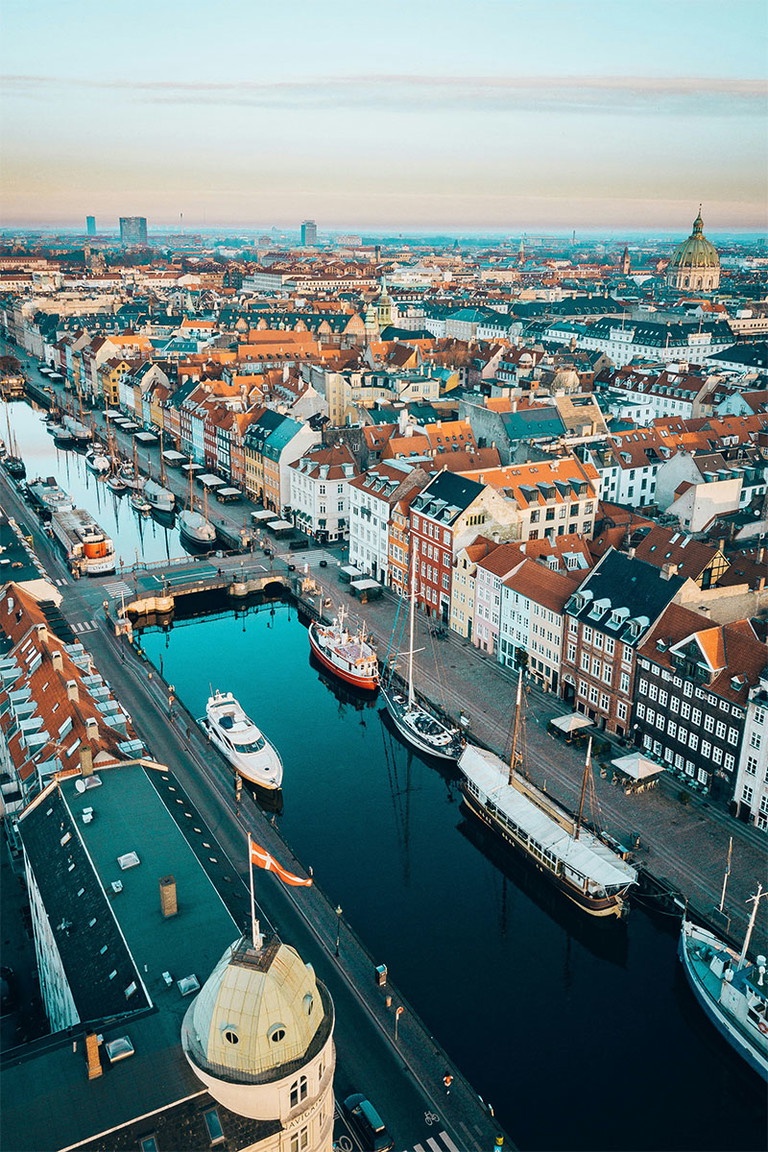
Further south and then eastward, the island nation stretches all the way to its capital, Copenhagen. Traveling via Fyn (Funen)—the birthplace of fairy tale writer Hans Christian Andersen and known as “Denmark’s orchard”—you’ll arrive at the main island of Sjælland (Zealand). Funen has earned its nickname: with its mild climate, fertile soil, and sheltered position between the Baltic Sea and the mainland, it has long been ideal for growing fruit. Apple and cherry trees dot the gently rolling hills, while berry bushes and fields bursting with ripe fruit shine in the summer sun.
Denmark has around 400 islands in total—and that’s just the ones with names. It would take many summers to explore them all: peaceful Læsø, known for its wide sandy beaches and delicate lobster; the island of Anholt, often called the “Gran Canaria of the North”; or Møn, home to the world-famous chalk cliffs of Møns Klint, which soar up to 128 meters above the sea. On a clear day, you can actually spot parts of the Swedish coastline from here. The southern coast of Sweden’s Skåne region lies just about 50 kilometers away.
Bornholm: The gourmet hotspot
But before heading to Sweden, we take a detour to Bornholm, where the sand is so fine that it was once exported to England and France and used for hourglasses. Bornholm's reputation as a gourmet hotspot adds to its scenic diversity. The island tastes...
...of clean wind, salt on the lips, the memory of smoke and the sweetness of wild plants
says chef Nicolai Nørregaard. He was born on Bornholm and “started his culinary journey” there. In his Kadeau, he offers the soul of the island to eat: The restaurant is only open in summer, during those magical months when time seems to stretch on forever. “We harvest in the morning and serve on the same day,” says Nørregaard. Wild blueberries, for example, juicy and fragrant, are combined with cream, dried rose and fig leaf oil.
Coastal paradise Sweden
From Bornholm, it’s just a short ferry ride to Sweden. The country boasts more than 26,000 kilometers of coastline—that’s as much as Italy, France, Spain, and Portugal combined. Like its Danish neighbor, Sweden’s coastline is lined with countless idyllic beaches: no crowds, no traffic noise, and no towering hotel blocks pressed up against the shore.
As mentioned earlier, the region of Skåne lies at the southern tip of Sweden, with Sandhammaren Beach at its southernmost point—a stretch of coastline often compared to the Caribbean. Admittedly, the water here is a bit cooler, and instead of palm trees, the beach is lined with powder-soft dunes and dense forests. But in every other way, it comes remarkably close to that tropical ideal.
Also popular are the seemingly endless beaches of the nearby Falsterbo Peninsula, where colorful beach huts dot the sand like cheerful splashes of paint, and the peaceful swimming spots in Stenshuvud National Park. The park’s summit rises just under 100 meters, but it stands like a stone giant above the landscape, offering sweeping views across a green, undulating sea of forest that stretches all the way to the coast.
The small fishing village of Mölle, located along the Öresund strait, became one of Sweden’s first seaside resorts in the late 19th century—and not just in summer. It was here that kallbad, the tradition of winter sea bathing, began its journey to global popularity. Even Kaiser Wilhelm II came here for a dip in the early 20th century. The elegant Grand Hôtel, opened in 1909, and still towers over the coastline today.
Nordic wine wonders
Southern Sweden is increasingly making a name for itself as a wine region. The cool climate, long summer days, and mineral-rich soils create ideal conditions for producing fresh, crisp wines with low alcohol content. White grape varieties, especially Solaris and Vidal, thrive remarkably well here. What was once dismissed as a novelty has since delivered surprising “aha” moments at international tastings.
This is a young wine culture that deliberately emphasizes elegance over opulence—Nordic clarity, Nordic character. Since the turn of the millennium, more than 40 wineries have been established, most of them small-scale operations cultivating just a few hectares. In many places, the vines grow with a view of the sea—such as at Thora Vingård on the picturesque Bjäre Peninsula. The 300 Pinot Noir vines planted by the Öberg family ten years ago have now grown into more than 50,000. Visitors can sample the wines on guided tours or at the newly opened Flora restaurant, where farm-and-sea-to-table cuisine is thoughtfully paired with the local vintages.
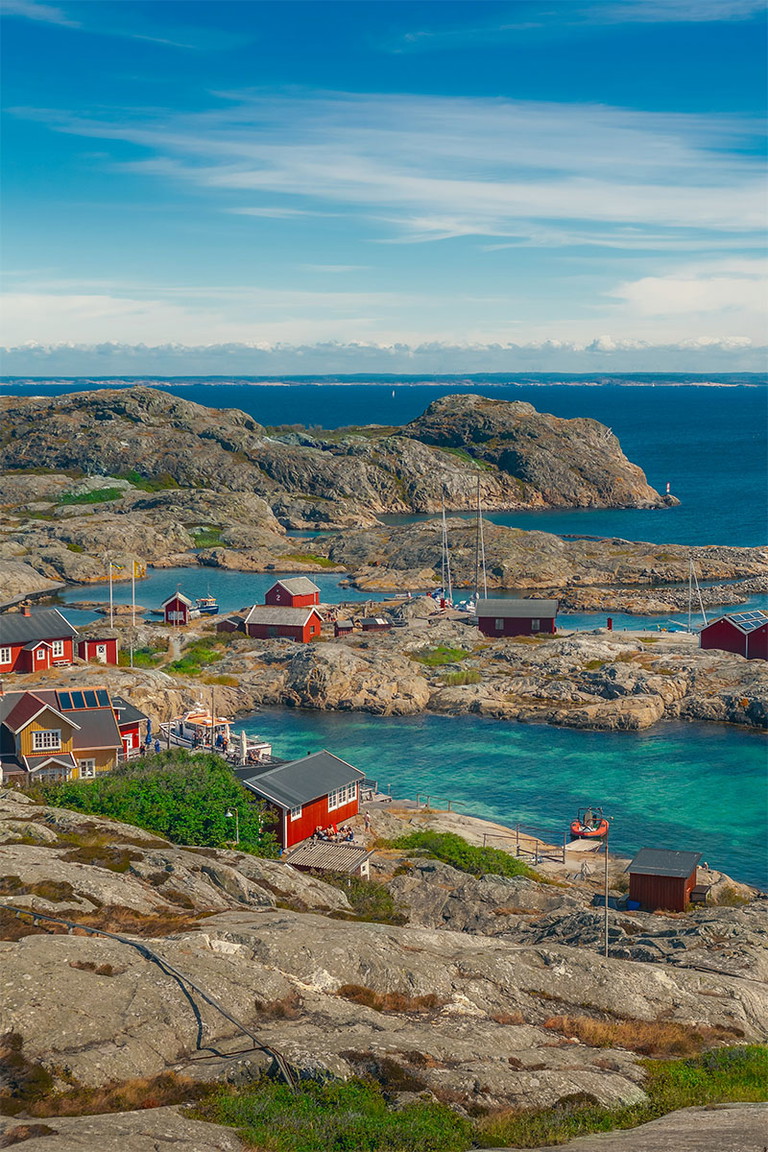
Gothenburg, the country's second largest city, is already on a par with Glasgow. Is this still suitable for a summer vacation? Of course! The best thing to do is to follow the locals and head to the Gothenburg archipelago, an island paradise off the coast of the city. Some are car-free, such as the small island of Donsö with its red wooden houses and romantic bathing bays.
Everyone will find their own little paradise here
raves algae diver Karolina Martinson. She spends her summer days barefoot on the coast or in the water with diving equipment to collect algae. They are particularly good up here - thanks to the pure water - and indispensable for the ecosystem. Martinson shares her enthusiasm for this “healthy underwater wonder” with guests from all over the world on her algae safaris. In summer, she uses the “pantry of the coast” for outdoor cooking courses. In addition to excellent seaweed, she says that the archipelago islands have the best seafood in the country, “plus clean air, peace and quiet and authentic people”. A paradise in fact.
Bullerbü romance
While the western coast along the Öresund tends to be more urban, the Baltic coast is defined by wide, quiet beaches and dense pine forests. Inland lies Småland, the homeland and creative inspiration of Astrid Lindgren. The region is dotted with more than 5,000 lakes—many locals have their own, or at least direct access to one, right outside their front door.
Just off the coast, the island of Öland stretches like a long arrow into the sea. Measuring more than 130 kilometers in length, it’s Sweden’s second-largest island. On its northeastern shore, Böda Sand is home to one of the country’s longest beaches—and for many, one of its most beautiful. From here, a ferry takes you to Gotland, Sweden’s largest island. It’s best known for its capital, Visby: thanks to its strategic location in the Baltic Sea, it was a key Hanseatic trading hub in the Middle Ages, where goods from around the world passed through. Traces of that history still linger today—in dishes like the island’s beloved saffron rice pudding.
Anyone who makes it to Gotland should also consider visiting its tiny neighbor, Gotska Sandön. Just eight by five kilometers in size, the island offers a surprisingly rich natural experience. Gray seals gather along the northern shores, and the coastline is almost entirely ringed by powdery white sand. The island is strictly protected and crisscrossed by an intricate network of walking trails that extends over some 60 kilometers.
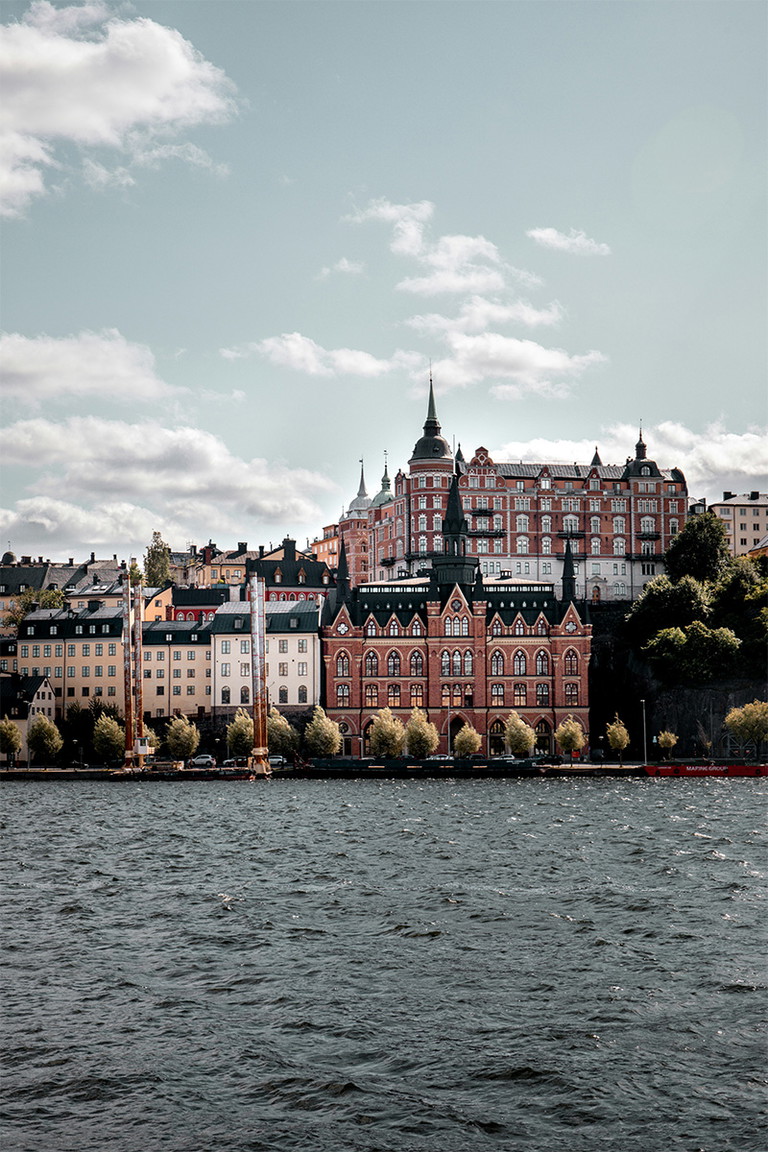
From here, it's just a hop, skip and a jump to Stockholm, the Venice of the North - with one crucial difference to the Italian lagoon city: the water is so clear that you can jump into it in the middle of the city. All around: the archipelago, a mosaic of over 30,000 islands, beaches, bays and small harbor towns.
Further north? This is only for the very weatherproof. We stay here - with fine sand between our toes, the scent of pine in the air and a glass of cool Swedish wine in our hands. Dolce Vita in Scandinavia!