Indulgence at the Summit: Top Menus with a View
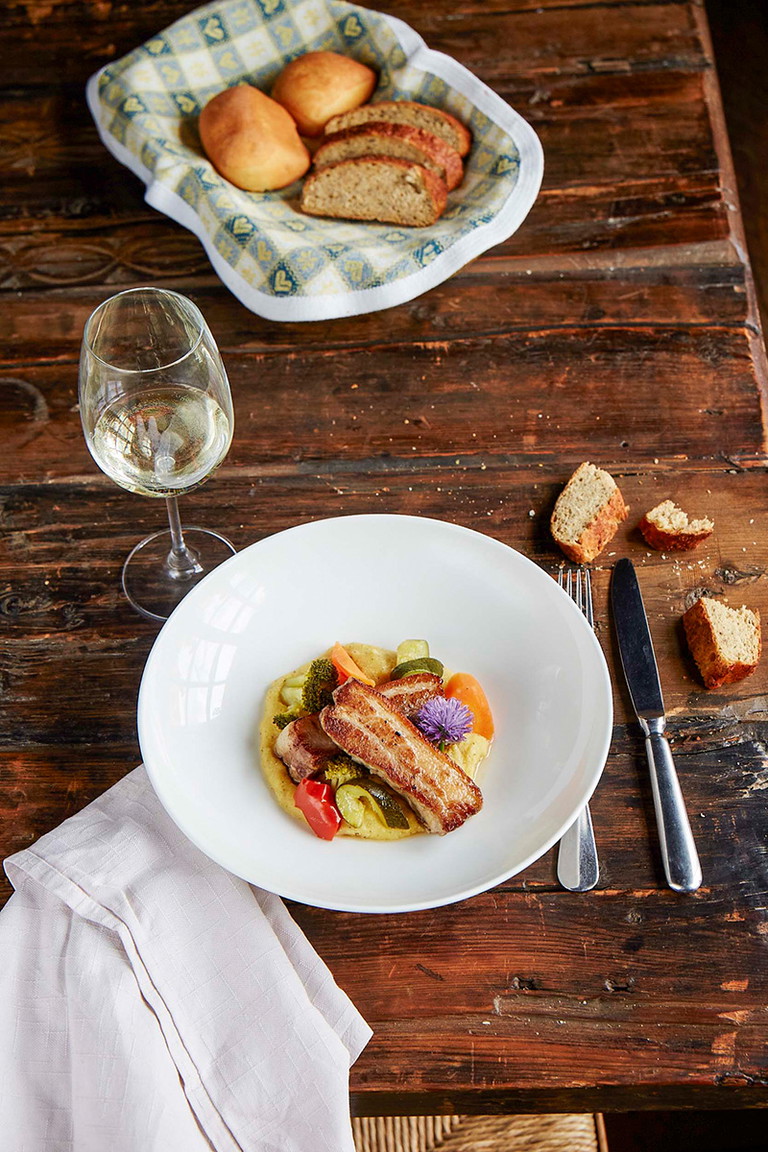
In the past, hearty, rustic fare dominated the menus of mountain huts—but today, restaurants in the mountains have transformed into gourmet paradises, showcasing high-quality local ingredients and embracing innovative new approaches.
From a purely scientific perspective, our sense of taste is diminished at the summit compared to in the valley—the higher the altitude, the more taste perception changes. Lower air pressure and humidity reduce the intensity of salty and sweet flavors. That’s the theory, but in practice, such details are quickly forgotten high up in the mountains. A gourmet meal with a panoramic view is an unforgettable experience. The sun is shining, the alpine scenery is breathtaking, and after a day in the snow, your appetite matches the setting. Mountain sommeliers, of course, know exactly which wines pair perfectly with the high-altitude environment—some even age their wines in barrels at the summit.
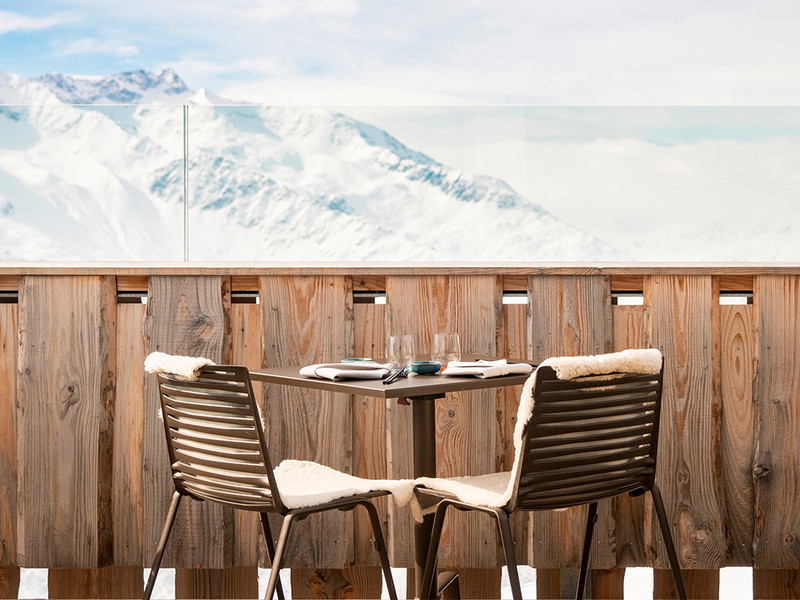
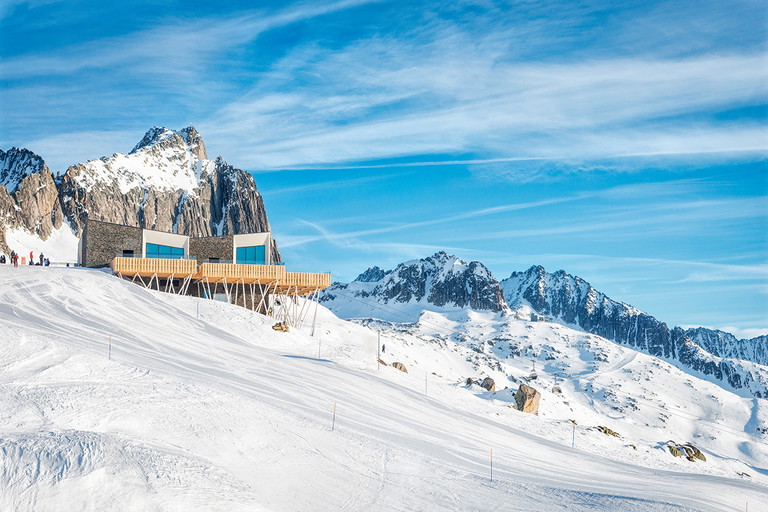
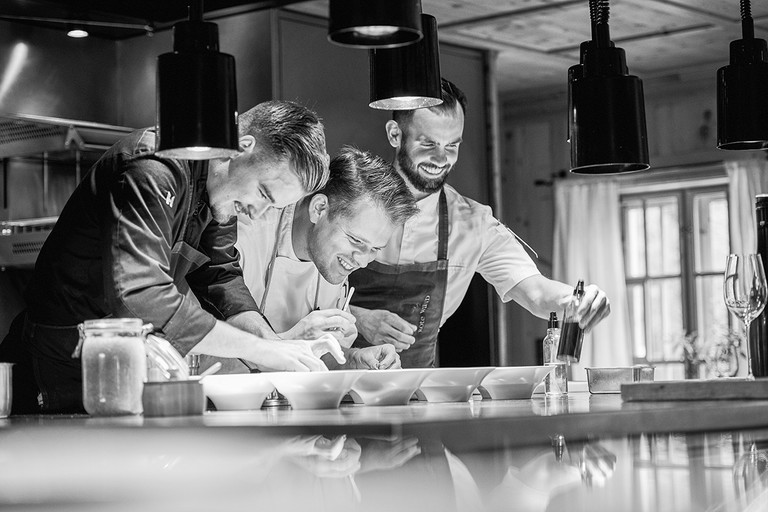
Where hearty fare once reigned supreme, dining in the mountains has become far more refined. Shiso, ponzu, miso hollandaise, and locally sourced char—top chefs Dominik Sato and Fabio Toffolon have turned the summit outpost of the Chedi Andermatt, The Japanese at Gütsch, into an experience worthy of a metropolitan culinary scene. Set at an elevation of 2,340 meters, the restaurant is surrounded by the breathtaking Swiss Alps. While enjoying sushi, tempura, and sake, diners on the sun-drenched terrace can take in stunning views of the Gotthard Pass, the Oberalp Pass, and the Ursern Valley. With an open kitchen and a cozy fireplace, the atmosphere is as inviting as the cuisine. Getting there is surprisingly easy: simply take the Gütsch-Express from the Andermatt valley station. Just be sure to secure a table in advance through their online reservation system.
Marcel Hagen
It goes even higher: summit dining awaits at Maison des Drus, which features a total of 18 restaurants, the most stunning of which is located at 3,842 meters, offering breathtaking views of the Mont Blanc massif. The menu emphasizes regional products and homemade bread. Naturally, Swiss cheese is a must, along with hearty ciabatta sandwiches filled with burrata or cured ham—perfect for taking with you on the slopes.
Christian Kerber
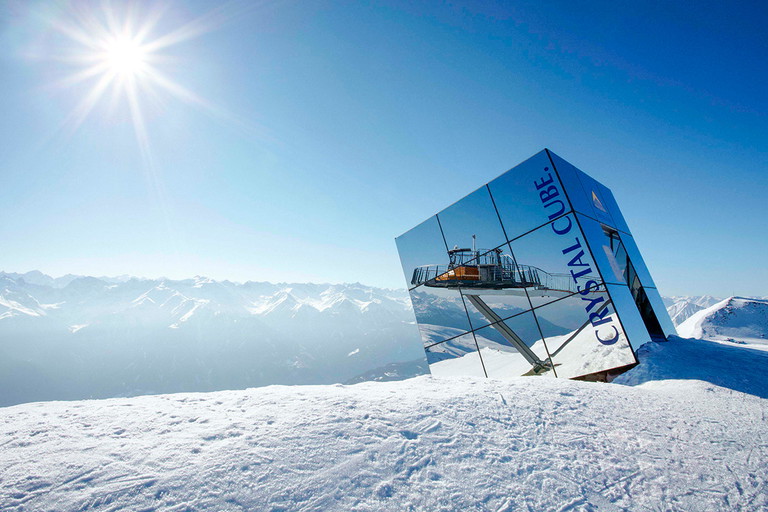
Whether you're in the mood for a sparkling wine breakfast with smoked fish or a luxurious high tea, there’s always something happening at Crystal Cube in Tyrol. This striking landmark in Serfaus-Fiss-Ladis is popular not only among skiers. For a more rustic experience, don’t miss the Rifugio Fuciade in the heart of the Dolomites. At 2,000 meters, you’ll step back in time with its old tiled stoves, wooden interiors, and a collection of traditional farming tools. Chef Martino celebrates Ladin traditions with hearty dumplings and stuffed pasta; venison loin is served with apple purée, braised bitter greens, and hay. Polenta, in all its forms, runs like a golden thread through the menu, and a curated selection of around 600 wines ensures that their flavors shine, even at high altitudes. Luckily, a handful of rooms and a chalet are available, so after savoring gourmet delights at the summit, you can fall asleep full and happy.
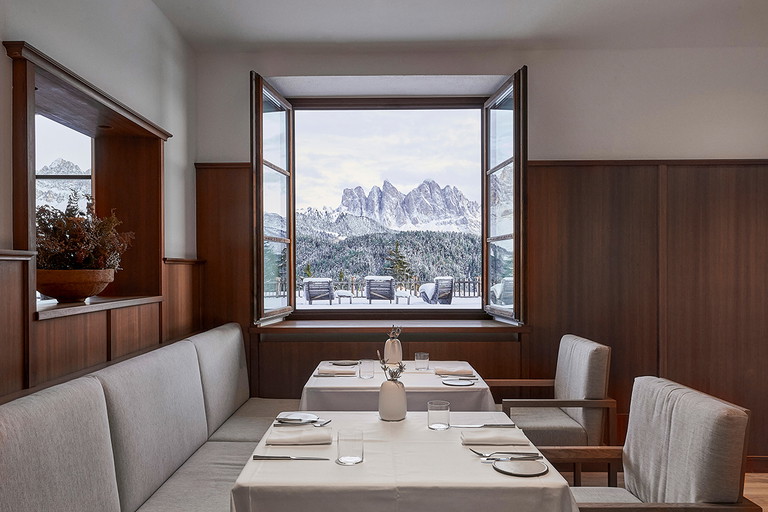
Summit restaurants are a wonderful thing—after all, great dining is part of the skiing experience. But the constant hustle and bustle can make it hard to fully focus on your meal. That’s why the kitchen at Forestis in Brixen is reserved exclusively for overnight guests. Once a sanatorium, this five-star hideaway now celebrates the art of simplicity. Nestled in nature, Forestis offers dining with breathtaking views of the Dolomites. The expansive glass wall in the minimalist dining room feels like a panoramic cinema. Roland Lamprecht’s "forest cuisine" is radically local, featuring ingredients sourced from the surrounding woods: mushrooms, berries, herbs, nuts—everything he loved foraging with his mother as a child. Aesthetic simplicity and stylish minimalism define Forestis, creating the perfect environment to clear your mind and savor the moment.
Cozy originality
Many, however, don’t want to miss out on the rustic charm of a cozy mountain hut. A perfect example of how traditional coziness and innovative cuisine come together is the gourmet hotel Rote Wand in Lech, where winter vacations, wellness, and a four-toque chef’s table blend seamlessly. The design hotel resembles an old inn and is located in the quiet Zug district. The cuisine by exceptional chef Julian Stieger—who honed his skills at Vienna’s renowned Steirereck—is in a league of its own. In his food lab, Stieger conducts exciting experiments, showcasing the full flavor potential of vegetables. With so much to discover in the creative kitchens of the Alps, you might almost forget about skiing!
Read more: The most beautiful hotels to indulge in on the mountain