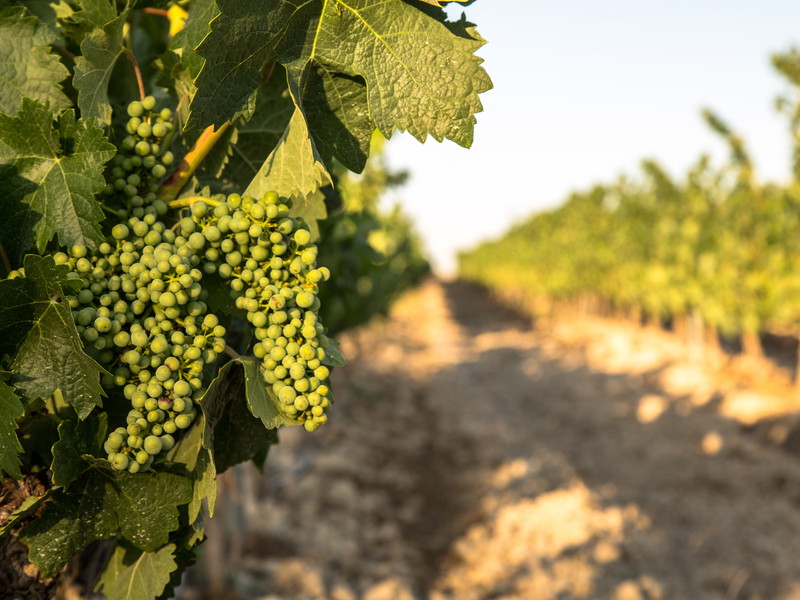
One of the oldest grape varieties in Portugal is the Tinto Ciao variety, sometimes also referred to as Tinto Cão. The existence of the variety can be documented at least back to the 17th century. The name means something like "Red Dog", but the reasons for such a name cannot be deciphered to this day. The Tinto Ciao was also used to create new varieties, such as the Rubred variety. It maintains family ties to the Viosinho and Tinta Francisca varieties. The variety ripens for a very long time and, if it goes well, develops small clusters with thick-skinned, small berries with low yields. The thick skin also protects the berries from rot diseases. Tinto Ciao is one of the five important varieties for the production of port wines, although it is not even that widespread in the Douro due to its low yields. Because of the excellent quality of his wines, he is often called upon to produce valuable vintage port wines. In Dão, however, it can produce everything from poor, small wines to really first-class wines with aging potential. This is mainly due to its long ripening period, so the cooler corners of the Dão are not necessarily suitable for this variety. Outside Portugal, there are still very small plantings in California and Australia.