Caviar as a Luxury: Why the Black Pearls Command Such Prices
Caviar is one of the world’s most coveted delicacies. Yet as glamorous as the aura surrounding salted sturgeon roe may be, few truly understand what defines its excellence—or how to recognize outstanding quality. Here’s a brief guide to what really matters.
To see caviar merely as a delicacy is to overlook its allure, its mythology. “We savor it because it transports us to another realm—a world shaped by tradition, refinement, and moments of intensity,” wrote cultural historian Peter G. Rebeiz in his 2010 book Caviar—The History of Desire. His words capture the essence of what these glistening black pearls still represent to connoisseurs around the globe: a sensual indulgence wrapped in centuries of fascination.
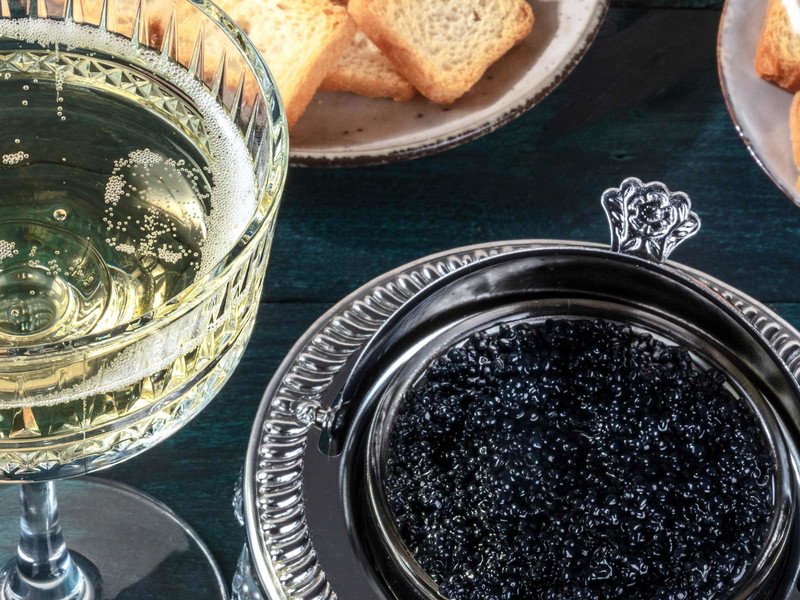
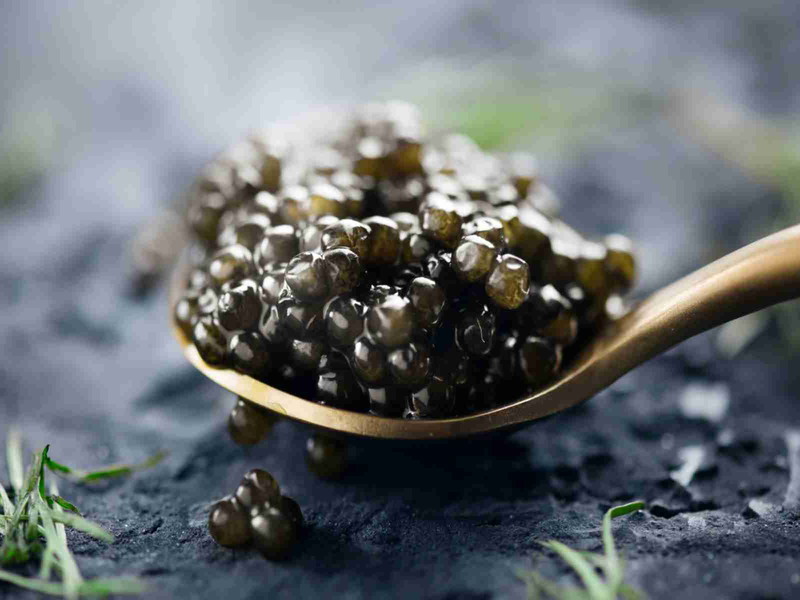
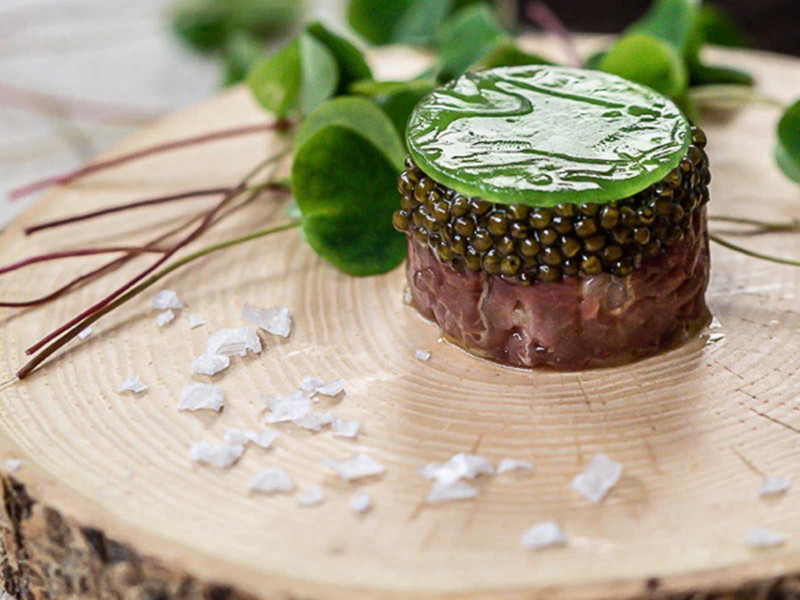
Caviar, as most know, is the roe of the sturgeon—gleaming, delicate, and exquisitely priced. Yet few realize that, strictly speaking, only heavily salted sturgeon eggs truly earn the title “caviar.” The process relies on immature roe, nestled deep within the fish’s abdominal cavity. To harvest it, the sturgeon must be opened lengthwise—a procedure that inevitably ends its life. The result, however, varies in color, flavor, and grain depending on the species. The most famous variety remains black caviar, while the rare white caviar from albino sturgeon reigns as the ultimate luxury—barely twelve kilograms are produced worldwide each year, commanding prices near €3,500 per 100 grams.
A Historic Luxury
Today, more than two dozen official caviar varieties exist, each tied to distinct sturgeon breeds—and nearly as many imitation versions borrow the name to evoke sophistication. These include trout, herring, or even snail caviar, made from the vineyard snail’s eggs with flavors said to recall asparagus and mushrooms. Seaweed-based caviar substitutes have also entered the market, costing as little as three euros per 100 grams.
The story of caviar spans millennia. Unfertilized sturgeon roe was prized long before modern luxury culture emerged. The ancient Persians were the first to fall for its taste, naming it khavyar, or “cake of joy.” By the 19th century, Russian tsars elevated it to a symbol of power and prestige. One of the world’s oldest names in the trade has improbable roots in Vienna: the sparkling wine house Kattus, once a leading global supplier. Originally, its interest lay not in caviar but in the beluga sturgeon’s swim bladder—an essential ingredient for clarifying wine. Recognition of the roe’s culinary value came later, and although Kattus today focuses on elegant sparkling wines that pair beautifully with caviar, another storied Viennese institution has since embraced the delicacy. Julius Meinl now offers around twenty varieties—including Austrian caviar from pioneer Walter Grüll—under its celebrated House of Julius Meinl label.
The New Generation
Among the most captivating newcomers to the caviar world is N25, a name that has swiftly become synonymous with modern luxury. Its founder, German-Chinese entrepreneur Hermes Gehnen, sources his caviar from farms located high on a remote plateau in China—some 2,200 meters above sea level. There, pristine conditions and meticulous craftsmanship yield a product designed to meet the exacting standards of Michelin-starred chefs such as Jan Hartwig, Christian Bau, and Claus-Peter Lumpp. The brand’s “Oscietra Gold Edition” has achieved near-legendary status, reaching prices of up to €20,000 per kilogram.
The price of caviar, however, is shaped by more than prestige alone. It reflects a precise interplay of factors: the sturgeon species, the quality of the waters it inhabits, the artistry of production—and, perhaps most importantly, time. A female sturgeon matures slowly, carrying her first roe only after eight to twenty years.
International trade in wild caviar has been prohibited since 2008, a regulation born from ecological necessity. In the early 20th century, Paris had become the epicenter of a thriving global caviar market, but booming demand led to decades of overfishing. The situation reached crisis levels following the collapse of the Soviet Union, when state oversight vanished and uncontrolled fishing devastated sturgeon populations. Within two decades, the beluga—caviar’s most iconic species—had declined by an estimated 90 percent.
Today, all 25 known sturgeon species are classified as endangered, with nearly two-thirds teetering on the edge of extinction. When the ban on wild-caught caviar took effect, the aquaculture industry was still in its infancy—except in China. There, early investment and innovation transformed the country into the leading force in sustainable caviar farming. Now responsible for roughly 30 percent of global production, China has redefined the future of a centuries-old luxury.
A new approach to caviar
However, in many industrial fish farms, the husbandry conditions could hardly be more contrary to the sturgeon's natural needs. This starts with the cramped tanks in which the animals are crammed together—although sturgeons are usually restless in the wild. Many species are born in freshwater, migrate to the sea as juveniles and return to their birthplace to reproduce. In the wild they burrow for food at the bottom, in captivity they are fed pellets made from soy, fish oil, and fish meal.
Helmut Schlader from Steyrtal in Upper Austria is one of those who takes a different approach. He has been producing "Alpine caviar" there for over ten years—in small quantities, but with great respect for the animals. Around 800 kilos of caviar are produced each year, almost exclusively for the high-end gastronomy sector. He raises the fish in 20 spring water tanks, completely without antibiotics or hormones. Because if you really love caviar, says Schlader, you should also respect sturgeon.