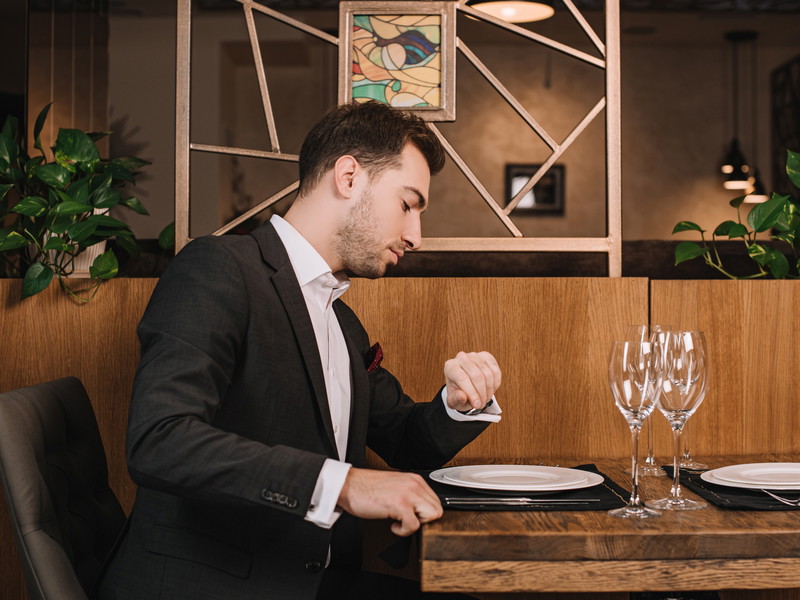
The good news first: from the perspective of many top chefs, this question is completely normal. There’s no “forbidden moment,” no unspoken restaurant code that says you can only ask after a certain amount of time. On the contrary, communication in modern gastronomy is seen as a benefit rather than a disruption.
No Rulebook for Patience
Fabian Günzel from Vienna’s “aend” puts it simply: “Whenever you like!” For him, the real issue isn’t guests asking—it’s when frustration builds without being voiced. Top chef Alain Weissgerber (“Taubenkobel”) shares a similar view, emphasizing that asking questions shows interest—and is far better than silently waiting in dissatisfaction. This mindset is common across many kitchens: guests who ask are engaged and present, communicating their needs. And that’s something positive in a restaurant setting.
Still, many chefs offer a general guideline. Elif Oskan from “Gül,” for example, says that politely asking after around 20 to 30 minutes is perfectly acceptable—especially if you’re unsure whether everything is running as it should. What matters most is the attitude. Raising your voice won’t help anyone in that situation. “If you’re in a hurry, you should mention it to the service team at the beginning of the evening,” advises Thomas Dorfer (“Landhaus Bacher”). That way, the restaurant can plan ahead before delays even arise.
A Kitchen Under Pressure
Waiting times in restaurants can vary greatly, and it’s rarely just a matter of perception. Much depends on the workflow in the kitchen: how busy the restaurant is, how complex the dishes are, and how the stations are organized—all of this affects when a plate reaches your table. On top of that, many dishes are prepared à la minute and simply can’t be rushed. Your order also plays a role: “If you go straight for a main course without a starter, you often have to expect longer waiting times, as the kitchen’s timing works differently,” explains Clara Aue from “Heu & Gabel” in Vienna.
It’s All About the Tone
In the end, asking about waiting time is less about timing and more about how you do it. Tim Raue puts it clearly: “It’s not the question that’s the problem, but the way it’s asked. If you raise your voice or apply pressure, you only make the situation worse. If you stay calm and open a dialogue, you usually create more understanding on both sides.”
The bottom line: there’s no fixed moment when you’re “allowed” to ask. If you feel the need, you can do so at any time—politely. As a rough guideline, 20 to 30 minutes is often mentioned. But ultimately, it’s the tone that matters. On one point, the chefs all agree: staying silent rarely helps. A courteous question, on the other hand, often turns uncertainty back into a relaxed dining experience.