Nantes: France's most beautiful cultural route
The Atlantic metropolis of Nantes not only attracts visitors with the best cycle path network in France, but also as a magnet for art lovers and gourmets. All around, a landscape of rolling hills, vineyards and fertile floodplains unfolds. Here, a cycling vacation becomes a journey for all the senses.
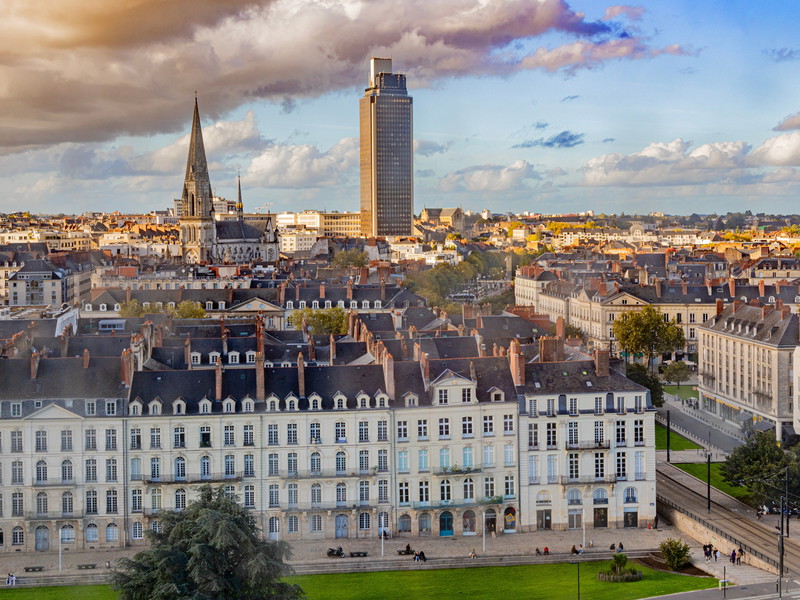
"The largest bicycle parking garage in France!" A poster clearly announces the imminent opening of the complex with more than 1,200 spaces. Nantes, once the proud capital of Brittany, is located not far from the mouth of the Loire in north-western France. The port city has transformed itself in recent years; from an industrial hub to a green pioneer. Today, it is considered one of the most bicycle-friendly cities in the country. Numerous European long-distance cycle routes intersect here, making Nantes a natural meeting point for cyclists.
There is "La Vélodyssée", the cycling odyssey that leads 1,300 kilometers from the northern Breton port city of Roscoff to Hendaye in the south of France. "La Loire à Vélo" follows France's longest river from the interior to the west of Nantes, where the Loire merges with the wild Atlantic at Saint-Nazaire. "La Vélidéale" leads from Lac de Vassivière in the green heart of the country through nature parks and protected marshland to the coast. And the "Traversée Bretonne" connects Nantes with the medieval abbey of Mont-Saint-Michel, 14 days away in the north.
The latter in particular is an excellent way to get to know the eventful history of Nantes as the former Breton capital - because the cycle path leads right through the heart of Brittany, the wild and romantic region known for its Celtic roots, idiosyncratic culture and landscape shaped by wind and waves.
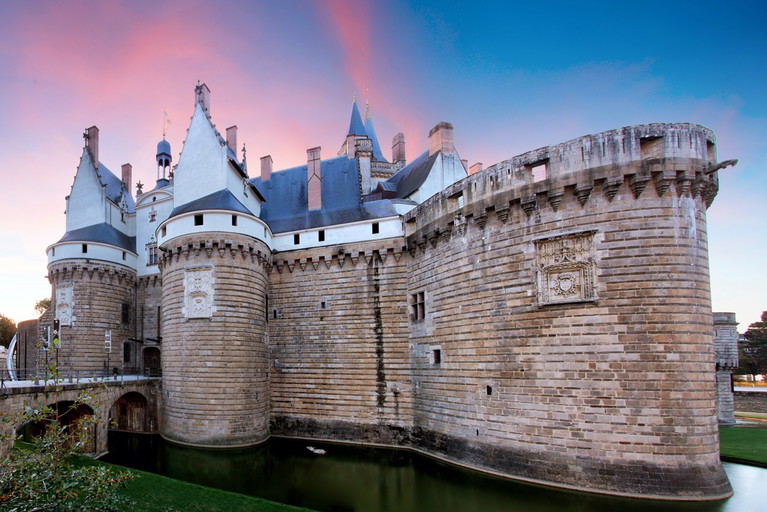
Today, Nantes officially belongs to the neighboring region of Pays de la Loire, but the Breton heritage is omnipresent; visible in old coats of arms with the white ermine, the heraldic symbol of Brittany, which is still emblazoned on facades and archways; in the Château des ducs de Bretagne, the former ducal palace that now houses a historical museum; in the Celtic-influenced culture; in traditional festivals such as the Fête de la Bretagne; in music and traditional costume, and not least in the cuisine, with galettes, cider or the buttery-sweet Kouign-amann.
Enjoying art on the Loire
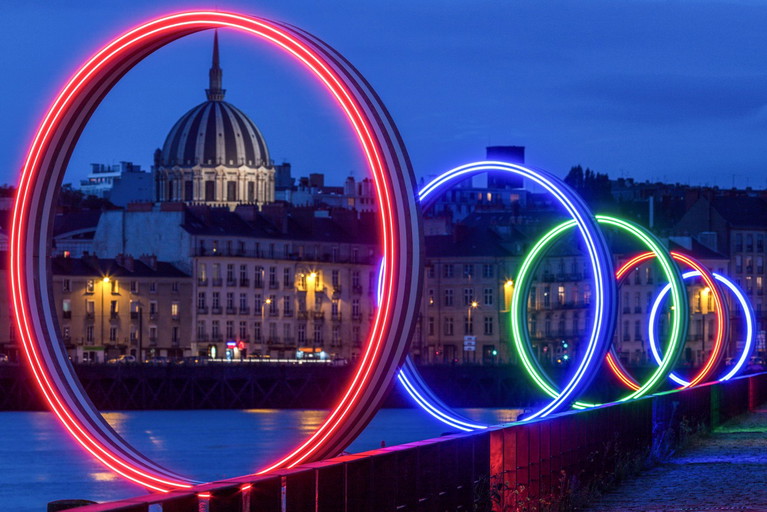
The people of Nantais are particularly proud of their Estuaire art trail, which follows the Loire from the city center to the Atlantic Ocean; past 33 works of art that artists from all over the world have placed in the landscape. The Austrian Erwin Wurm, for example, designed a banana-shaped sailing boat with a blue and white hull. Its bow juts out over the edge of the jetty - as if the boat would melt away in the summer sun and drip over the jetty at any moment. "The basin behind it is a ship graveyard," explains a visitor from the area. "It's probably trying to cheat death."
A little further on, a cut-off power station tower rises into the sky. And on top ... is that a house? Yes - with windows, curtains, armchair and floor lamp. A work by Japanese artist Tatzu Nishi, who is known for confronting monuments and technical buildings with bourgeois domesticity. It turns our usual perception on its head by shifting the private into the public sphere - and vice versa. A chimney suddenly becomes a living room with a view. The parcours transforms Nantes into an open exhibition space, free of charge and accessible to all. Even sweaty cyclists are welcome.
Where sculptures and installations are presented today, lively shipping traffic once glided past. Until the 19th century, Nantes was one of the most important overseas ports in France. Magnificent buildings such as the three-storey Pommeraye shopping arcade, which opened in 1843, tell of the city's wealth at the time.
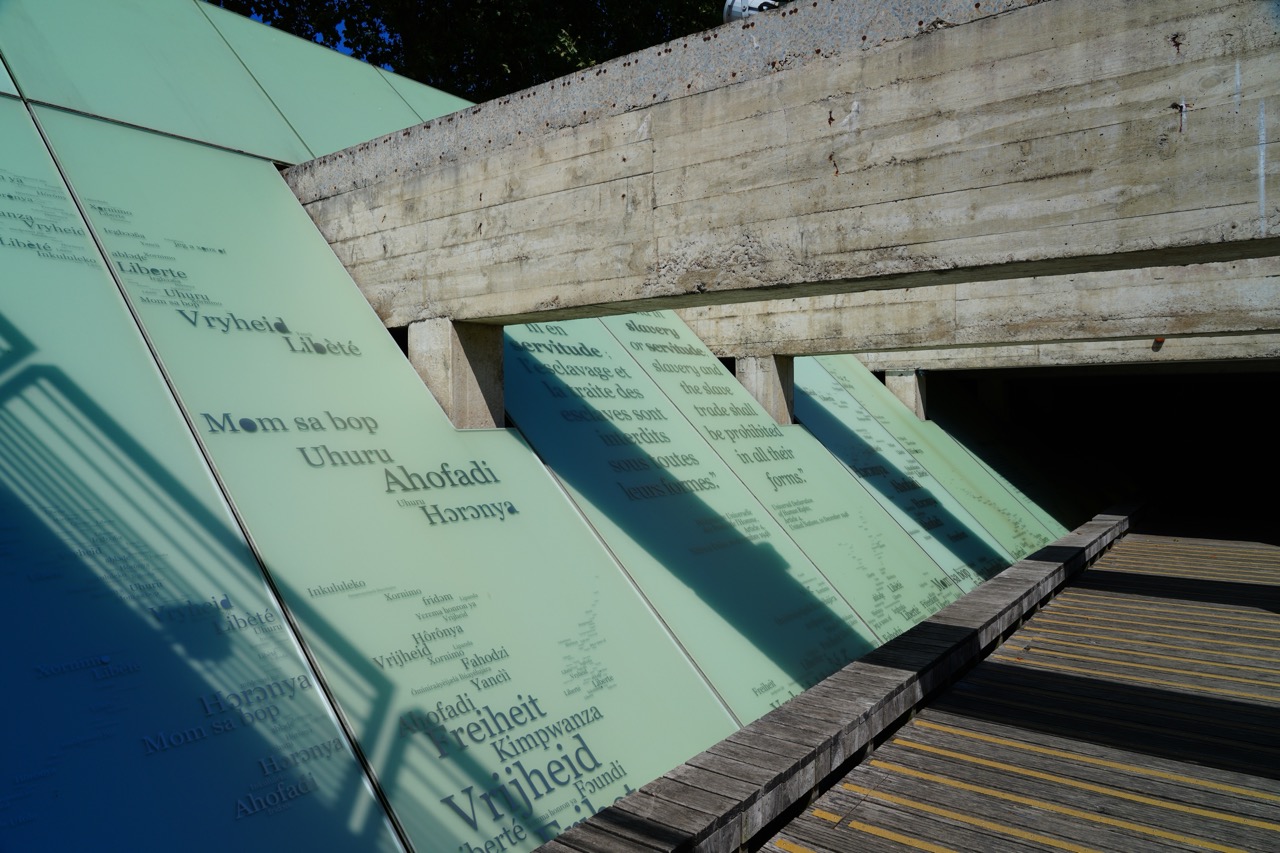
However, this part of Nantes' history has a dark chapter: in the 18th century, the metropolis on the Loire became the central hub of the French slave trade. Over 40 percent of human trafficking in France was carried out here; around 450,000 men, women and children were abducted from Africa, shipped via Nantes and "sold to the Americas". At the place where the slave ships once docked before setting sail for Africa, a haunting glass memorial now cuts into the waterfront; 1,710 embedded plates commemorate the names of the ships involved in the transatlantic human trafficking.
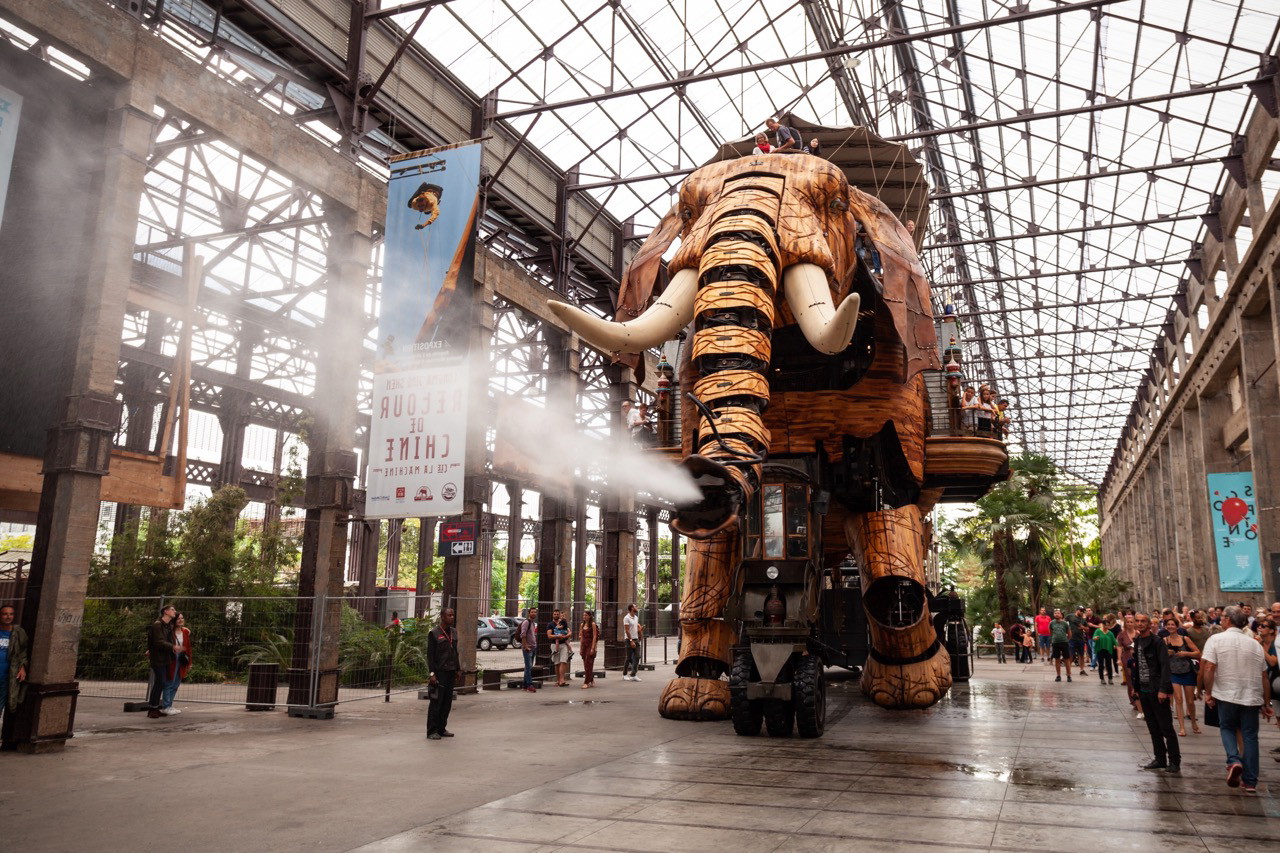
When port activity increasingly shifted to the coast as ships became larger from the 1950s onwards, Nantes was threatened with an economic crisis. But the city dared to do the unusual; it bet everything on culture. The former shipyard and port area on the Île de Nantes - an artificial island created over the centuries by the merging of smaller islands - has become an art and cultural oasis with open-air events, galleries and bars. Parks were created in industrial wastelands, the city center was closed to cars and the network of cycle paths was expanded.
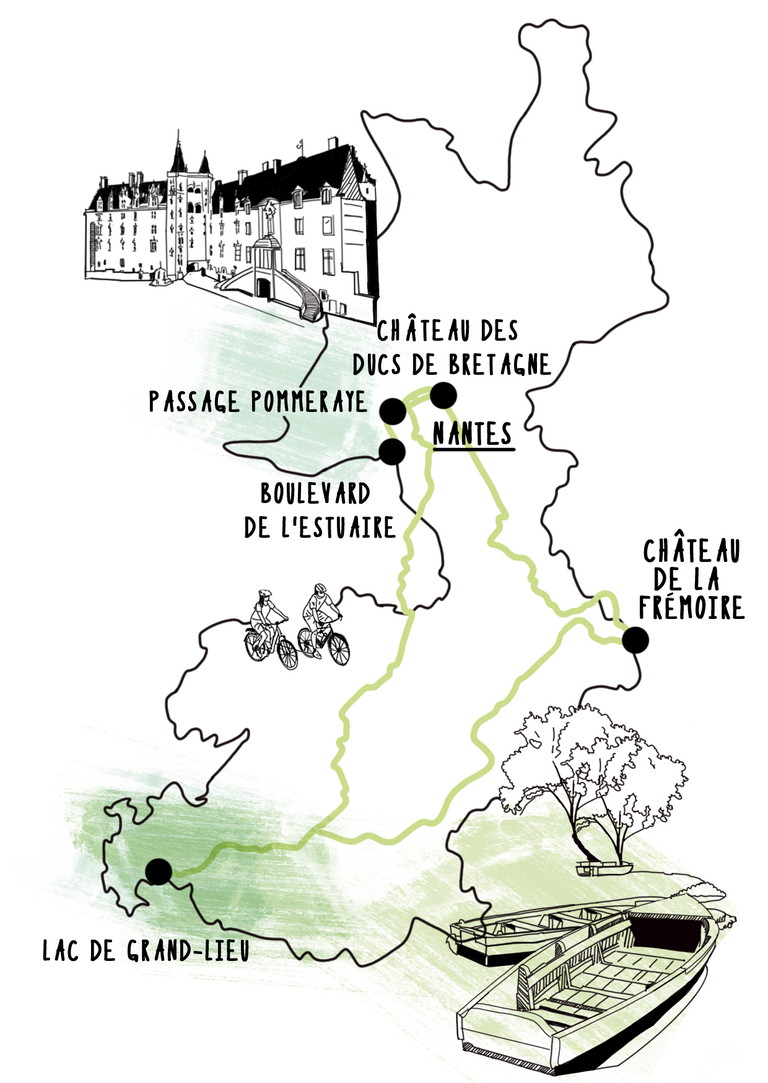
As part of the Voyage à Nantes art festival, which takes place every year in July and August, the approximately 24-kilometer-long "Ligne Verte" was created. If you follow the green ground markings you will see fountains that play with traditional gender roles, floating houses and curved table tennis tables. The art trail on the banks of the Loire is also a result of the Nantais art spectacle. The local cycle network spans around 150 kilometers - some of which can be reached by train and can therefore be cycled in stages.
The Lac de Grand-Lieu, one of the largest natural lakes in France, and the vineyards to the south of Nantes, the home of Muscadet; a dry, fresh, slightly salty white wine, usually with a low alcohol content, are also within easy cycling distance.
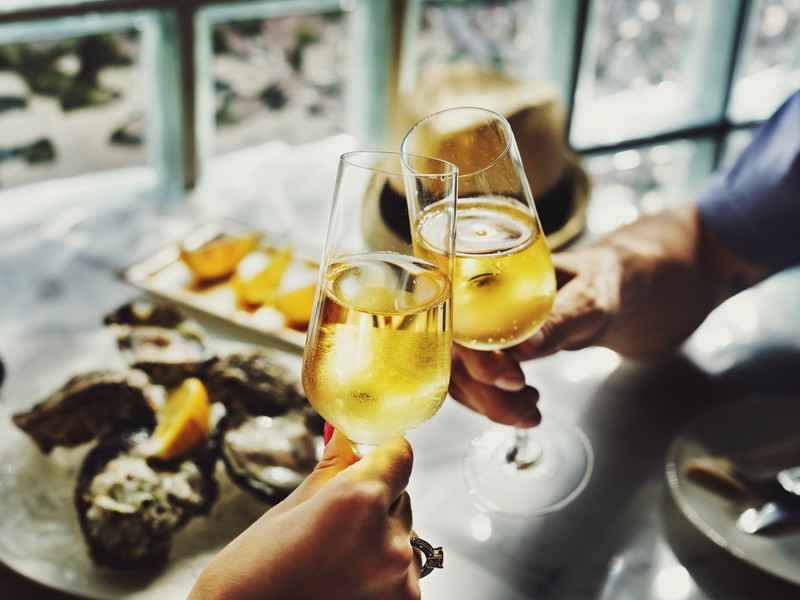
In the recently renovated "Château de La Frémoire", an elegant 17th century manor house, you can taste the best wines of the region. In fine weather in the garden, with a view of the surrounding vineyards and accompanied by local delicacies: oysters from the nearby Atlantic and fish from the Loire; creamy curé nantais washed down with Muscadet; gâteau nantais brimming with butter and rum.
In 2025, Nantes was recognized as a newcomer among culinary destinations by the international restaurant guide "La Liste". There are more tempting restaurants, bars, fromageries and delicatessens than you could visit in one vacation. After all, if you cycle diligently, you'll be really hungry and might be able to manage one or two more pieces of cheese and sweet treats.