Opera star Elīna Garanča: "I am the best singing farmgirl"
Latvian mezzo-soprano Elīna Garanča knows what it means to grow up among artists. She also knows the farm life – cleaning stables, milking cows, making black pudding, and baking bread. And she wouldn’t trade any of it. “At heart,” she says, “I’m still an intellectual farm girl.”
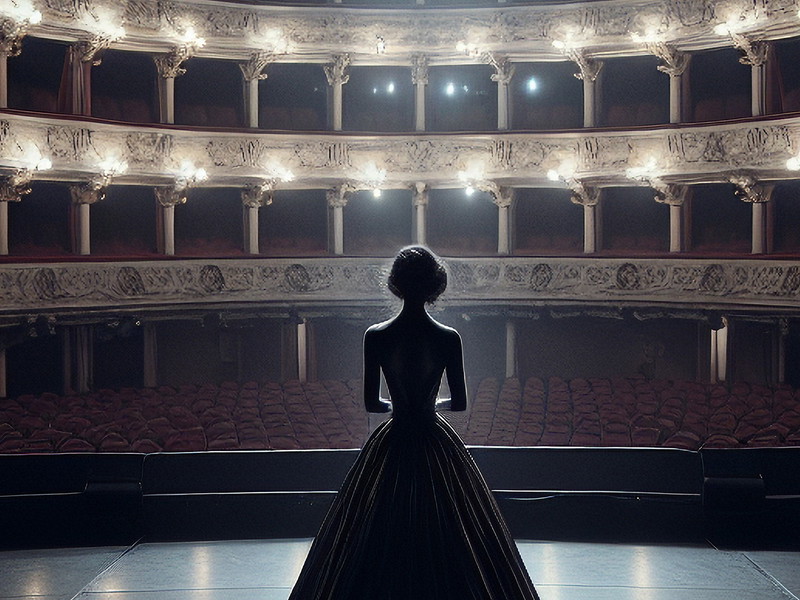
She is often described as a diva, an opera star, a vocal marvel – and the cool blonde from the north. Yet every time she hears these labels, celebrated Latvian singer Elīna Garanča is taken aback, for she sees herself quite differently. “The Elīna Garanča on stage has nothing to do with the private Elīna,” she explains. “When the performance ends, the curtain falls, the applause fades, I go to my dressing room, remove my costume, return to the hotel and very often, I am alone. Success does not shield an artist from loneliness. The magic disappears, and that is when real life begins for me: the everyday life of a mother and wife, a daughter and a woman.” These reflections are drawn from her autobiography Between Worlds.
Farm to stage
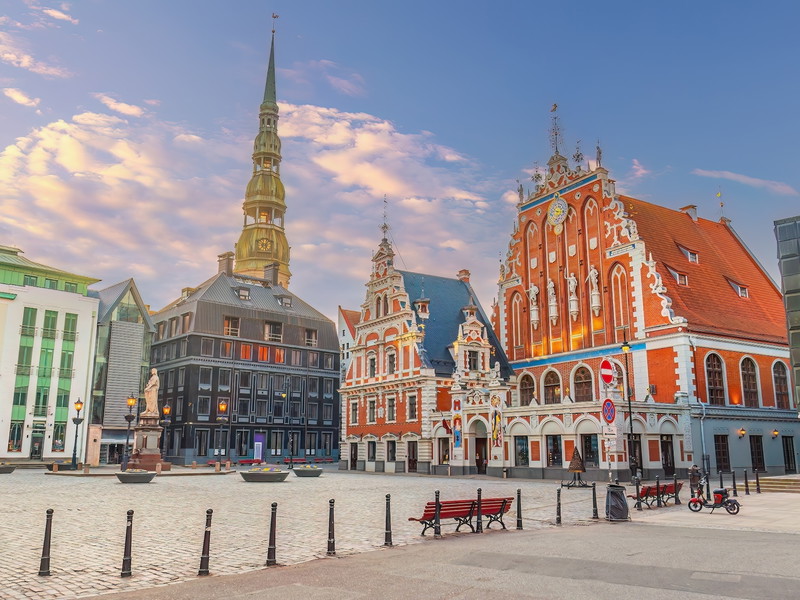
Garanča has long been aware that she leads a kind of double life – a duality that has shaped her since childhood. In Riga, she grew up surrounded by writers, singers, painters, and other artists who frequently gathered at her parents', Anita and Jānis. Music was played, meals were shared, conversations flowed, and laughter often carried on late into the night.
Her mother, Anita, was a vocal coach at the Latvian National Theater. When Garanča wasn’t at school, she accompanied her there, doing homework in the dressing rooms among costumes and makeup before listening in on rehearsals. “I often fell asleep, exhausted, on an armchair in the canteen until my parents carried me home after rehearsals or premieres and put me to bed,” she recalls.
It Provided us with everything we needed to live: vegetables, bread, milk, meat, eggs.
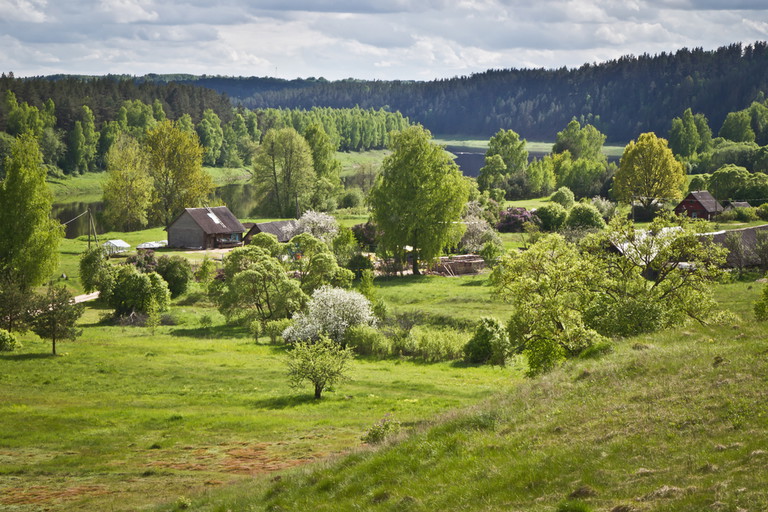
Yet weekends and holidays transported her into a completely different world: her grandparents’ farm in the small village of Meža Rasas, 200 kilometers from the capital. There, cows, pigs, sheep, and chickens filled the yard. “It provided us with everything we needed to live: vegetables, bread, milk, meat, eggs; and it gave us a sense of security at a time when money was scarce,” Garanča remembers.
Working vacation
Before black pudding, kidney soup, or sweet-and-sour bread with caraway seeds ever made it to the kitchen table, there was work to be done – hard work, from morning until night. And that included Garanča and her brother. “Life on the farm wasn’t just about playing or petting calves. We were treated by our grandparents as full-fledged workers. During the holidays, we hardly had time to be silly like other children,” she recalls. Still, the “best singing farmgirl,” as she jokingly calls herself, cherished the summers spent with Grandma Nellija and Grandpa Albert more than anything. She remembers with particular fondness the luminous summer nights and the Feast of St. John, celebrated in Latvia each year on June 23.
“There are bonfires everywhere; people sing and dance. Latvians leap over the flames because, according to old custom, it keeps the summer mosquitoes away. Beer flows freely, and Grandma Nellija always served her homemade cheese – she made the best in the entire village.” Even today, the old house of her grandparents remains Garanča’s favorite place. “At heart, I’m still an intellectual farm girl,” she says. Yet her present life has little in common with those days of simple farm work and village festivals.
Latvia to Málaga
The mother of two daughters now spends most of the year on the road, singing on the world’s greatest stages. Yet the constant travel is increasingly exhausting; endless hotel rooms and rented apartments taking their toll. Her homeland will always be Latvia, but for several years now, Spain has also been home.
We will never forget the 780 gram beefsteak tomato.
Along with her husband, conductor Karel Mark Chichon, she bought a house with a large garden in Málaga. A nature lover, she has planted strawberries, tomatoes, and herbs, because it matters deeply to her that her children experience what it means to grow their own food.
One day, they harvested a giant beefsteak tomato weighing 780 grams, an unforgettable moment for all three of them made even more memorable by its flavor. “I cut the tomato into thick slices and ate it with olive oil, salt, and coriander. It was simply sensational.”
Eaten quickly
Gardening, says Garanča, helps her keep both adrenaline rushes and melancholy at bay. Cooking, however, offers her less relaxation. Still, she is an excellent cook – one who learned early on how to create delicious meals with just a handful of simple ingredients like potatoes, onions, tomatoes, and oil. “Cooking has always been easy for me. I can have a full meal on the table within half an hour. Since I spend so much time at receptions, dinners, and cocktail evenings, everything at home has to be ready quickly. What I do find unfair, though, is that you can spend four hours cooking, and within twenty minutes, all the effort is gone.”
Christmas culinary traditions
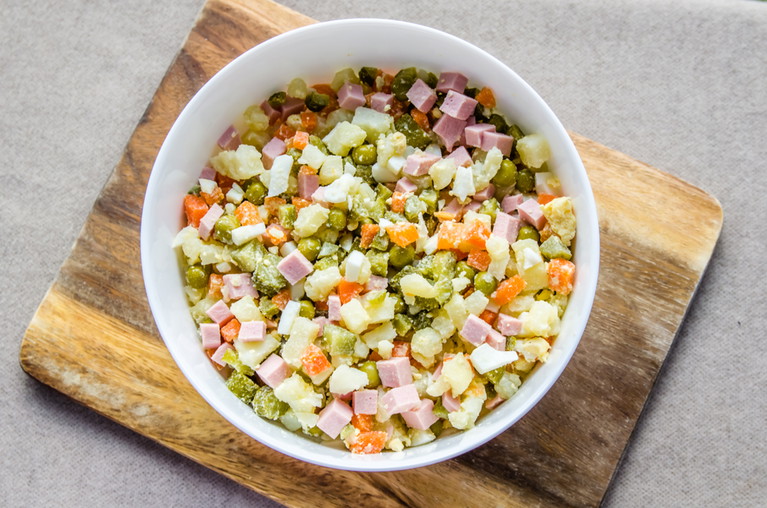
Only at Christmas, which she always celebrates in her native Latvia, does she make an exception. There, tradition calls for at least nine different dishes to be served: True to custom, the singer spends several days preparing specialties such as brown peas with bacon and onions, breaded pork chops, "rosols" (a classic Latvian salad of finely chopped vegetables, egg, meat, and mayonnaise), as well as homemade bread and cookies.

A weakness for Asian cuisine
When the mezzo-soprano is on the road – rushing from one engagement to the next, rehearsing and performing in the evenings – her daily culinary routine looks very different. She never cooks for herself but makes sure she eats healthily. After all, only by staying in peak condition can she perform such demanding roles as Kundry in Parsifal, Amneris in Aida, or Judith in Bluebeard’s Castle to the exacting standard she sets for herself.
The Latvian singer has a particular fondness for Asian and Mexican cuisine. “Coriander, coconut milk, lemongrass, chili, guacamole, vegetables – I could eat that every day,” she says. To this, she often adds water infused with ginger and lemon, a mix she finds soothing for the voice. What she avoids, however, is eating late, as it takes a toll on her well-being. “Going to bed on a full stomach leads to reflux and all the side effects that negatively affect the voice the next day.”
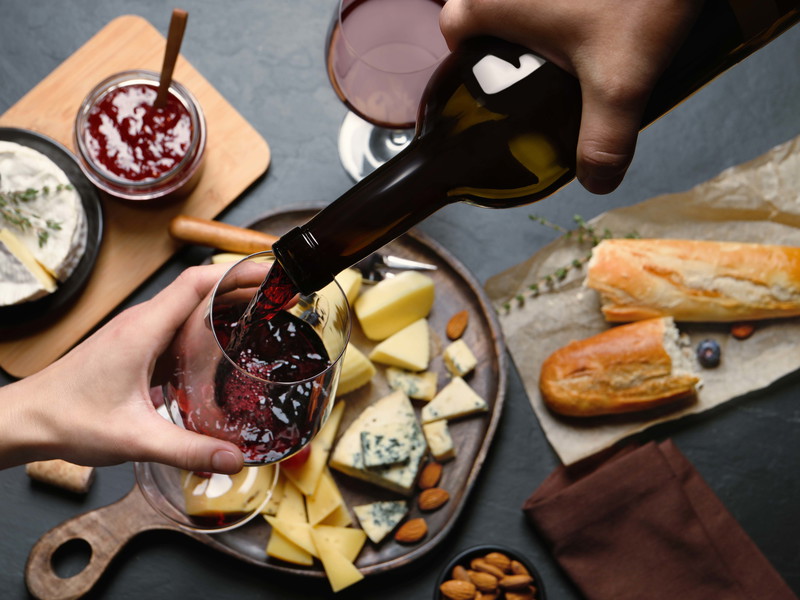
For this reason, the disciplined artist seldom indulges in late-night meals – and if she does, it is only after a performance. “After an evening at the opera or a concert, I prefer a sausage and a beer,” she admits with a smile. “And then it’s straight home, because usually I have to be up early the next morning.”