“You Can't Go Wrong with Champagne.” That familiar saying alone hints at the special place sparkling wine holds for so many people. Especially at festive occasions such as the Vienna Opera Ball 2026, bubbles are simply indispensable. And the numbers back this statement up: 2024 was a record year for many sparkling wine categories—from Cava and Crémant to Prosecco—and 2025 is shaping up to be just as strong. Italy, the world’s largest producer of sparkling wine, reached a historic high in 2024 with 1.015 billion bottles sold, an increase of eight percent year on year.
An impressive figure—particularly when viewed against the broader backdrop. Global wine consumption is currently at its lowest level since 1961. Conservatively estimated, around 1.75 billion bottles of sparkling wine were sold or uncorked worldwide in 2024. Assuming standard 0.75-liter bottles, that would mean every one of the planet’s roughly 8.3 billion inhabitants could have enjoyed at least one glass of bubbly—and some even two. This, despite the fact that nearly half of the world’s population abstains from alcohol altogether for cultural or religious reasons.
Even at home, little seems able to dampen enthusiasm for sparkling wine. Dry January, health trends, zero-alcohol movements—all these supposed threats to wine consumption appear to have left bubbles largely untouched. Of course, a closer look is needed: Much of the growth has been driven by affordable sparkling wine categories. Champagne itself had a challenging year in 2024, losing around ten percent in volume and five percent in value. Yet even so, the prickly luxury from northern France continues to outperform many other high-end wine segments.
Sparkling Wine Boom as a Multiplier
So what's behind this boom—this seemingly insatiable thirst for bubbles? One common explanation holds that sparkling wine evokes celebration—saved for those rare moments when even the health-conscious savor a small indulgence. That may be true, but it doesn’t fully explain the scale of the numbers.
Another compelling factor contributing to the popularity of sparkling wine, especially in the case of Prosecco, is the rise of aperitivo culture, which has turned sparkling wine into more than just wine—it has become a lifestyle ingredient. And that brings us closer to the heart of the matter.
Sparkling wine is not merely something we drink; it is something we experience. Quite literally, as was mentioned at a symposium in Spain hosted by Gramona, one of the country’s most respected sparkling wine producers. One talk in particular left a lasting impression on attendents: French neuroscientist Gabriel Lepousez reveals how sparkling wine—and carbonation in general—affect our brains, providing a crucial clue to the sparkling wine surge.
A Truly Multisensory Drink
Lepousez, who works at the Institut Pasteur in Paris, combines rigorous neuroscience with a deep interest in wine tasting. According to him, the effect of carbon dioxide goes far beyond a simple tingling sensation. Sparkling wine stimulates us on multiple sensory levels.
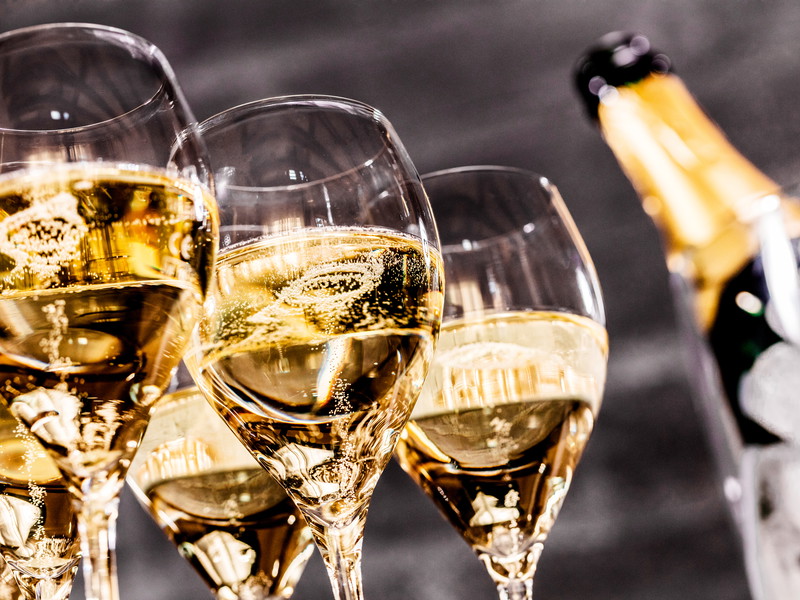
The journey begins with sound: the pop of the cork, the hiss as the bottle is opened, the gentle fizz as the wine is poured. Visually, we watch the streams of bubbles rise and burst at the surface. Like a fine atomizer, these bubbles release micro-aerosols that catapult aromas toward the nose, triggering measurable brain activity even before the first sip.
When we finally drink the wine, carbon dioxide activates the TRPA1 receptor—a specialized ion channel involved in pain perception. In mild form, this produces a subtle burning or stinging sensation, similar to the effect of spicy food, mustard, or wasabi. Far from unpleasant, this sensation is perceived as refreshing and stimulating. Add to that the texture created by the fine mousse between tongue and palate, and sparkling wine delivers yet another sensory impulse.
In short, a glass of sparkling wine stimulates us emotionally, physically, and neurologically—all at once. And that is very likely why it continues to exert such a powerful pull. At the Vienna Opera Ball, guests do more than celebrate tradition when they raise a glass of bubbles—they give their senses a gentle nudge as well. Perhaps that’s what ultimately gets the dancing legs moving.