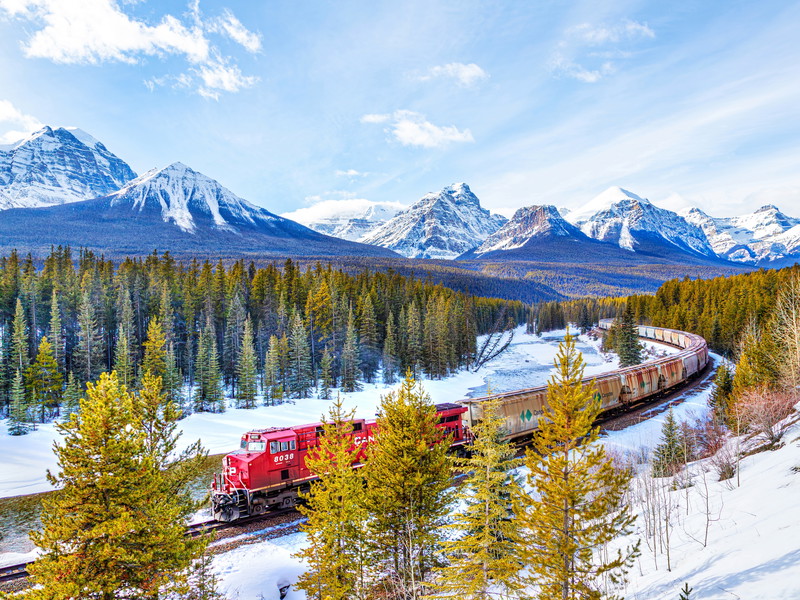
The route shows a quieter, less well-known side of the Canadian Rockies - away from the two most famous national parks, Jasper and Banff. Those who come here not only travel through impressive landscapes, but also through Alberta's past. Old railroad tracks, abandoned settlements and relics of the mining era tell of a time when trains transported coal across Canada and brought small communities to life.
Through forests, valleys and ghost towns
The trail winds its way through Clearwater County and the extensive Bighorn Backcountry, where the landscape is characterized by mixed forests, open valleys and wetlands. If you're lucky, you might spot moose, deer or roe deer, while grizzly bears and black bears are at home in the more remote areas. Ghost towns such as Saunders or Alexo, which once lived from mining and are now slowly being reclaimed by nature, give the route a special atmosphere.
Accessible in winter and summer
The trail is designed as a multimodal route: In summer, hikers, cyclists and horse riders share the route, and off-road vehicles are also permitted. When winter arrives, the landscape is transformed into a snowy paradise for cross-country skiers, snowshoe hikers and dog sledders.