Nice's best food spots
Nice is a paradise for connoisseurs. Between the azure sea and the colorful alleys of the old town,...
Nice is considered the cradle of the art of living. Here, French elegance meets Italian lightness—no wonder this Provençal gem has inspired artists and creatives from across Europe for centuries. Take a closer look at one of the most beautiful cities in the world.
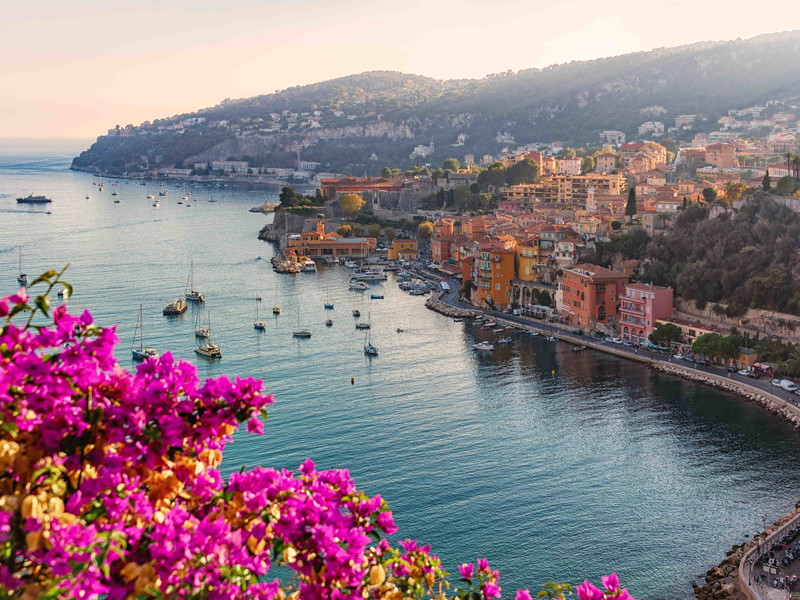
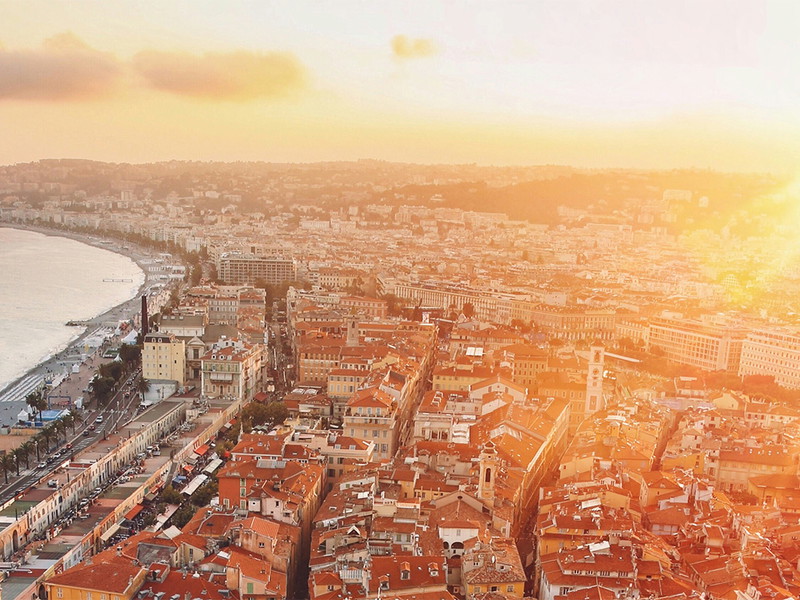
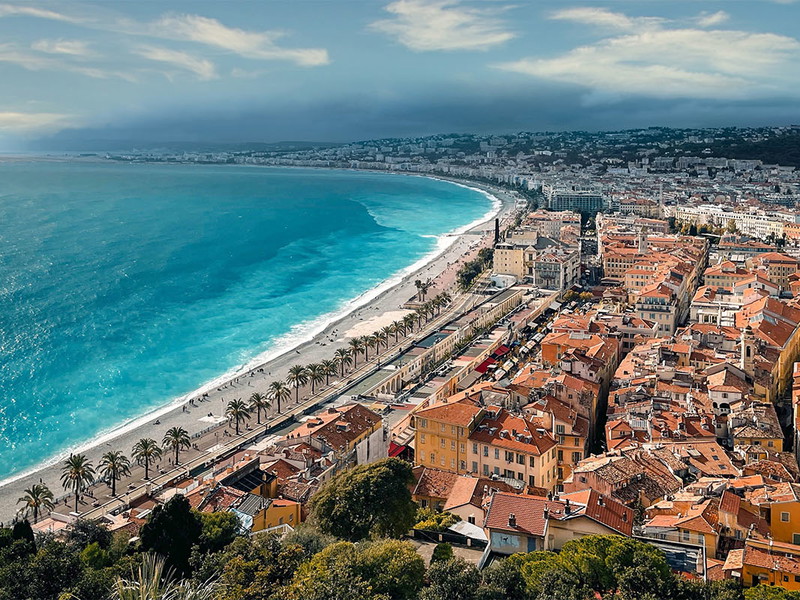
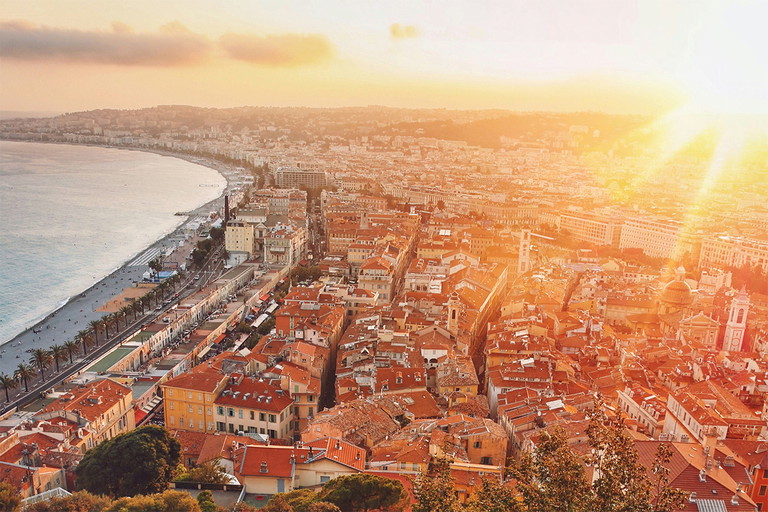
“A first-class resort,” this city was called, “magnificently situated on the Baie des Anges”—and the rhapsodic words from a 1904 Nice travel guide still ring true today. Like a shimmering blue gem, the sea sparkles in the sunlight, cradled by the gentle curve of the Bay of Angels. People from all over the world stroll along the wide seafront promenade with the effortless calm that Nice seems to bestow on everyone who arrives. Birds chirp in the date palms lining the path like a string of pearls, adding a soft soundtrack to the scene.
Nice is one of the oldest settlements in Europe. As far back as 400,000 years ago—long before the Greeks founded Nikaia in 350 BC—humans were living along this sun-drenched bay. “Nissa la bella” (“Oh, my beautiful Nice”) sing the locals in their dialect—at soccer games, in schools, and at festivals. They also sing of the “great golden sun”—and with good reason: Nice enjoys around 300 days of sunshine a year. Nestled at the foot of the Alpes Maritimes, the city is sheltered from cold northern winds, and the climate is mild. Even in winter, it’s warm enough for people to sit outside late into the evening, sipping rosé and pastis.
It’s no surprise that La Bella has long drawn travelers from around the world: aristocrats and the wealthy fled the cold North, artists like Henri Matisse and Marc Chagall came for the light, and writers and composers sought inspiration in the city’s sunlit ease. “Nice, Travail et Joie” is what Matisse titled one of his paintings—on the table, a plate of vibrant fruit; in the background, through a wide-open window, the fronds of a palm tree peek out against a blue sky.
In Nice, Mediterranean zest for life, French elegance, and the charm of nearby Italy—less than 50 kilometers away—blend into a unique way of living. Would it be too bold to claim that savoir-vivre—that effortless celebration of pleasure, style, and ease—originated here? Not at all. In fact, since 2021, Nice has been a UNESCO World Heritage Site—thanks to its vibrant cultural scene, colorful markets, and cuisine infused with the flavors of sunshine and the sea. Yes, in Nice, they truly know how to enjoy life.
The food scene here is exceptional. With the freshest local ingredients at its doorstep, Nice continues to attract a new generation of young, creative chefs. One of them is Pinja Paakkonen, who made her way from the far north of Finland to cook in one of the city’s eight Michelin-starred restaurants. “So many things I used to think of as exotic, I can now buy fresh at the market,” the 29-year-old says with a smile—dates, passion fruit, avocados. And, of course, citrus: in winter, lemons, oranges, and grapefruits light up the market stalls like it’s springtime.
Unparalleled in both taste and variety, says Thomas Vételé of Bistrot des Serruriers, are the white and pink grapefruits, sweet and bitter oranges, yuzu and kaffir lime, Buddha’s hand, and bergamot. And of course, the famous lemons from nearby Menton. You’ll find them freshly squeezed for breakfast, as a creamy filling in brioche, rolled into delicate rosettes with sashimi from the day’s catch, or—Vételé’s favorite—the classic tarte au citron.
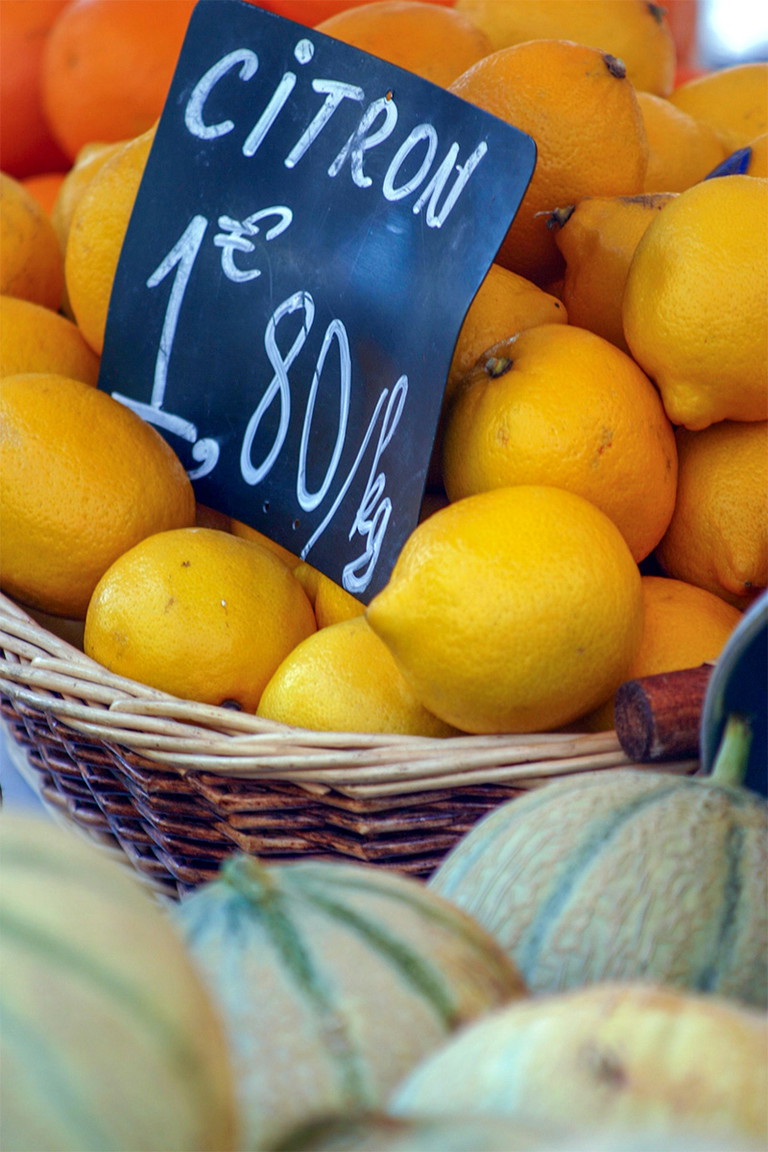
Some of these lemon groves are well worth a visit—just like the vineyards nestled in the surrounding hills. The Bellet wine region is a true insider tip: it’s one of France’s smallest and oldest appellations—and the only one located entirely within city limits. Certain grape varieties, like Braquet, used for both red and rosé wines, are found nowhere else in the world.
Equally picturesque are the countless little wine bars tucked into the narrow alleys of the old town. Many have embraced natural wines in recent years. Among the favorites is La Pêche à la Vigne, run by the Mazzarone couple. He’s constantly on the hunt for the best bottles from across Europe, while she crafts outstanding French-Italian cuisine—a nod to their own story, having moved from Italy to Nice like so many others before them.
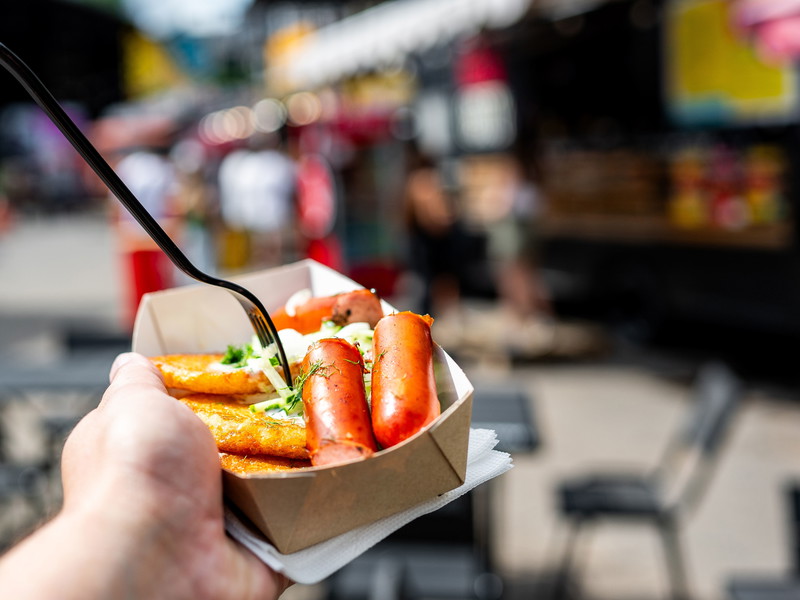
Elsewhere in the city, you’ll find French flavors fused with South African flair, or Italian dishes paired with Colombian influences or Vietnamese bánh mì. But one of Nice’s most iconic dishes remains the humble socca: a pancake made of chickpea flour, water, salt, and olive oil, baked in a wood-fired oven. Its roots likely lie in Liguria—after all, Nice only became part of France in 1860, a thank-you gift for French support in the movement for Italian unification. A good socca, locals say, must be crispy on the outside and tender inside. It’s eaten with just a dash of pepper—and only while hot, with greasy fingers, straight from the paper. The best socca in town? You’ll find it at Socca d’Or.
Time for a post-meal stroll along the waterfront. Once the domain of wealthy English vacationers—hence the name—the Promenade des Anglais is now a lively mix of locals and visitors from around the world. People dance, sing, kiss. A wide bike lane now runs right beneath the palms. If you're up for it, you can ride into the hilly hinterland—the routes climb to elevations of up to 1,200 meters. Or you can simply cruise along the long, flat bay—or skip the bike altogether and settle into one of the cafés that bask in the sun well into the evening. Long live beautiful Nice—viva, viva Nissa la bella!
But let’s be honest: even in Nice, the sun doesn’t shine every day. Matisse fell for that myth himself. He came to the city in 1917, hoping its mild climate would help ease his chronic bronchitis. After days of rain, he was ready to leave—until the sky suddenly turned a brilliant shade of turquoise. He ended up staying until his death in 1954. The museum dedicated to him is the perfect place to visit on a rainy day—just one of the city’s twelve public museums, not to mention its many private collections and galleries.
And then there’s the hinterland—where artists’ villages like Saint-Paul-de-Vence still whisper stories of a bygone era. Its rich cultural legacy continues to draw art lovers from around the world. In 2021, Belgian art collector Hubert Bonnet relocated part of his collection to a light-filled gallery on the edge of town. Visitors can even stay overnight—surrounded by art and mid-century furniture—and after breakfast, follow the little footpath that begins just behind the property. It’s the same path artists once walked. Along the way is the chapel that Chagall decorated in 1968; a bit farther on, the terrace from which he painted his dreamy Lovers Over Saint-Paul.
“I knew them all,” says Stève Tavitian, who sells his drawings at markets around the Cours Saleya and Place du Palais de Justice in Nice. “Those were exciting times!” he adds with a mischievous grin. Now 85, he first moved to the Côte d’Azur in the 1950s and, after some years in Paris, returned in 2007.
I have everything I need here: Warmth, light, peace and quiet; the sea, which is a different color every day.
But there’s a flip side, too: six of the ten apartments in his building are now rented out on Airbnb—too many people, perhaps, chasing their own slice of Nice and its celebrated way of life. Earlier this year, the city responded by announcing a ban on cruise ships carrying more than 900 passengers. The kind of tourist who snaps a quick selfie at the #ILoveNice sign and rushes through the old town before heading back onboard for dinner doesn’t contribute much—and doesn’t quite fit in. Nice is a city meant to be discovered slowly, without hurry, without a checklist. Spontaneously. Timelessly. L’art de vivre—the art of being present, of savoring the moment in all its richness. Here, life isn’t a list of things to do—it’s a celebration of the here and now.