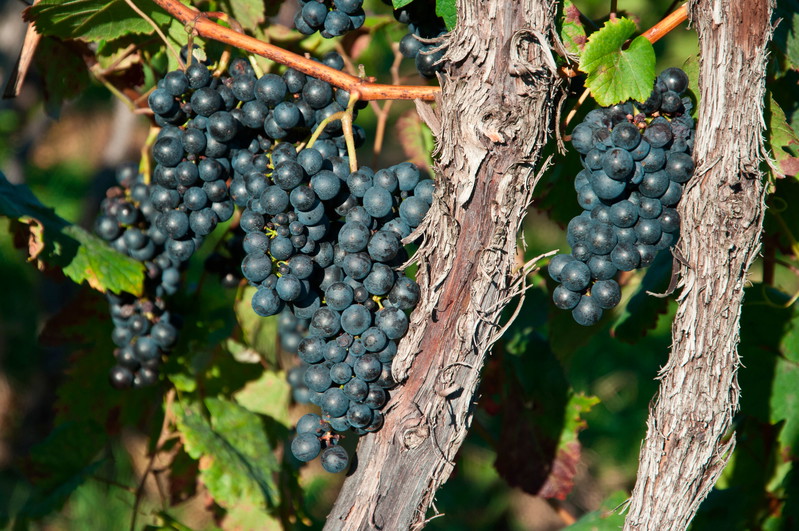
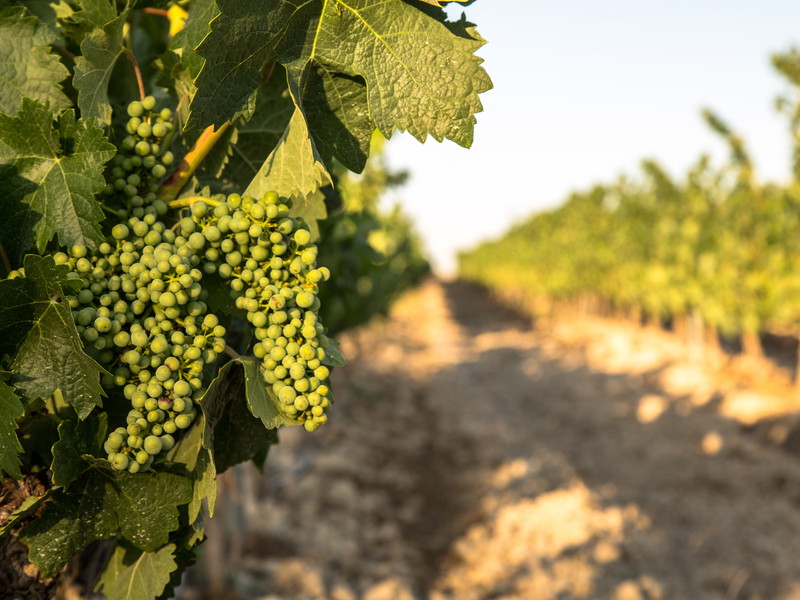
Named after the town of Wildbach south of Graz, this is a long-established, traditional variety especially from western Styria. There are various theories about its exact origin that have not yet been fully confirmed. The Blauer Wildbacher has become famous above all because of the specialty of Western Styria, the Schilcher. This is a pale rosé-colored, light to medium-weight wine in which the piquant and racy acidity of the Blauer Wildbacher is clearly in the foreground and which should be drunk young and fresh. Because of its high acidity, it is also suitable for sparkling wine, so part of the harvest is processed into Schilcher sparkling wine. The Blauer Wildbacher harmonizes well with the climate of western Styria, ripens late and has quite small berries. Outside Styria, there are still a few hectares with Blauer Wildbacher in northern Italy.
This grape variety is also known by the name of:
Blauer Gräutler, Blauer Greutler, Blauer Kracher, Dioljak, Divljak, Frühblaue, Frühblauer Wildbacher, Maslerl, Echter Wildbacher blau, Mauserl, Mali zherni, Gräutler, Großer Mauserl, Gutblaue, Kleinblaue, Kräutler blau, Echter blauer Wildbacher, Großes Mauserl, Später blauer Wildbacher, Schlechte Kauka, Schlehenolauer Wildbacher, Pticnik crni, Ptinik crni, Vildbasske, Vranek, Schilcher, Schilchertraube, Tizhnik, Schillertraube, Wildbacher, Wildbacher nero, Willbacher