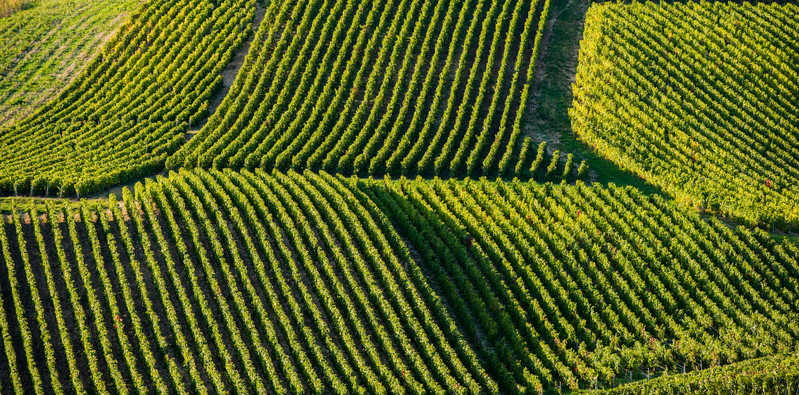
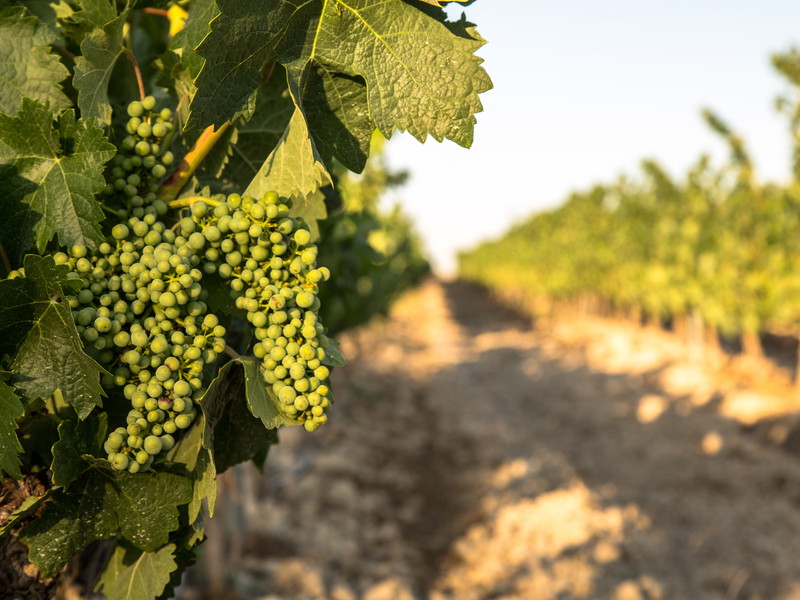
Tannat is one of the most unique grape varieties, very deep in color and with a powerful tannin structure. The name probably comes from an old Gascon dialect and could be derived from the phrase “colored like tan,” an allusion to the deep, dark color. The Tannat most likely comes from the Pyrenees and has close family ties to the Courbu family, i.e. to grape varieties also found in southwest France such as Manseng Noir, Petit Courbu or Courbu Blanc. It is vigorous in growth and therefore needs to be cut regularly. The variety, which matures over a medium-long period of time, is susceptible to mites and is also at risk from small leafhoppers. If the weather is right, it is occasionally prone to sour rot. The Tannat had been forgotten for a long time until Château Montus, under the direction of Alain Brumont, surprised the experts with a Tannat wine of impressive quality at the beginning of the 1990s. Today, a good 3,000 hectares in southwest France are under vines, most of them in Madiran and Saint-Mont. The production regulations always call for a blend with Cabernet Sauvignon or Cabernet Franc in order to soften the powerful tannins of the Tannat. Tannat wines require barrel and bottle aging before they can be drunk; when they are young, they are usually very tannic and therefore hard and inaccessible. Tannat's second home has become Uruguay, where it is one of the most important grape varieties in the country with around 1,800 hectares. Here it is also often blended with Pinot Noir or Merlot. Argentina and Brazil also have well-known areas with a few hundred hectares, while the Tannat plays no role in Europe outside of France.
This grape variety is also known by the name of:
Bordeleza, Harriague, Moustrou, Madiran, Tannat noir