

Restaurant Guide: The best restaurants in Norway 2024
Falstaff presents the 130 best rated restaurants in Norway for the first time.
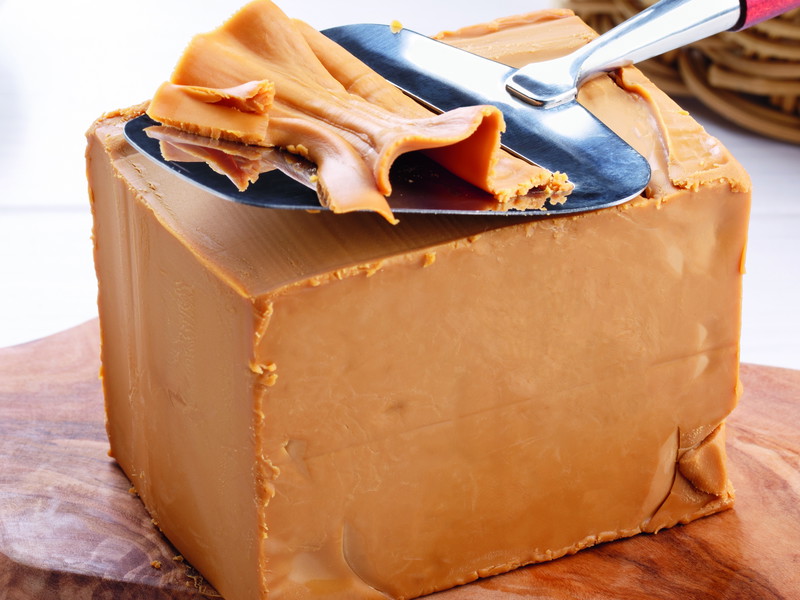
The dramatic landscapes of Norway have been used for dairy production for millennia. Made from caramelized whey, Brunost is a particularly popular regional delicacy.
With its steep mountains, dense forests and dramatic fjords, Norway has captured the imagination for eons – but the country also has a lot of meadows and pastures. Since time immemorial, locals have grazed animals there, especially cattle and goats. As the long winters and short summers up north cause significantly lower crop yields, the Norse have supplemented their diet with dairy products for ages. Summers were the perfect time for dairy production –cows and goats could eat their fill, sheltering in so-called "Seters", mountain farms surrounded by lush pastures in remote areas. This would pay off during the long, hard winters, when animals were kept in stables, fed on hay and giving very little milk.
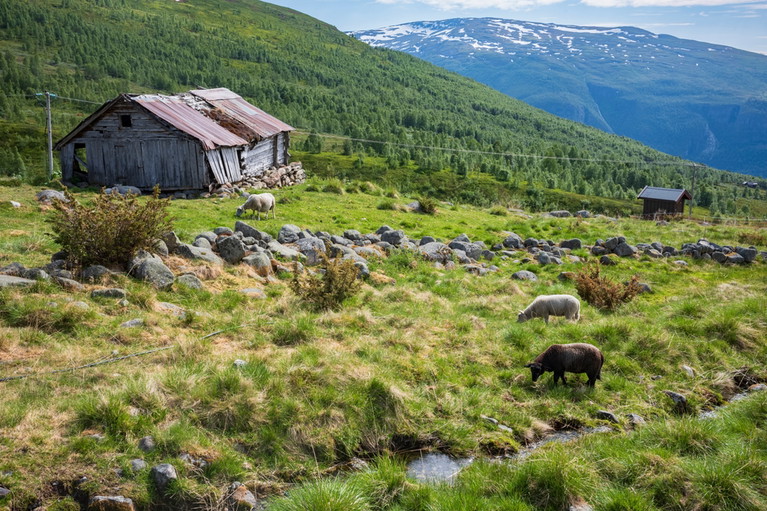
A Seter was usually a simple building that was equal parts bedroom, dairy, pantry, and stable. A farming family often had two such seters, one further up in the valley and one way higher up in the mountains. After the snow melted in the valley, animals were driven to nearby meadows to graze until the snow had melted at higher altitudes; then, any animals strong enough undertook the longer journey to even greener pastures.
The herds were accompanied by a shepherd or shepherdess and a milkmaid, the former caring for the animals while the latter turned the rich summer milk into butter and cheese that would keep families fed in winter. The produce was temporarily stored in the Seter; every few weeks someone from the valley came by to pick up the cheese, cream, and butter.
For a long time, the most valuable dairy product for Norwegians was not cheese, but butter. When salted, it kept for ages and could turn even a simple slice of bread into a delicacy. Farmers turned the skimmed milk left over after butter production into sour milk cheeses such as Gamalost and Pultost.
Milkmaid Anne Hov tasted a neighbor's whey cheese one day and decided to make a something similar.
The byproduct was whey, which Norwegians boiled down for hours so as not to waste it. In fact, they kept boiling until all the liquid had evaporated and only a brown mass of caramelized whey protein and sugar remained. This was called mysost, or whey cheese. Over time, this evolved into most popular dairy product in Norway today, Brunost, or brown cheese.
The exact moment of its creation has actually been recorded: A milkmaid named Anne Hov was working on her parents' farm in the Gudbrandsdalen mountains north of Oslo in the summer of 1863. One day, she tasted a neighbor's whey cheese and decided to make something similar – however, she added some cream before boiling down the whey.
This creamy whey cheese quickly became a hit. Later, Hov came up with the idea of enhancing the recipe with goat's milk. Today, Gudbrandsdalsost is still made according to her recipe and remains the most popular cheese in Norway. Thanks to Hov's invention, Gudbrandsdalen experienced an impressive economic boom in the following years.
Brown cheese is not actually a cheese at all, as it consists of whey protein and cream rather than milk protein. The actual cheese resulting from the production of Brunost is little appreciated today and sold cheap as unripened, white, low-fat produce. Brunost itself, however, has gone from byproduct to bestseller over the last 150 years. It is produced all over Norway, both by traditional cheese dairies on Setern and on a large scale by industrial farms.
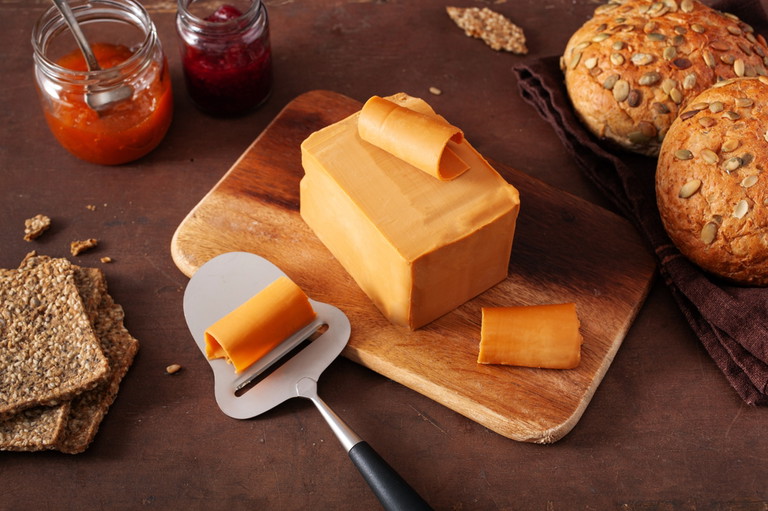
In addition to Anne Hov's formula of cow's whey, cream and goat's milk, there are also variations made only from goat's or cow's milk. Brunost is either sold as a spreadable version – primost – in tubes, or solidified for cutting, which is made possible by pressing the brunost mixture into square molds to cool.
It is often eaten on buttered dark bread, crispbread or Norwegian waffles, cut into thin slices and often in combination with berry jam. Incidentally, the ubiquitous cheese slicer was invented in the 1920s specifically for cutting brunost. Inspired by the hand plane, the carpenter Thor Bjørklund made the first model out of frustration, as he was unable to cut his brunost into thin, regular slices with a knife.
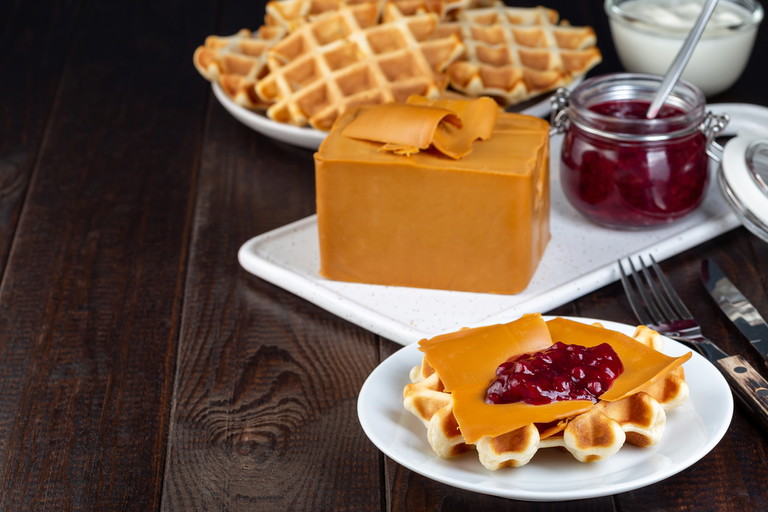
Brunost is also popular in cooking and baking. One particularly popular Norwegian recipe calls for making a "fondue" from brown cheese and then dipping fruit in it. However, the brown gold also enhances savory dishes: as an ingredient in Norwegian reindeer stew, for example, brunost provides a velvety texture and sweet notes. There are two popular accompaniments to Brunost: strong coffee for breakfast and aquavit, the famous Norwegian schnapps, after lunch. Skål!
Sign up now for our newsletter.


