Skip to content
@Martin Kaufmann

Cooking with Carbon Dioxide: Spora joins a global food revolution

Copenhagen
Restaurant News

Can the air we breathe become the food we eat? Renowned chef Rasmus Munk of Alchemist in Copenhagen is now at the forefront of a project that could transform the way we think about food production.

Rasmus Munk, the celebrated founder of Copenhagen's Alchemist, is once again pushing the boundaries of gastronomy: His food innovation centre, Spora, has joined a global consortium of researchers, foundations and industry leaders working to create nutritious protein from an unlikely source: Carbon dioxide. The project, called Acetate to Food, is backed by two of the world’s largest philanthropic foundations — the Novo Nordisk Foundation and the Bill & Melinda Gates Foundation — with a combined investment of €21.7 million over the next two years.

The concept is radical, yet simple. By replacing resource-heavy sugar in fermentation processes with CO₂-derived acetate — the same acid that gives vinegar its tang — researchers can feed microorganisms that, in turn, produce protein. The potential is staggering: enough to feed more than a billion people every year while dramatically reducing the strain on global resources.

“Two years ago, the idea of making food from CO₂ felt like something out of a science fiction film. Today, we’re on the brink of producing prototypes that can actually be tasted,” says Claus Felby, Vice President for Agri-Food at the Novo Nordisk Foundation.

Picture Provided

From Molecules to Meals

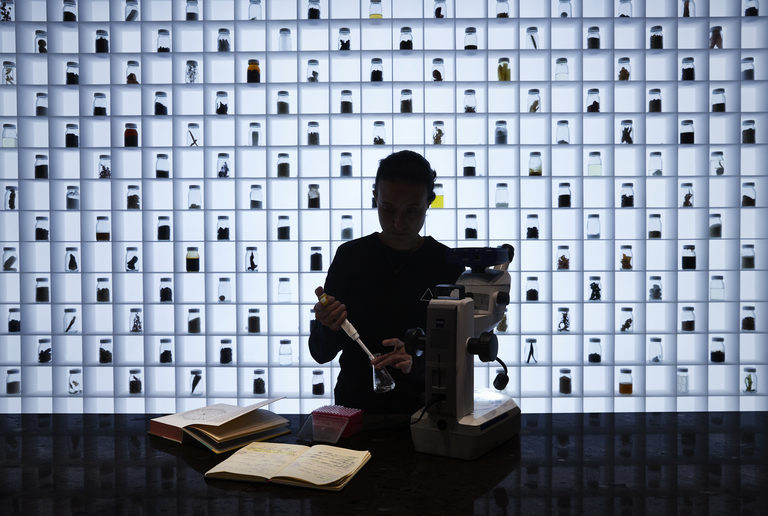
Science may hold the key, but it’s Spora’s task to ensure the results appeal to both the palate and the plate. Founded by Munk in 2023 as a hub for culinary innovation, Spora will work with international partners to transform lab results into foodstuffs that are not only sustainable and nutritious, but also delicious.

“We are facing a global food and climate crisis, and we need radical solutions to feed a growing population sustainably,” says Munk. “This technology has the potential to reshape how we produce food — and our role is to make sure it doesn’t just nourish, but that people actually want to eat it.”

Spora’s CEO, Mette Johnsen, adds that the challenge is both straightforward and complex: “We want to create protein-rich everyday foods with low environmental impact and broad appeal — especially for families in the communities that need them most.”

To achieve this, Spora will collaborate with chefs and communities across continents, studying local food cultures and traditions to ensure that the dishes are not only sustainable but also aligned with regional tastes. “Ticking the sustainability box isn’t enough,” Johnsen says. “Food has to be loved, not just eaten.”

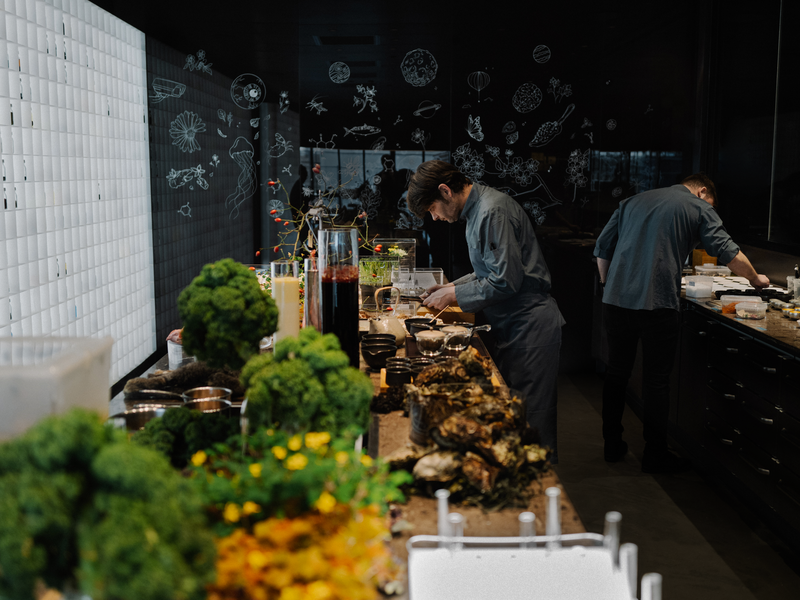
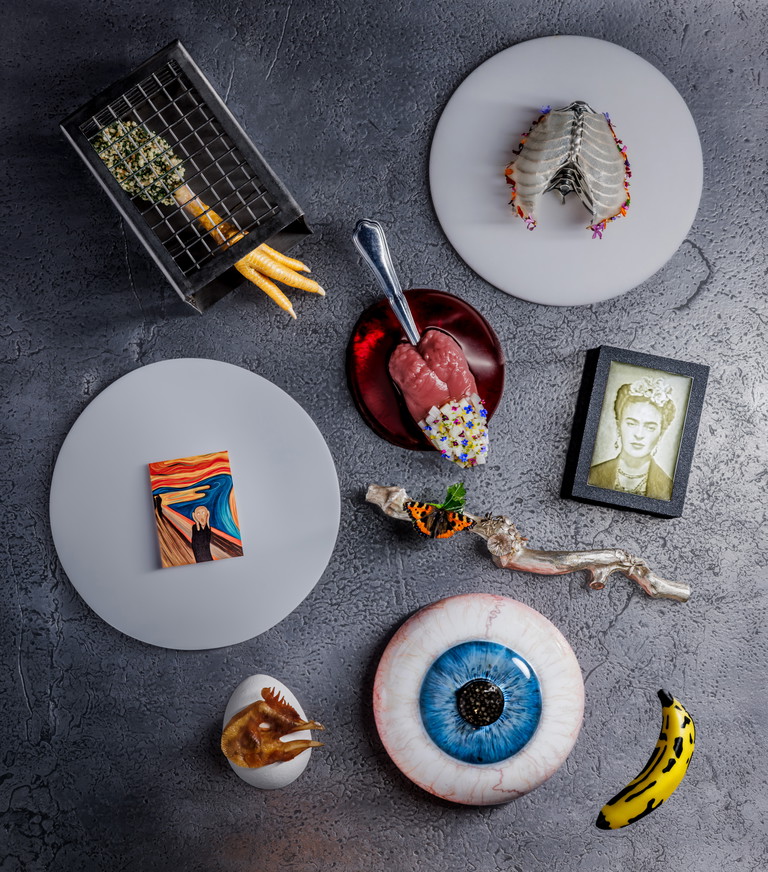
Some of Munk's creations for the award-winning Alchemist.
Picture Provided
Some of Munk's creations for the award-winning Alchemist.

A Global Collaboration

The Acetate to Food project is ambitious in scale and scope: Alongside Spora, partners include Topsoe, Novonesis, Orkla Foods, and leading academic institutions such as Aarhus University, the University of Copenhagen, and Northwestern University. Together, the group aims to prove that food spawning from thin air can go from a futuristic idea to a global reality.

For Munk, who has made a career pushing boundaries with his Copenhagen restaurant Alchemist, this project represents the next evolution of his culinary vision. It’s not just about fine dining anymore — it’s about reshaping the future of food on a planetary scale.

“This project isn’t just about science,” Munk says. “It’s about changing the way we feed the world — and making sure that future food is sustainable, accessible, and irresistibly good.”

What is Acetate-to-Food?
  • The process: CO₂ is captured and converted into acetate — the same compound that gives vinegar its sour flavour.
  • How: Microorganisms feed on acetate instead of sugar, producing high-quality protein.
  • Potential: Enough protein to feed over 1 billion people annually.
  • Goal: To develop affordable, protein-rich foods that are nutritious, sustainable and appealing across cultures.
  • The timeline: First prototypes are expected to be tested by consumers within two years.
The Editors
Find out more
1 / 12