

Napa Valley: A wine travel guide
No other region embodies U.S. wine culture more than Northern California's Napa Valley. Here's a...
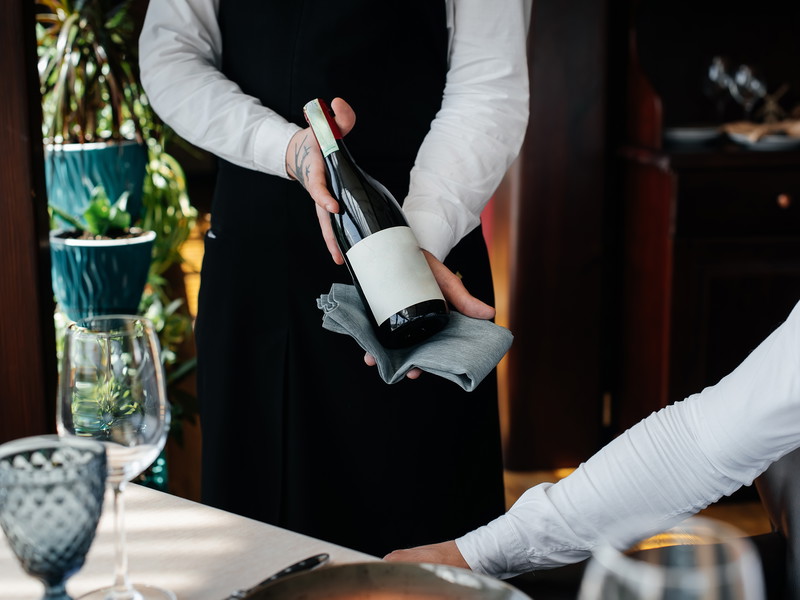
Serving fine wines correctly is easier said than done – Falstaff has summarized a few simple tricks that ensure your bottle is good from the first drop to the last.
Your corkscrew should have a two-stage lever so that corks can be pulled out straight and with little effort – this minimizes the risk of breakage. A folding waiter's knife is suitable for cutting the capsule: it should be cut off right below the finish so that the wine does not run over the rest of the capsule when pouring. Wing corkscrews are popular: Here, two levers ensure that the cork is pulled out evenly and straight.
When opening older wines, you should use a twin blade wine opener, which is ideal for corks that have become porous. It consists of two parallel rails attached to one handle. Place them on the left and right between the cork and the neck of the bottle and push them in by applying pressure and a back-and-forth motion. The cork can then be pulled out with a gentle twist. This should be practiced on simple wines before trying it on expensive Bordeaux. The combination of clasp and spindle found in the so-called Durand corkscrew is also recommended for such cases.
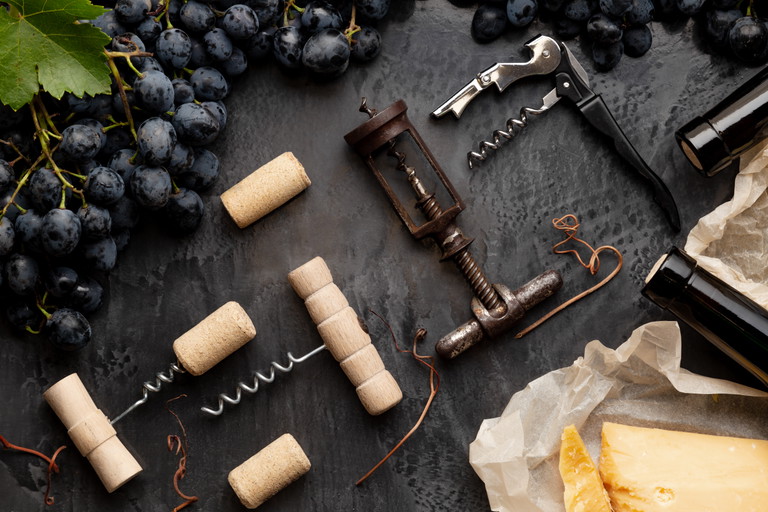
If a large piece of the cork is still stuck in the neck of the bottle, try to screw the spindle into theremaining piece and pull it out. The chances of success are fifty-fifty, even for professionals. If the attempt fails and the cork is completely pushed through or has fallen into the bottle, the wine must then be filtered through a fine sieve into a carafe. Before you invest the time for such endeavors, you should taste the wine – sometimes a bottle with a rotten cork is no longer enjoyable anyway.
When served chilled, the fruit comes into its own better, while tannins appear harder. Higher temperatures emphasize alcohol content and fullness. Light, young white and rosé wines are at their best at 8-10 °C. Stronger white and rosé wines, especially those aged in wood barrels, develop best at 10-12 °C. Low-tannin red wines from Burgundy are served slightly chilled at 12-14 °C, while full-bodied red wines are best served at 16-18 °C.
Sparkling wines such as prosecco and champagne taste best at 6-8 °C. A tip: It is better to pour the wine slightly cooler than wanted, as it warms up quickly once in the glass. But please don't serve it ice cold either – fridge temperatures rob even the best wine of its nuance and finesse.
We've all been there: your guests are thirstier than expected and the wine is still room temperature. When this happens in a restaurant, the sommelier reaches for the ice bucket and mixes ice, water and a pinch of salt. The water is crucial because it transmits cold better, while the salt causes ice to melt even at sub-zero temperatures, making the water even colder. However, most households lack a vessel large enough and the copious quantities of ice necessary for this solution. However, a similar effect can be improvised in the freezer: It takes about half an hour for a bottle of white wine to cool down from 21 °C to drinking temperature; add another five to ten minutes for sparkling wines, as the bottles are thicker.
If the wine becomes too cold, tartrate crystals may arise. They may not be pretty, but they don't affect the taste. However, forgetting a bottle in your icebox can be a major problem: Wine expands when it freezes and can cause the bottle to burst. You should therefore set an alarm to be on the safe side.
Sign up now for our newsletter.