Creative Minds
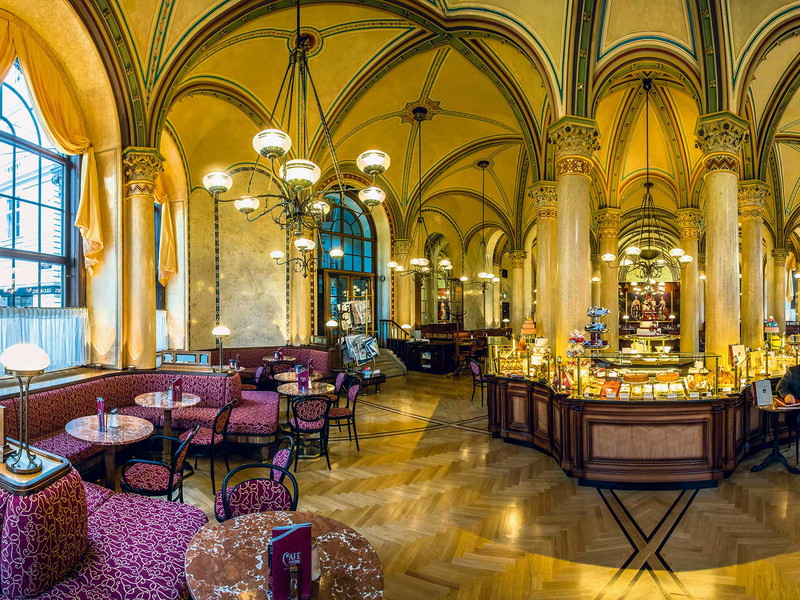
For centuries, Europe’s great coffeehouses have served as unofficial offices, salons, and stages for some of the continent’s most influential thinkers. In Vienna, Sigmund Freud and Arthur Schnitzler were among the regulars. Freud debated his emerging theories with colleagues over cups of strong coffee, while Schnitzler observed the rhythms of urban life—material that would later shape works such as Dream Story.
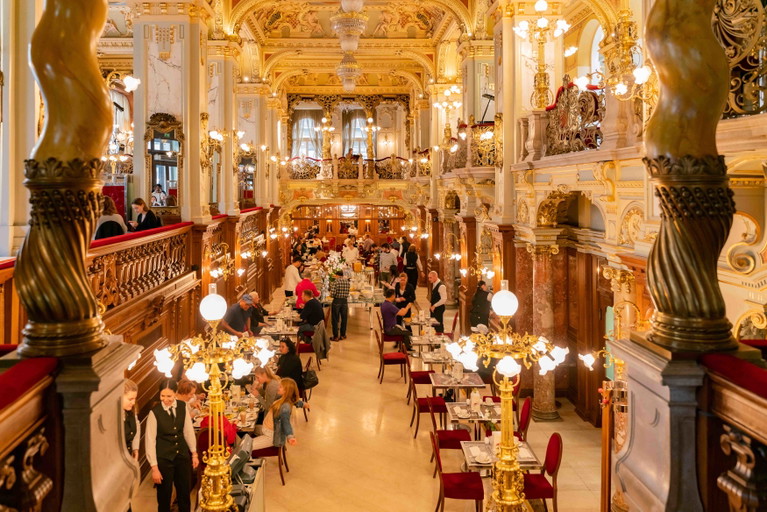
Budapest’s legendary Café New York became a crucible of literary exchange, where writers including Ferenc Molnár gathered to argue about theater, politics, and the future of Hungarian literature. In Venice, Caffè Florian—arguably the city’s most storied café—welcomed figures such as Thomas Mann and Richard Wagner. Mann is said to have drawn inspiration here for Death in Venice, while Wagner used the elegant rooms as a meeting point for conversations about music and performance.
Despite the pace of modern life, these coffeehouses remain remarkably resilient. Their polished wood paneling, marble tables, and attentive service offer a sense of continuity in ever-changing cities. Step inside, and the noise fades; what remains is the quiet hum of conversation, the ritual of coffee, and the enduring feeling that ideas still matter here.