
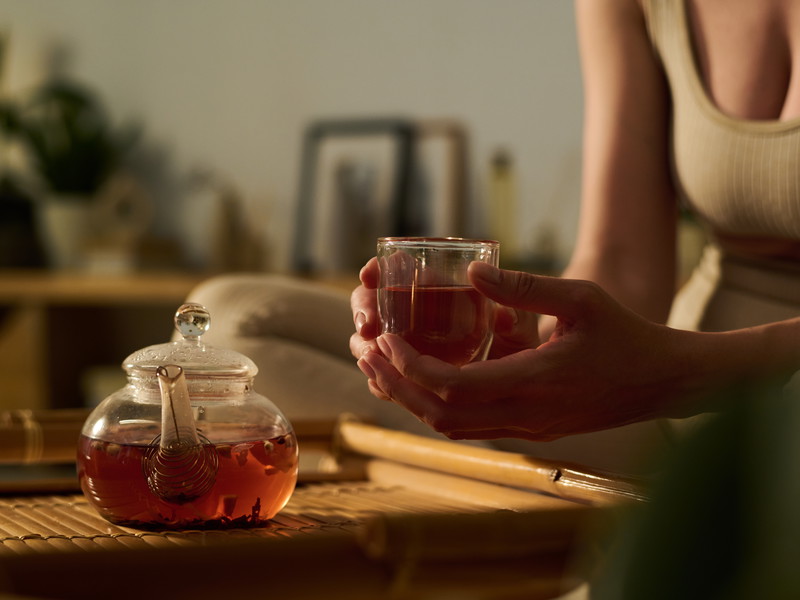
In fully oxidized black tea, the enzymatic reaction has run its full course.
Everything You Always Wanted to Know About Tea
No other drink is as beneficial, as versatile—or as misunderstood. Not everything sold as “tea” is truly tea. We break down what real tea is, how different varieties are produced, and exactly how much caffeine ends up in your cup.
Hardly any drink is as deeply woven into cultures as tea. From the ritualized tea ceremonies of Japan to a strong Assam in a British glass, or a delicate Darjeeling at Sunday brunch, tea has accompanied humanity for centuries. But what exactly counts as “real” tea, and how do the many varieties, that end up in our cups, differ from one another?
Real vs. “Fake” Tea
Not every infusion can rightly be called tea. Strictly speaking, only beverages made from the leaves of the Camellia sinensis plant qualify. Popular fruit and herbal teas belong to the broader category of infusions, crafted from dried plants, flowers, and fruits. Rooibos, for instance, comes from the South African red bush—not the tea plant. In contrast, Earl Grey is a flavored tea, Darjeeling originates in India, and Ceylon tea hails from Sri Lanka.
The Camellia sinensis plant thrives in China, Japan, Sri Lanka, Taiwan, Indonesia, and India, where conditions are ideal for its growth. High-quality tea is correspondingly precious—though a little goes a long way: a good leaf can be infused up to ten times, making each cup a testament to its value.
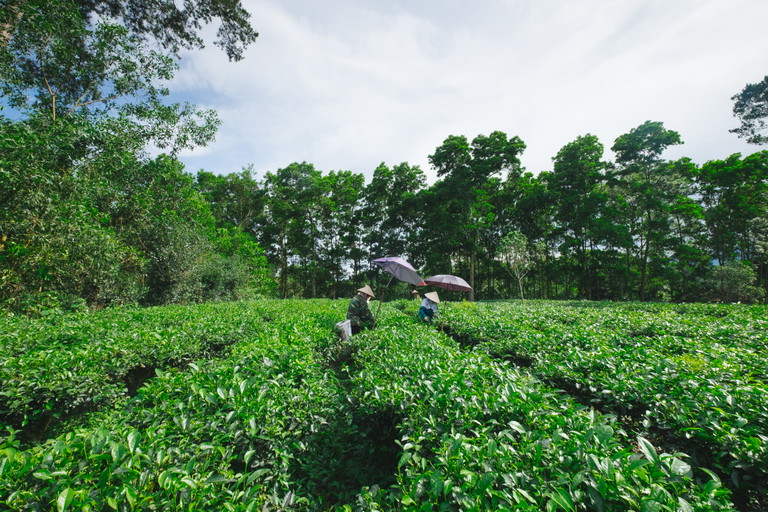
© Shutterstock
Eine Plantage mit Teepflanzen
One Plant, Many Varieties
All classic teas—white, green, black, oolong, and pu-erh—come from the same plant, Camellia sinensis. The differences lie entirely in processing, particularly the degree of oxidation. Enzymes in the tea leaves react with oxygen, transforming color, aroma, and flavor.
-
White tea: Barely oxidized, delicate and elegant, with minimal bitterness even after extended brewing
-
Green tea: Unoxidized, fresh and grassy, packed with polyphenols (antioxidants), L-theanine (a calming, focus-enhancing amino acid), vitamins C, E, B, and minerals like potassium, calcium, magnesium, iron, and fluoride
-
Oolong: Semi-oxidized, aromatic, and versatile, striking a balance between green and black tea
-
Black tea: Fully oxidized, bold and spicy, forming the base for popular blends like Earl Grey
-
Pu-erh: A fermented tea from China, aged for years, with deep, earthy notes
-
Matcha: Finely ground Japanese green tea, grassy, sweet, and umami-rich
-
Hojicha: Roasted green tea, usually from bancha or sencha, with nutty, caramel-like aromas
What happens during oxidation?
During oxidation, the cell walls of the tea leaves break down, allowing enzymes to react with oxygen—much like what happens when an apple is cut. The more extensive the oxidation, the darker and stronger the tea becomes.
A Boost With Every Sip
All real teas naturally contain caffeine, though the levels vary. Leading the pack is matcha, with roughly 64 mg per 2 g of powder. A cup of black tea follows at around 40 mg, then oolong (30 mg), green tea (20 mg), and white tea (15 mg). For comparison, a cup of filter coffee contains about 100 mg, while an espresso ranges from 50 to 70 mg.
Tea offers something for every moment and mood. Whether you need a gentle morning boost, a calming afternoon pause, or a soothing home remedy, a cup of tea is always the right choice.


