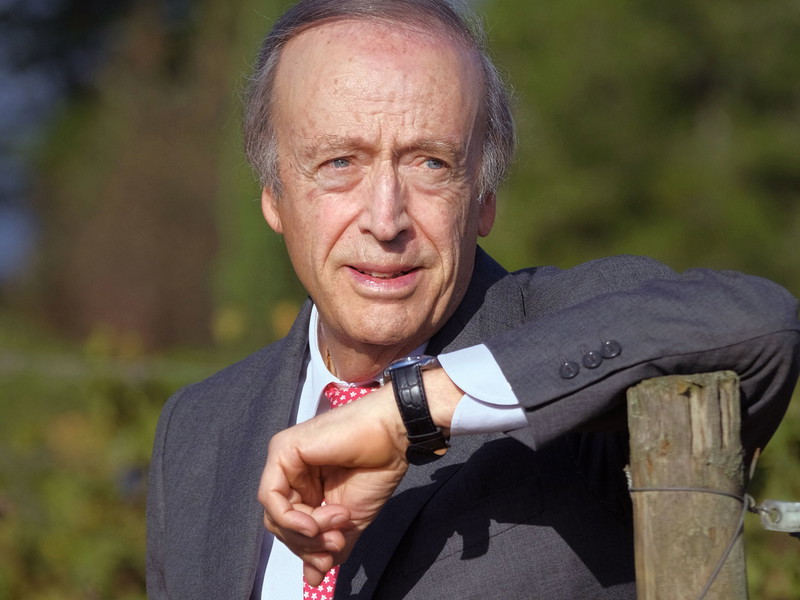
Falstaff: Mr. Torres, in Germany we experienced the devastating floods in the Ahr valley in 2021, in Spain there were floods in Valencia in 2024. Yet there are still people who claim that natural disasters have always existed and that climate change is fiction.
Miguel Torres: But the frequency of such events – that is no coincidence. It is the consequence of climate change. We humans are causing all kinds of disasters. Just look at what is happening in the Amazon, the deforestation of the rainforest. Every day, we use 100 million barrels of oil worldwide. That produces greenhouse gases, and they are up there in the stratosphere and cause climate change. Fortunately, we have not yet experienced a major catastrophe in Catalonia. But here in Penedès, where our vineyards are located, we are suffering greatly from drought. In 2023, due to the drought, we harvested only about half of a normal crop. Fortunately, there was more rain again in 2025, especially in the Mediterranean basin, which benefited the vineyards. However, water stress remains a major challenge in some regions.
You also co-founded an association of wine producers called "International Wineries for Climate Action".
Climate change can become as devastating for viticulture as the phylloxera crisis was in the 19th century. That's why it is so encouraging to see that we are gaining new members almost every week – that is very important. We now have 177 members from 15 countries.
Including Germany, Austria and Switzerland?
So far, unfortunately, only one from Germany. I hope there will be more.
You are not only politically active, but have also made significant changes at your own winery over the past 10 or 15 years.
We are making great efforts to reduce our CO2-emissions. Since we first had our CO2-footprint calculated in 2008, we have reduced it by 40 percent. By 2040, we aim to be completely carbon neutral. Almost half of the electricity for the winery building we are sitting in is generated through photovoltaics. We have invested 23 million euros so far, including in reforestation and water management. Our own vineyards in Catalonia – more than 1,000 hectares – are 100 percent organic or in the process of being certified. 60 percent of our land has been converted to regenerative farming. One of the many aspects I like about the regenerative approach is that it allows carbon to be stored in the soil. We mow the grass in the vineyard, but leave the roots in the ground – this keeps the carbon in the soil instead of releasing it into the atmosphere. And we continue to adapt: Just this morning we had a meeting at the company to discuss strategies to ensure that we can continue to produce high-quality wines for the next 20 years. The result was that we need irrigation; it is absolutely essential.
And then there's the initiative with the old, forgotten local varieties ...
Yes, it started 45 years ago when I took a sabbatical in Montpellier. One evening, Professor Boubals, the renowned oenologist, asked me over dinner: Miguel, why don't you look for old grape varieties from your home country? As a result, I placed advertisements in the daily newspapers and asked winegrowers to show us old vines that they could not be assigned to any known variety. The idea behind these "Ancestrales" did not cost a lot of money, but a great deal of time. We examined more than 200 vines, and most of them were not interesting. However, six grape varieties that we have systematically propagated in the past decades now show great potential: Forcada, Moneu, Gonfaus, Pirene, Garró and Querol. With the rediscovery of this heritage, we probably also have a building block for the viticulture of the future.
If Miguel Torres retires from day-to-day business one day, what will he do in retirement?
(Laughs) He will be very busy. For example, by writing his memoirs.