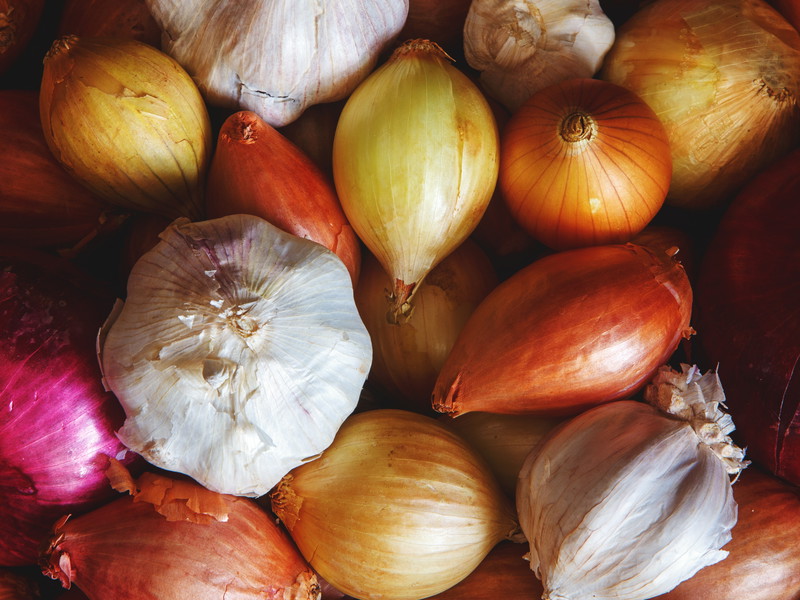
Onions and garlic are deceptively hardy. With their protective skins, pungent aroma, and long shelf life, it’s tempting to stash them anywhere—in the fridge, a plastic bag, or the back of the pantry. But improper storage can quickly lead to mold, sprouting, or softening.
Why the Fridge Isn’t Ideal
Cold, humid environments are a no-go. The fridge is usually too damp, causing bulbs to absorb water, soften, or grow mold. Low temperatures also convert starches into sugar, making onions sweeter and causing them to brown faster when fried. The refrigerator is only recommended for onions or garlic once they’ve been cut.
Plastic Bags? Avoid Them
Whether a thin produce bag or a tightly sealed plastic pouch, plastic traps moisture—the enemy of onions and garlic. In a closed bag, a humid microclimate develops quickly, leading to soft spots, mold, or premature sprouting. Crowded bulbs worsen the problem by preventing air circulation.
Where and How to Store Them
Onions and garlic thrive in a dry, dark, and well-ventilated spot. The ideal temperature for storing onions and garlic is around 10–15°C, making a cool, dry pantry the perfect spot. Open baskets, nets, or paper bags with holes enable airflow while protecting them from light. Check bulbs regularly and remove any damaged ones promptly. Keep onions and garlic separate from other vegetables, especially potatoes, which release moisture and gases that accelerate spoilage.
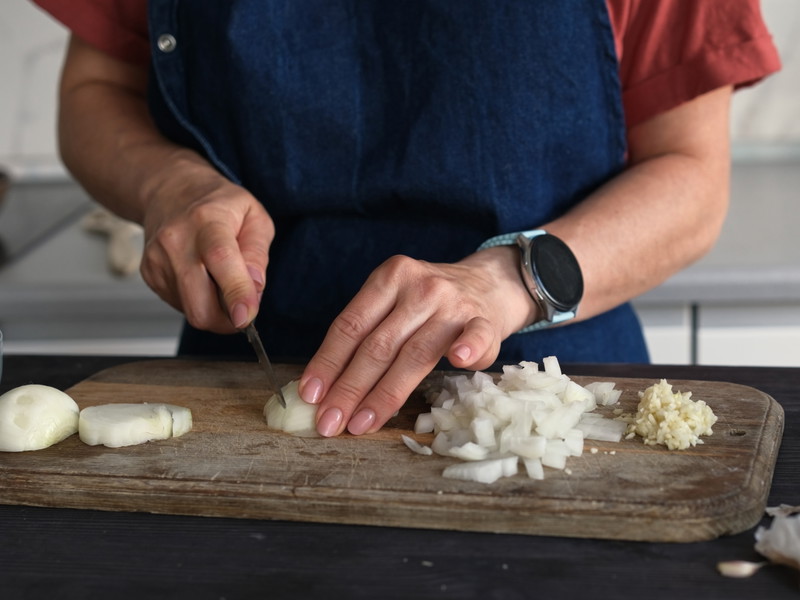
Sliced onions or peeled garlic can go in the fridge, but only for a few days and loosely packed to minimize moisture buildup. Consume them quickly for the best flavor and texture.