The Right Amount
As a main course: about 250 g of cheese per person
As part of a menu: about 100 g per person
Selection
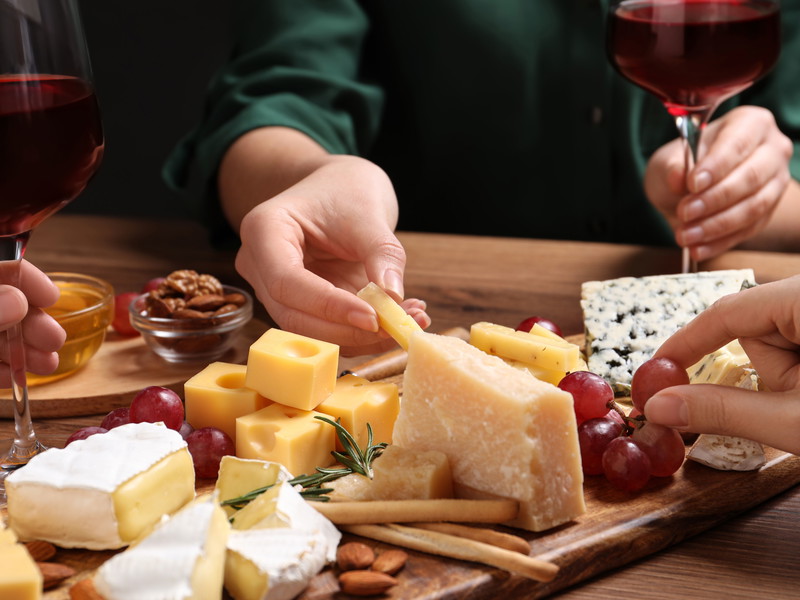
Variety is key. A well-composed cheese board should feature selections from different cheese families. Combining diverse textures and flavor profiles ensures that every guest discovers their favorite.
Board
Cheese favors natural materials such as wood, marble, slate, or ceramic. If left out too long, cheese tends to develop a greasy surface—placing it on straw mats allows it to breathe. Avoid silver or stainless steel platters, as these metals can react with the cheese and alter its flavor.
Temperature
Remove cheese from the refrigerator about an hour before serving. Room temperature allows its aromas and textures to unfold fully. Exception: blue cheeses taste best slightly chilled; if too warm, their flavor can become overpowering.
Cutting Cheese Properly
Each cheese has its own form—and with it, its own cutting technique. Aim for a balanced ratio of rind to interior, especially for varieties whose rind can be eaten. Pre-cutting or slicing the portions helps guests serve themselves easily.
The Right Tools
Soft cheeses tend to cling to blades; perforated knives or a cheese wire are perfect solutions. Very hard cheeses, such as Parmesan, are best broken into chunks with a short, pointed knife. Ideally, each cheese should have its own knife to prevent flavors from mixing.
Side Dishes
Less is more: A handful of grapes, nuts, dried fruit, pears, figs, or a well-matched chutney is plenty. Side elements should complement the cheese, not overpower it.
Bread
A small assortment of baguette, rustic country bread, and perhaps a touch of fruit bread creates the ideal balance of texture and flavor.
Storage
Store cheese ideally between 8–13°C, wrapped in parchment paper or cloth. Plastic traps moisture, preventing the cheese from breathing and dulling its flavor. Blue cheese, which releases liquid as it matures, should be wrapped in aluminum foil to allow the moisture to flow back into the cheese—keeping it creamy and aromatic.
With or Without Rind
Rinds coated in wax or varnish are not edible. Even with hard cheeses, consuming the rind is generally discouraged due to its density and intense processing. As to other types, the rind can be eaten according to personal taste and texture preference.