Skip to content

The famous hard cheese is produced in German-speaking Switzerland and exported all over the world.

The famous hard cheese is produced in German-speaking Switzerland and exported all over the world.
© New Africa / Shutterstock

The cheese with the holes: Emmentaler

Gourmet
Switzerland
Cheese

Although not all Swiss cheeses have holes, phrases like "Swiss cheese defence" have become common parlance. It's a testament to the enormous popularity of Switzerland's most famous dairy export: Emmentaler.

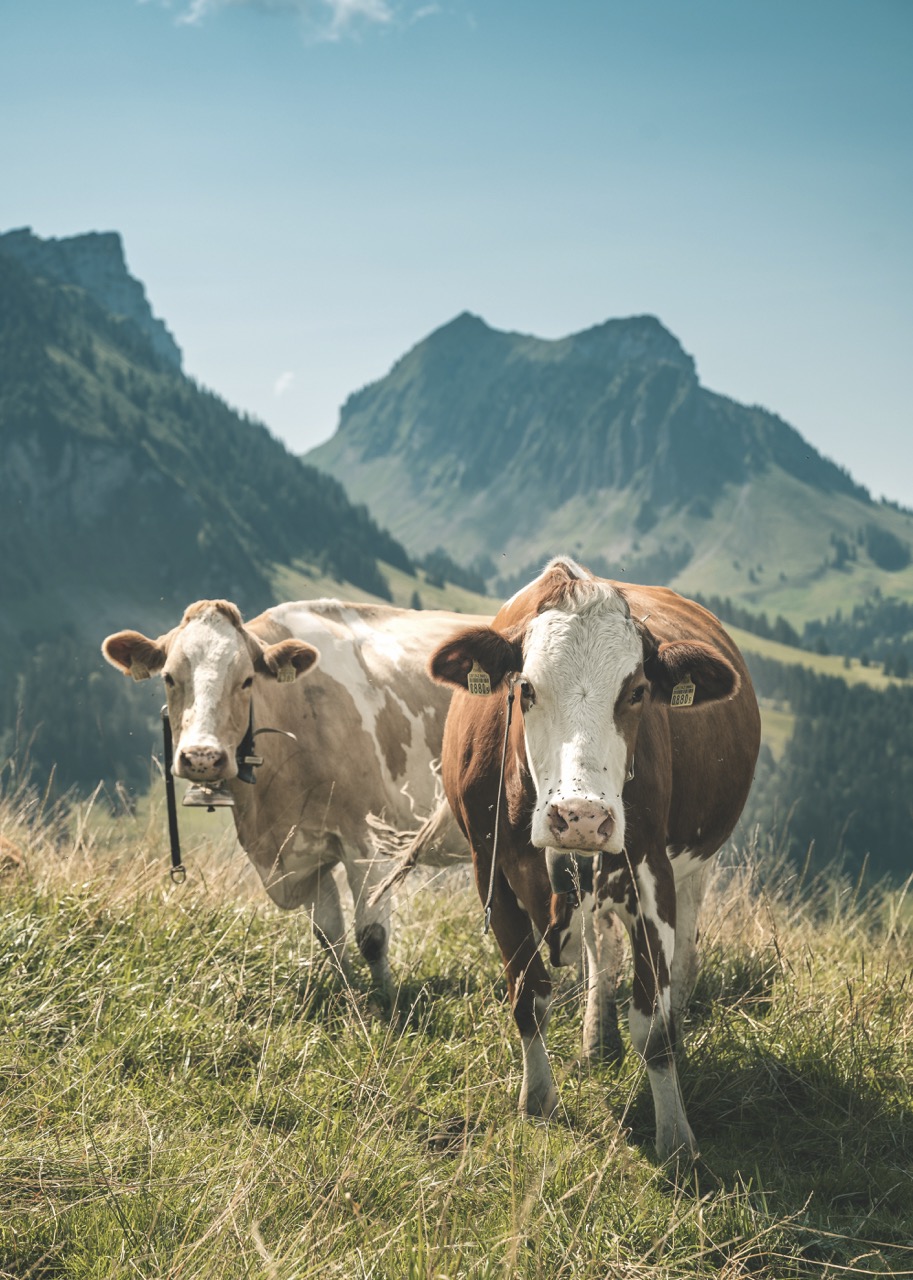
It's so iconic, it's known as "Swiss cheese" abroad: the famed Emmentaler may just be the world's favorite cheese. Named after its place of origin, Emmentaler has been made in the rolling alpine hills of the Emme river valley (or "Emmental" in German) in the canton of Bern for centuries. A "beautiful Emmenthaler cheese" was first mentioned in writing in 1557: a Bernese councillor presented it to a Basel doctor as a wedding gift. Like most Swiss cheeses at the time, it was probably made on a mountain meadow, where the cows could graze to their heart's desire; the abundance of milk produced was then preserved as cheese for the winter. In addition, the Emmental had a locational advantage: its lower altitude meant that summers were longer. This meant that more cows could be fed for longer, resulting in more milk – and consequently, more cheese. The Emmental was also well connected to international trade routes, and started exporting a large portion of its cheeses from  early modern times onward. At that time however, the name only referred to its origin; the "Emmentaler" of today did not exist yet, and types of cheeses made varied depending on the cheesemaker and the amount of milk available. For many of the Emmental's dairy farmers (called "Küher"), the production and sale of cheese was a lucrative business.

From the mountain to the valley

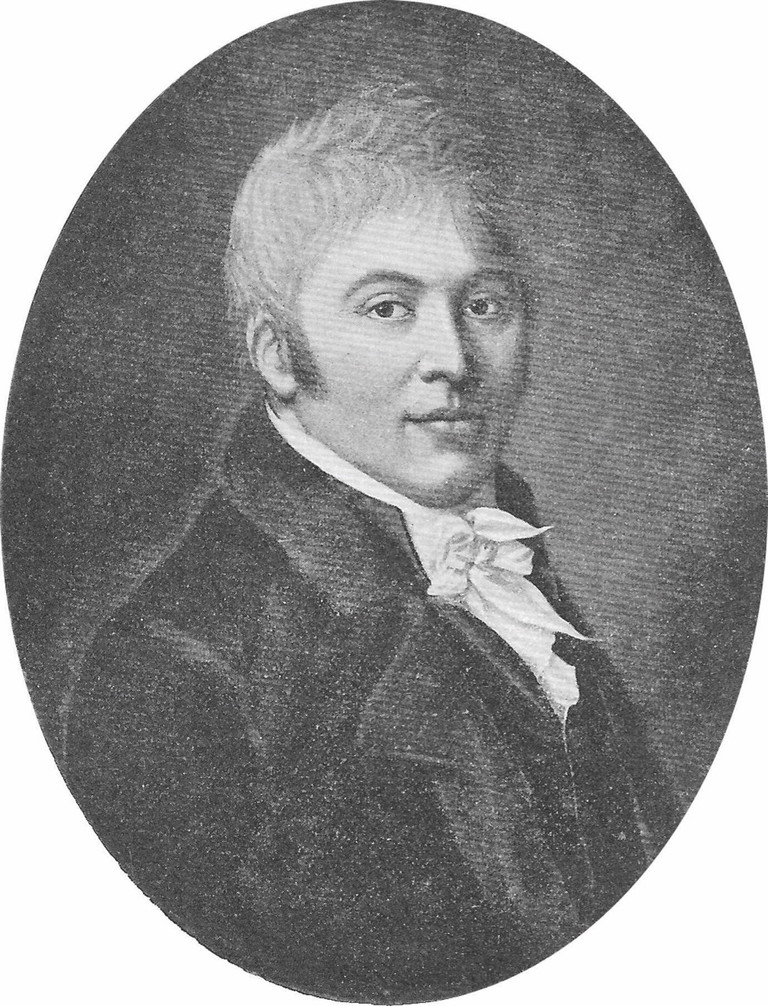
This changed rapidly when Rudolf Emanuel Effinger founded the first Emmental cheese dairy in Kiesen in 1815. This was quickly followed by others, and within a few years, most Emmental cheese was produced in the valley instead of the mountains, and soon spread beyond the canton of Bern. Agricultural innovations increased milk yields, making it available in large quantities all year round, which in turn increased cheese production. International trade also began to flourish in the 19th century thanks to the invention of the railroad, steamship and telegraph.

The fact that Emmental cheeses were now produced and sold on a large scale led to standardisation, which was made possible by technological and scientific advances. As a result, the holes, which had previously been a secondary feature that varied depending on the cheese, were now deliberately created. Cheeses also grew in size, as export duties were not based on weight, but on the number of wheels – to this day, a whole Emmental cheese weighs a whopping 90 kilograms on average.

This heyday of Emmental cheese came to an end in the early 20th century: High tariffs caused profit margins to collapse, the market was highly competitive and numerous cheesemakers went out of business. Around the turn of the century, many Emmental dairy farmers immigrated in search of a better life, taking their expertise with them. For example, David Moser from Arni in Emmental founded a cheese dairy in Boğatepe, Turkey, where so-called "Gravyer" cheese is still produced today – although it is named after Gruyère, it is more similar to Emmentaler.

With the outbreak of the First World War, the Swiss government banned exports, insisting that domestic cheese was to be used for local consumption. In order to compensate for the slump in sales during this period, a state-run Swiss Cheese Union was founded in 1919, which was responsible for marketing Sbrinz, Gruyère and Emmentaler until the 1990s and also supported producers financially with export subsidies. Since the dissolution of the Union, the "Consortium Emmentaler Switzerland", founded in 1997, has taken over.

In 2006, Emmentaler was registered in Switzerland as an AOP protected designation of origin. Nevertheless, cheese is still produced as "Emmentaler" in many countries today, including Germany, Austria, France and the United States.
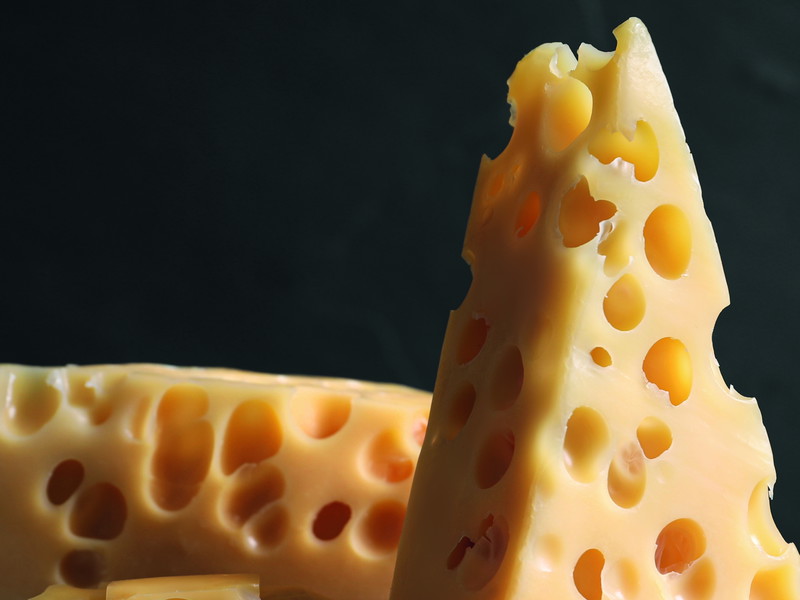
Hole lotta love

Only fresh, unpasteurized milk may be used for the production of Swiss Emmentaler AOP, and the dairy cows can only be fed with grass or hay. The milk is cooled after milking and processed within 24 hours: The cheesemaker first heats it to 32 degrees, stirring constantly; then inoculates it with lactic acid bacterial cultures, which  help create the characteristic aroma. Propionic acid bacteria are also mixed in, which play a decisive role in creating the famous holes. Rennet is then added, causing the milk to solidify and coagulate within 40 minutes. This creates curd and whey, which is then cut into many small pieces with a cheese harp. The cheesemaker then heats these pieces to 53 to 54 degrees for 20 to 60 minutes before filling it into cheese molds. The whey flows out through holes in the bottom, leaving the cheese curds behind.

Before pressing, the maker's mark is stamped on the cheese, which will identify the finished wheel as genuine Emmentaler. Pressing takes 20 hours, to ensure the curds fuse evenly. The young cheese wheel is then placed in brine for two to three days for salting and preservation. During the subsequent resting period of at least 120 days, the famous holes are formed: The propionic acid bacteria ferment lactic acid, forming carbonic acid gas in the process. This attaches itself to small hay particles in the cheese, making it harder for the gas to escape. The fact that the holes in Emmentaler are larger than in most other cheeses is due to storage temperature, which is relatively high at 19 to 24 degrees.

After six to eight weeks, the holes have reached their final size; the cheese is then placed in a cool cellar at twelve degrees for the rest of its maturing period. After four months, the first wheels are cut up and sold; they are at the "mild" stage of ripeness. The cheese is considered "mature" at eight months, and "fully mature" after a year. Emmentaler that has been aged for 24 or even 30 months is rare – it's somewhat bitter and has pronounced Tyrosine crystals.

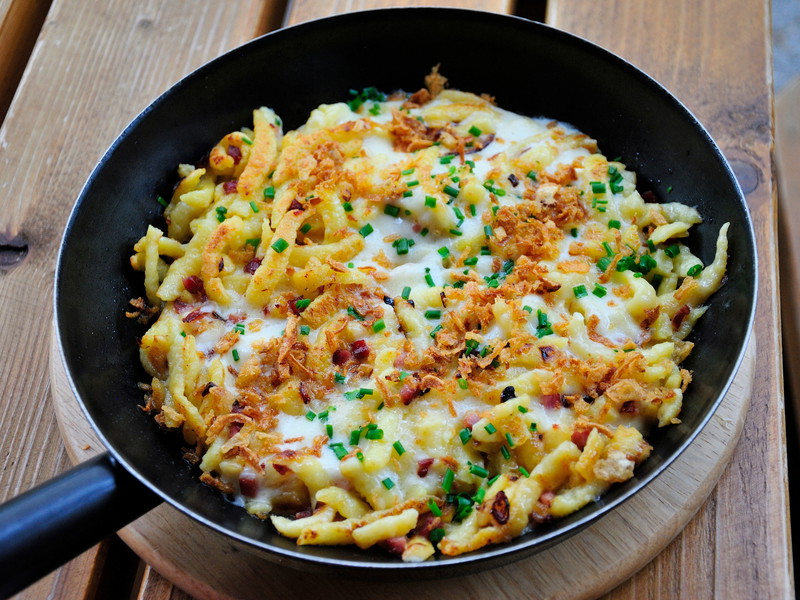
Thanks to its rather mild flavour, Emmentaler is versatile and popular among all ages. It's a great addition to every cheese platter and sandwich. In Switzerland, it is also often used in cooking; whether in Käspätzle, for gratinating casseroles or in sausage and cheese salad, Emmentaler is always a good option.

Rudolf Emanuel Effinger played a major role in creating Emmentaler as we know it today.
© Mauritius Images / Alamy Stock Photos / Achive PL
Rudolf Emanuel Effinger played a major role in creating Emmentaler as we know it today.

Profile of the Emmentaler

Type: Hard cheese made from unpasteurized cow's milk
Production area: The Swiss cantons of Aargau, Bern, Glarus, Lucerne, Schwyz, Solothurn, St. Gallen, Thurgau, Zug, Zurich and Fribourg
Taste: Nutty, herbal, caramel. Over time, it develops some slight notes of wood.
Consistency: Relatively soft at first, becomes somewhat crumbly as it matures.
Weight of a wheel: 75 to 120 kg
Maturation time: 4 to 30 months


Related varieties

Emmentaler's cheesy cousins
Thanks to the characteristic cheese-making culture of the Swiss Alps, Emmentaler is related to most Swiss hard cheeses, such as Gruyère and Sbrinz. It also served as inspiration for a number of other cheeses – for instance, the Dutch Leerdammer is said to combine the characteristics of Emmentaler and Gouda. The "Swiss cheese" produced and sold in the United States is also inspired by Emmentaler. In Turkey, there is "Kars Gravyer", which was named after Gruyère, but with is more similar to Emmentaler thanks to its large holes.


Emmental variants

In 2022, 101 dairies in 11 Swiss cantons produced almost 15,000 tons of Emmentaler AOP; the lion's share of over 10,000 tons was exported. There are countless versions of this popular cheese: It is sold after being aged for four months as "mild", after eight months as "reserve" and from twelve months as "Eetra". Emmentaler is also available in a cave-aged variant, made from organic or alpine pasture milk, as well as a number of novelties and regional varieties.

Emmentaler is not only found in Switzerland but is also available in other countries, often even with its own designation of origin. In Germany, "Allgäuer Emmentaler" is made from unpasteurized milk and matured for at least three months. The "Bregenzerwälder Emmentaler" from Austria is similar, and is sometimes sold after just two months of aging. France has the regional varieties "Emmental Français Est-Central" and "Emmental de Savoie".


Don't miss out!

Sign up now for our newsletter.

Larissa Graf
Larissa Graf
Autorin
Find out more
1 / 12