Turkey Tales: Thanksgiving of Superlatives
Why the dinner has to follow a precise choreography, what the new ready-made fillings can do and why pumpkins have to be white, green and full of warts this year.
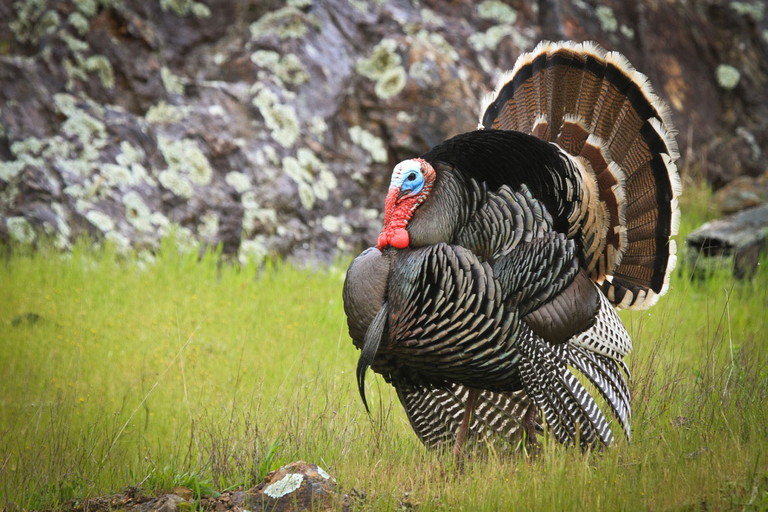
"Chocolate" and "Chip" escaped the roaster at the last minute. The names are those of the two turkeys that US President Joe Biden officially pardoned at a ceremony shortly before Thanksgiving last year. So they fared better than around 40 million of their kind, who are roasted and eaten in the USA on the high holiday - the US version of Thanksgiving. Beloved traditions; there are many around the centuries-old festival, which is celebrated every year on the fourth Thursday in November.
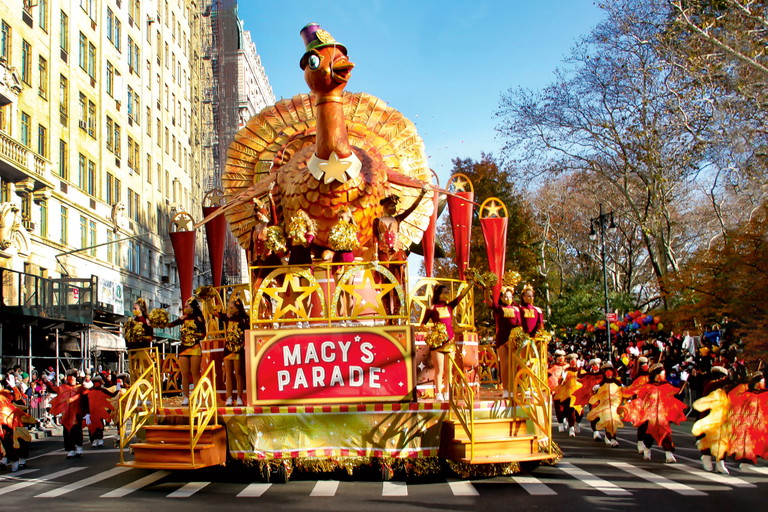
The turkey is just as much a part of this as a wide repertoire of side dishes - and the annual "Macy's Parade". The parade of the department store chain of the same name has grown into a top-class event in recent decades. Dozens of artists, welders, carpenters and balloon experts work all year round on gigantic floats in the shape of giant turkeys or three metre high pumpkins. Balloons float over the city, brass band music plays. The Christmas shopping season is officially open!
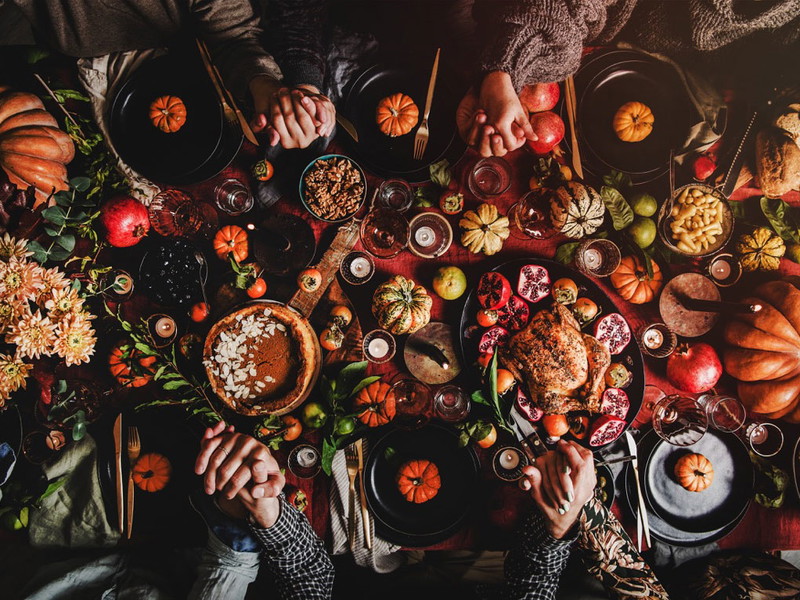
Up to 3.5 million people line the streets of New York City to watch the approximately three-hour spectacle on site, while 50 million sit at home in front of the television. Many other traditions are of a culinary nature. The Thanksgiving feast, which Americans usually celebrate with a large family circle, follows a precise culinary choreography. A succulent, well-seasoned and roasted turkey is the centrepiece, the star of most festivities. To make the meal a success, Americans spend hours, if not days, in the kitchen. Opulence is the name of the game.
The inner values count
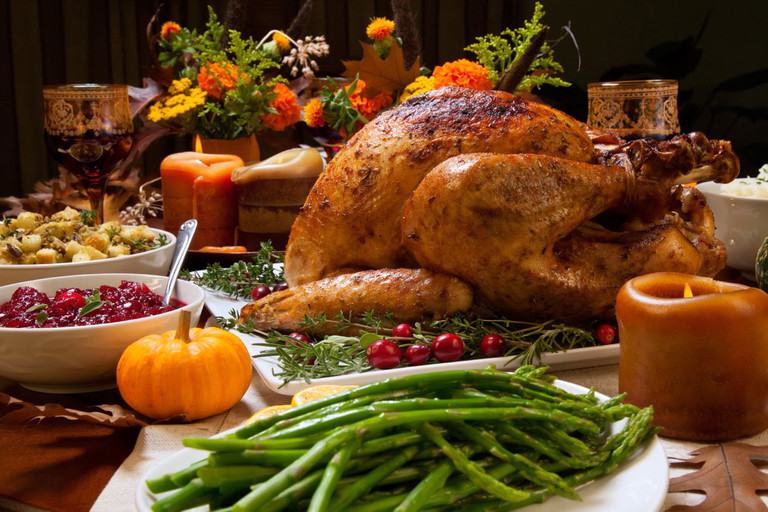
There are probably as many opinions on the preparation of the bird as there are families in the USA. The largest turkeys - which weigh up to eleven kilos - spend up to five hours in the oven. A technique is needed to keep them juicy and serve them to the table with crispy skin. The aim is to preserve and perfect old recipes. The cutting of the cake then resembles a ceremony. Of course, stuffing is also crucial. Any self-respecting American housewife or househusband will of course prepare them themselves. Exact recipes are often kept as family secrets, with the basic ingredients being bread cubes, vegetables, spices and soup. The stuffing is either roasted with the turkey or served separately as a side dish.
And although turkey is just as popular in the north-east of the country as it is in the south-west, regional preferences are evident when it comes to the stuffing. In the south the spices are often stronger, there are fillings with chorizo, chili and even corn bread, which replaces the bread cubes. For those in a hurry, supermarkets and delicatessens now also offer ready-made fillings in the days leading up to Thanksgiving. But you shouldn't let yourself be caught by the party. The selection of side dishes is also extremely extensive. Particularly popular are mashed potatoes or sweet potatoes, a green bean casserole, cranberry sauce, cornbread, potato gratin, pumpkin pie or pecan pie.
And red cabbage is increasingly being served as a side dish. If you don't want to cook for yourself, go out to eat with your loved ones - for example at Charlie Palmer. The New York chef has been named "Best Chef of America" by the James Beard Foundation in recent years. The "Charlie Palmer Steak House" not far from Times Square, between Broadway and Bryant Park, offers a Thanksgiving menu for 95 dollars per person. The main course is (of course) roast turkey. Alternatively, guests can also choose dry-aged prime rib or grilled salmon. The ten-course tasting menu at celebrity chef Jean-Georges Vongerichten's eponymous "Jean-Georges" on Columbus Circle costs 388 dollars per person.
His casual bistro "Nougatine" right next door offers a three-course Thanksgiving menu à la carte for 188 dollars. Of course, turkey is also on the menu here in both cases. In the "Nougatine", for example, with chestnut and foie gras filling and blood orange-cranberry sauce. Alternatively, a pork chop fried with bacon or fillet of beef are on the menu. Fish fans are also well catered for with lobster from Maine or sea bass with cabbage, young potatoes and black trumpet mushrooms. And for vegetarians there are fall vegetables. Reservations in good time are highly recommended for Thanksgiving. Many restaurants are closed. Or it says: Opening hours 12 to 10 pm.

First Thanksgivings
At first glance, Thanksgiving is comparable to the German harvest festival, but the US national holiday is much more deeply rooted in society and is actually celebrated by many more people. In the fall of 1621, European pilgrims who had arrived in New England on the east coast of the USA celebrated a three-day festival with the Wampanoag - the Native American inhabitants of the region; the natives provided them with food, taught them their farming techniques and thus helped them to survive the winter. We celebrated with turkey, corn and sweet potatoes. At least that's how the legend goes.
When Diane Schwindt hears this, she shakes her head vigorously: "Turkeys didn't really appear on the table until the 18th century." Schwindt is the Historic Tavern Cook at the historic Terry-Ketcham Inn on Long Island. Built in 1693, the historic inn used to be a popular resting place for stagecoaches, and even US presidents such as Thomas Jefferson have been fed here. Today, Schwindt cooks in the historic kitchen and regularly serves 20 guests at a time. And just like back then, with old cast-iron kettles over the fire. Many a star chef would probably fail here. Because there is no switch with which you can regulate the temperature. She controls the temperature by hanging the pots sometimes lower, sometimes higher over the fire. And she teaches in workshops what was really eaten at Thanksgiving in the past: "The settlers did hunt turkeys. But the birds run pretty fast and you couldn't hit them very accurately with the guns back then." In fact, there are only two documents from that time that deal with food. And from them it is clear that the settlers probably rather hunt and eat geese, ducks, roe deer, perch and halibut.
Holiday for peace
US President Abraham Lincoln declared Thanksgiving a national holiday in 1863. At the time; he was looking for a holiday that would unite all Americans because of the impending civil war between the North and South. Incidentally, he also fulfilled writer and activist Sarah Hale's great wish. She had promoted the holiday to various presidents for more than 40 years. And she did something else: in her articles, she placed the turkey at the centre of her festive meals, influencing many women in the USA even back then.
At the turn of the 19th century, the turkey became a popular dish in wide circles for occasions such as Thanksgiving. There are several reasons for this. Perhaps the most trivial: there were simply a lot of turkeys in the USA at the time. People were also reluctant to slaughter cows and chickens as long as they were useful and produced milk and eggs. What's more, a single turkey is usually big enough to feed an entire family. Today, more and more families are going back to the very early beginnings, reports Patrick Peralta. He is the manager of the Broken Arrow Ranch in the hills of Texas, around 100 kilometres from San Antonio. The ranch supplies chefs from Hawaii to New York with fresh meat. And Peralta knows that deer, quail and wild boar are increasingly being ordered as an alternative to turkey. And therefore exactly what the first pilgrims ate back then.
New pumpkin trends
One last thing: what would Thanksgiving be without the right decorations? Exactly. A new trend is also emerging here. "The orange pumpkins are out. Nobody wants them anymore," says Suni, a vendor at the iconic flower market on 28th Street, between 6th and 7th Avenue in New York. This is where the city's best restaurants and florists buy their decorations. "In are large white and green pumpkins. Or the so-called warty pumpkins. They are bred like this now because they are so popular."