Korean kinship on the plate
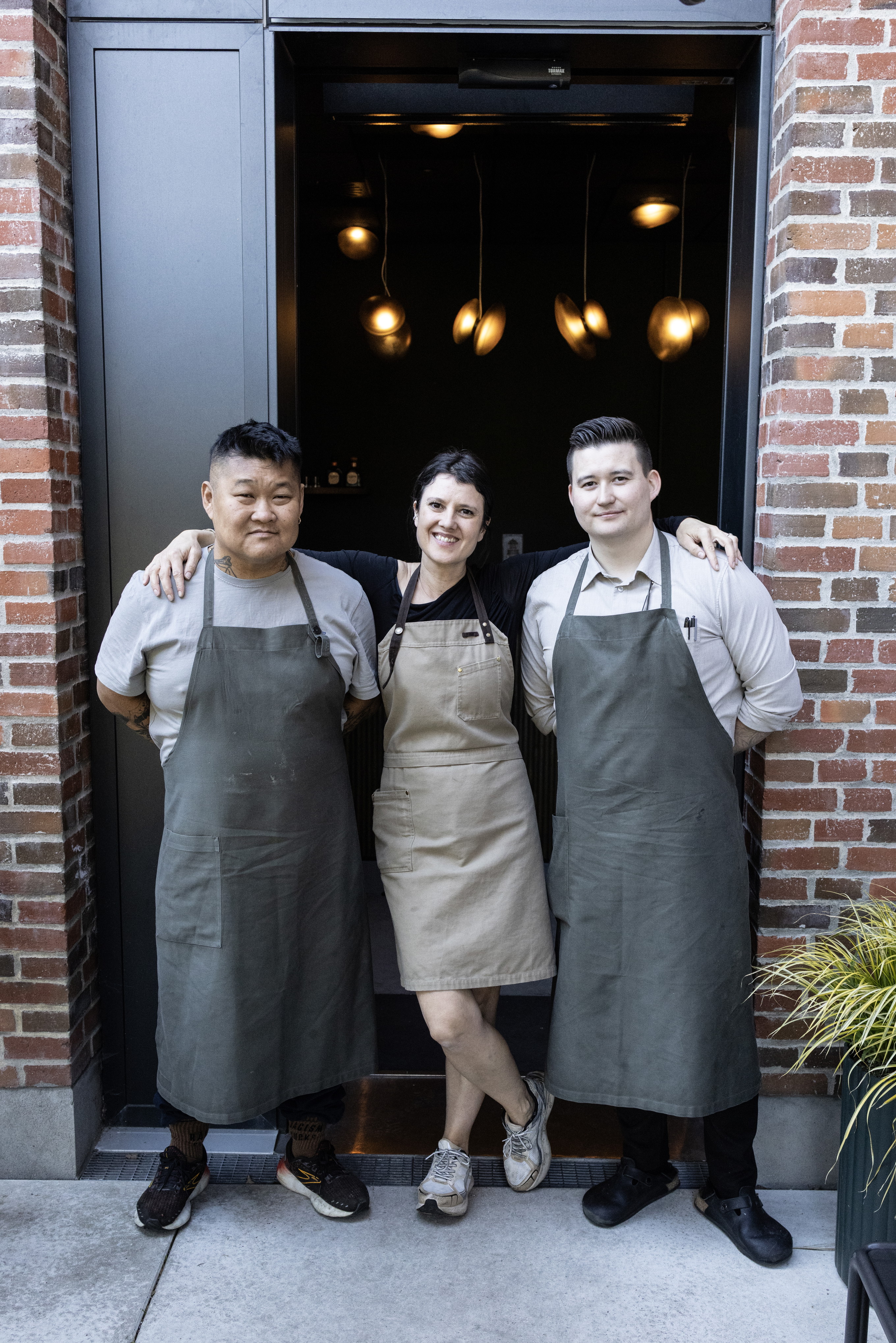
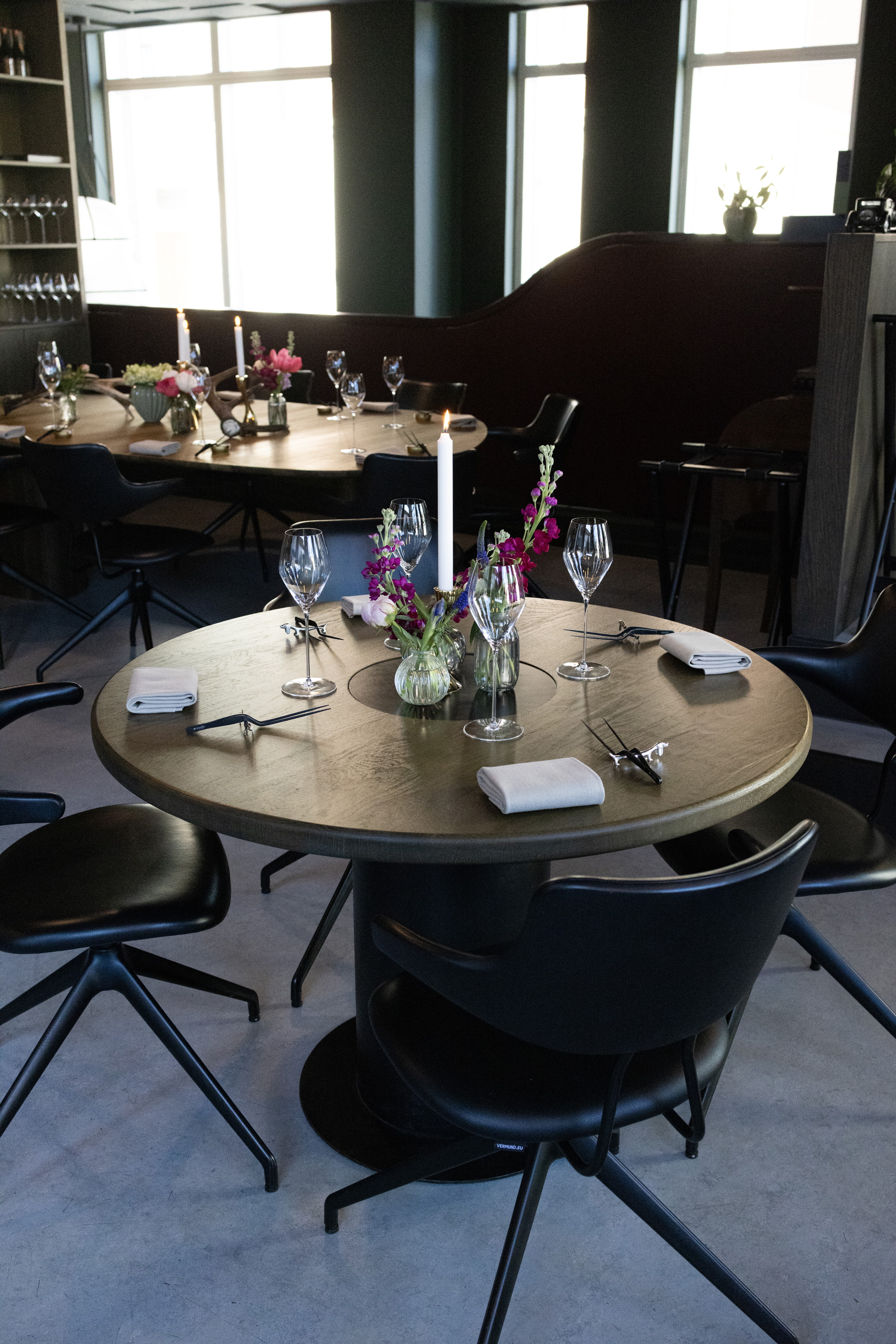
At Bach & Nurup in Northern Jutland, chef-owner Christian Nurup welcomed guest chef and television personality Simon Jul for an evening shaped by curiosity, kinship, and creative exchange. Together, they explored the meeting point between Nordic produce, French technique, and Korean culinary memory – a collaboration rooted as much in personal history as in flavor.
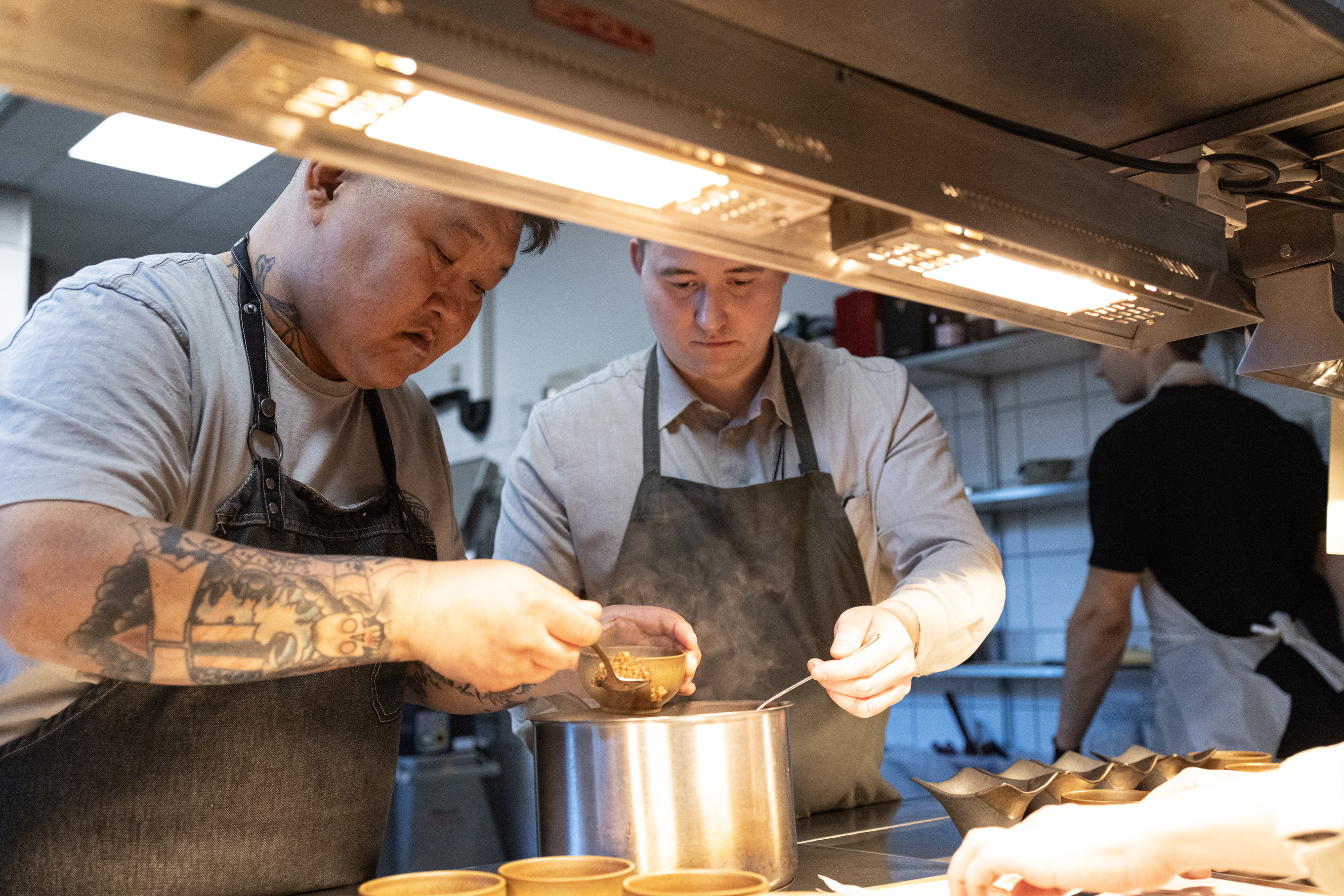
At Bach & Nurup, creativity is not treated as ornament, but as a working language. For one evening, chef-owner Christian Nurup invited guest chef and television personality Simon Jul into his kitchen, creating a menu that became both collaboration and conversation: Nordic produce, French discipline, and Korean and Japanese inspiration meeting across the pass.
The connection was personal as well as culinary. Jul was adopted from South Korea, while Nurup’s father was adopted from South Korea. Both grew up at a distance from that heritage, yet both now find themselves drawn toward the flavors, techniques, and philosophy of Korean cooking.
“For my father, it was something you didn’t talk about,” Nurup says. “He’s more Dane than the Danes are.”
Jul recognizes the feeling: “When I first went to Korea, I stood in Seoul and laughed because everybody looked like me.”
Their menu did not simply “add” Asian flavors to a Nordic restaurant. It explored a deeper shared sensibility: patience, purity, fermentation, smoke, broth, rice, grain, and respect for every part of the ingredient. Jul describes Korean cuisine as a kitchen of “few but very pure flavors,” built through fermentation, maturity, and aging.
For Nurup, whose cooking has long had “a French backbone”, the collaboration became a step toward a more personal expression: “The more confidence I get with the guests, the more I’ll show them the Asian flavors.”
Their menu did not simply “add” Asian flavors to a Nordic restaurant. It explored a deeper shared sensibility: patience, purity, fermentation, smoke, broth, rice, grain, and respect for every part of the ingredient. Jul describes Korean cuisine as a kitchen of “few but very pure flavors,” built through fermentation, maturity, and aging.
For Nurup, whose cooking has long had “a French backbone”, the collaboration became a step toward a more personal expression: “The more confidence I get with the guests, the more I’ll show them the Asian flavors.”
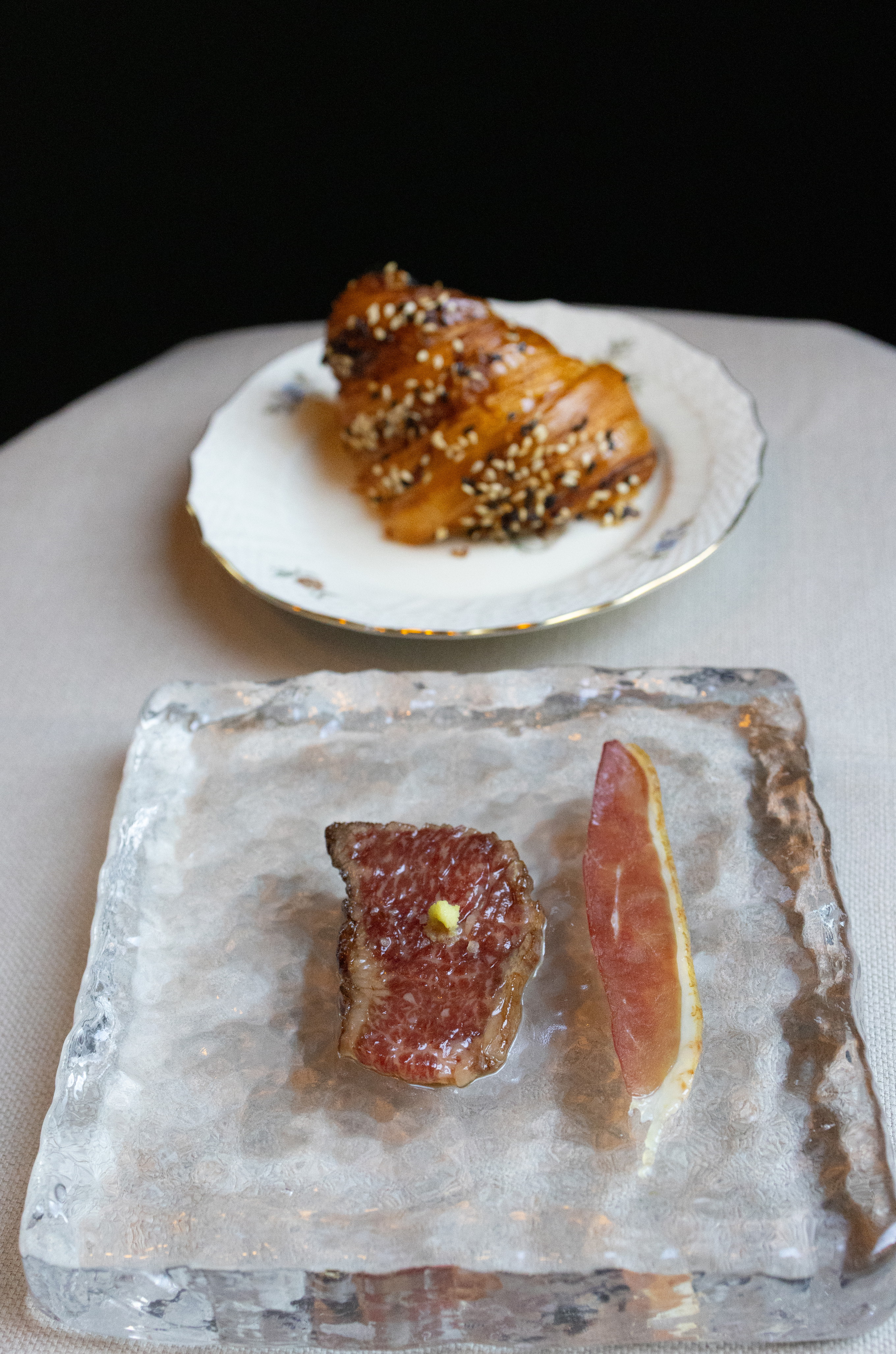
The evening opened not with bread, but a croissant with the Danish cheese Vesterhavsost and Korean red chili paste, or gochujang.
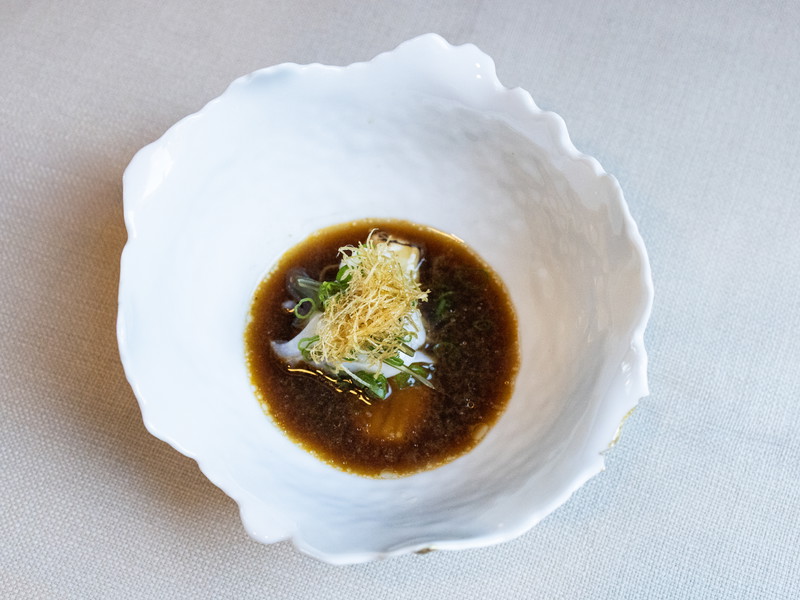
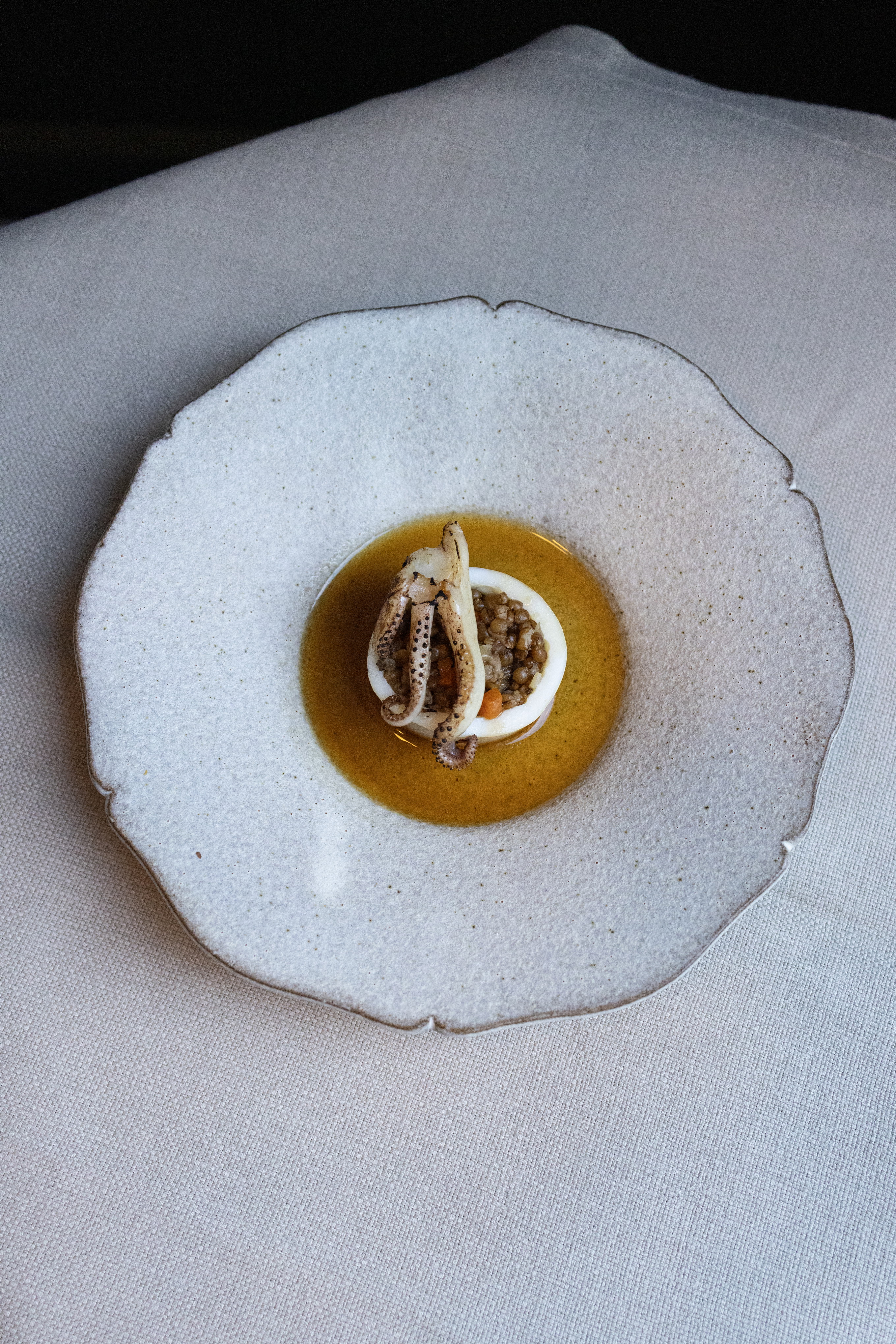
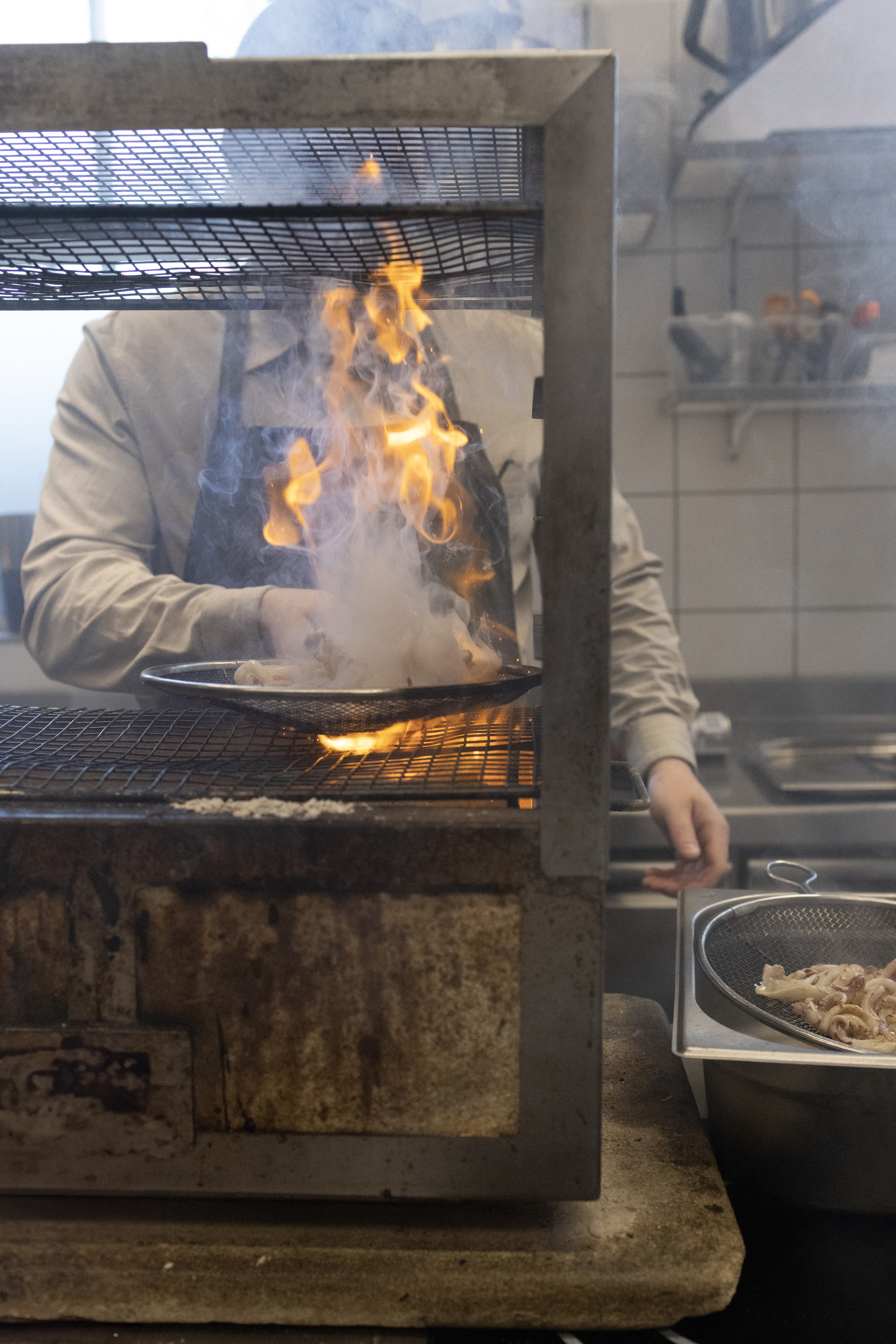
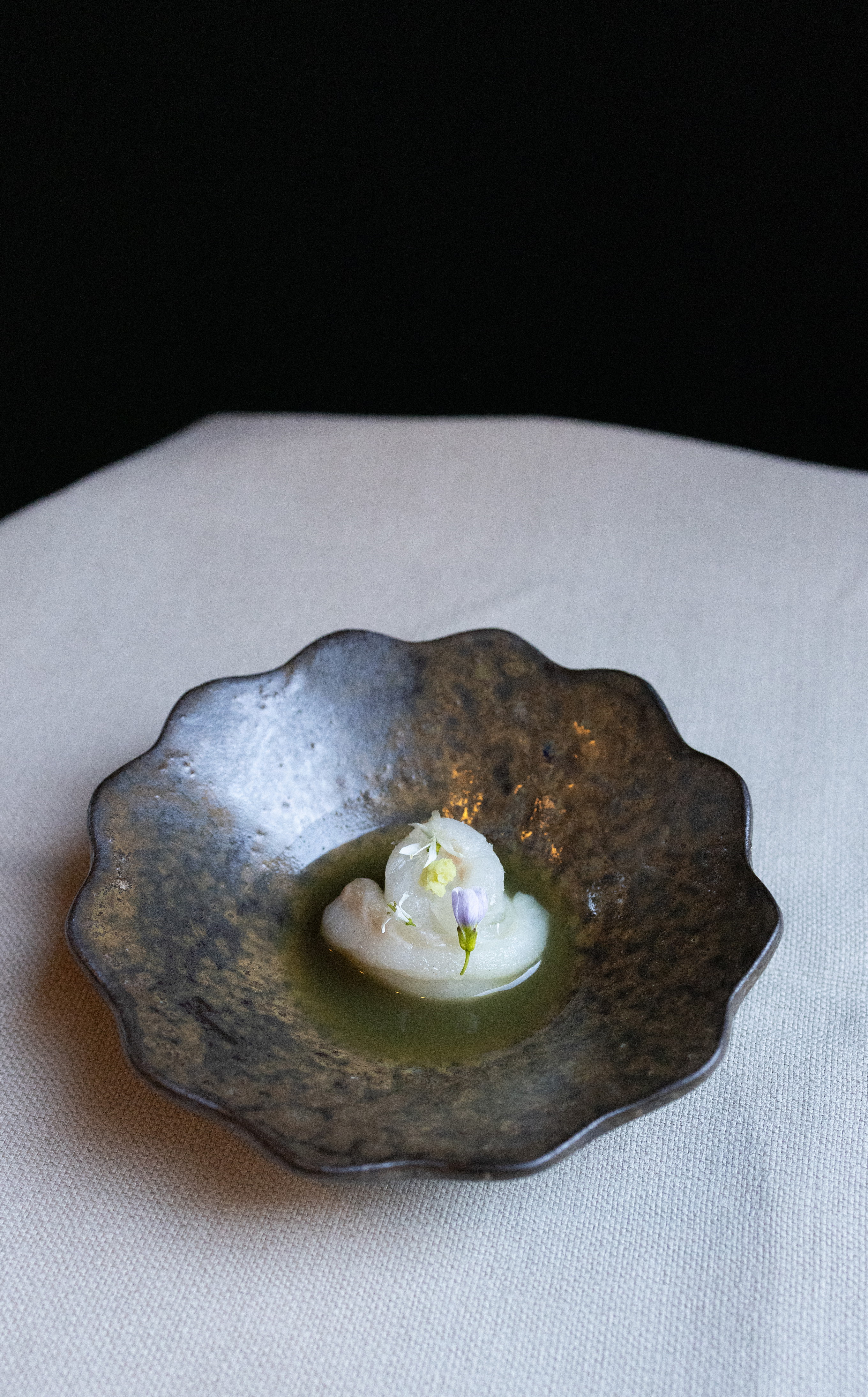
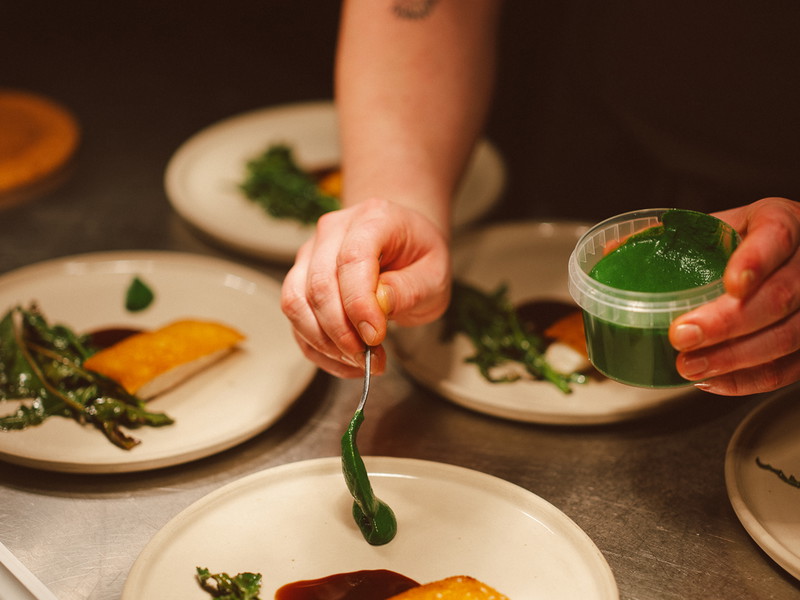
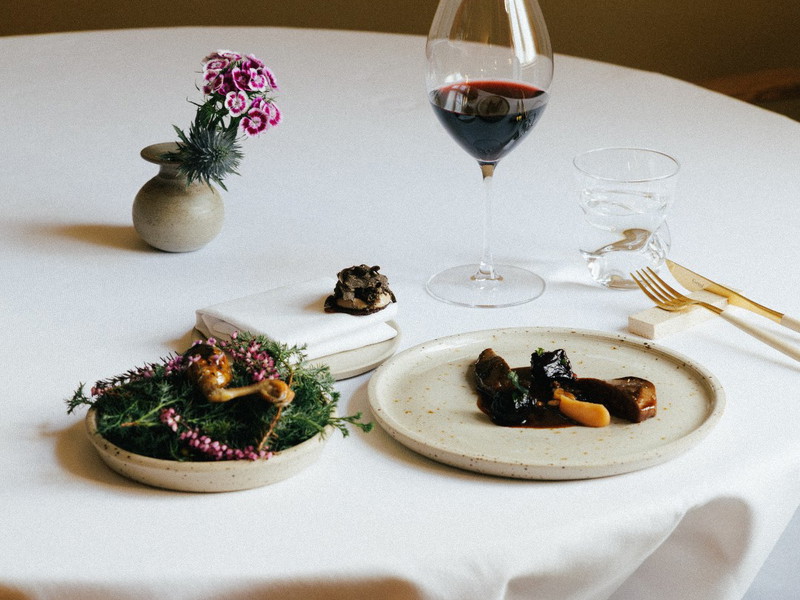
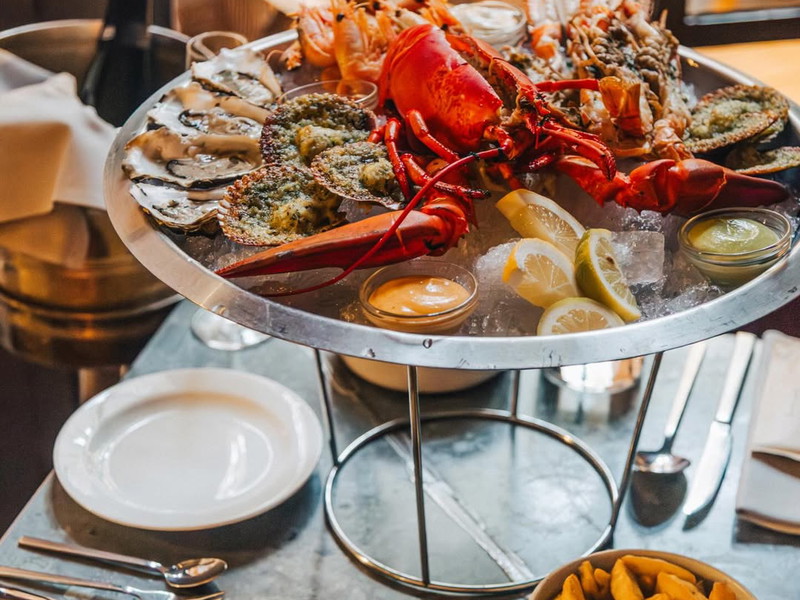
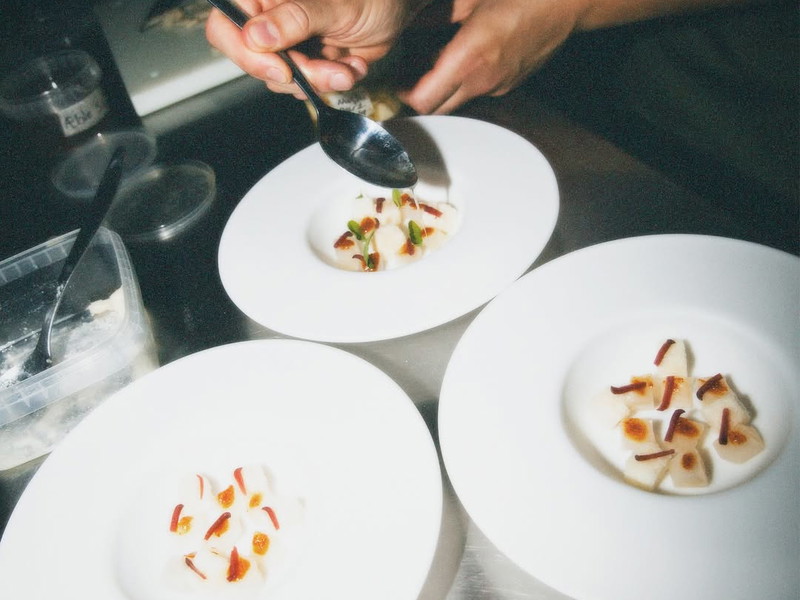
Other plates continued the exchange: Wagyu with soy and wasabi; smoked duck breast; redfish, often treated as bycatch, given center stage; soju barbecue aromas; and a sauce made from squid innards. A soup inspired by bouillabaisse brought together oyster, dashi, kombu, lobster bisque, scallop, halibut, squid noodles, fried leek, and lobster butter.
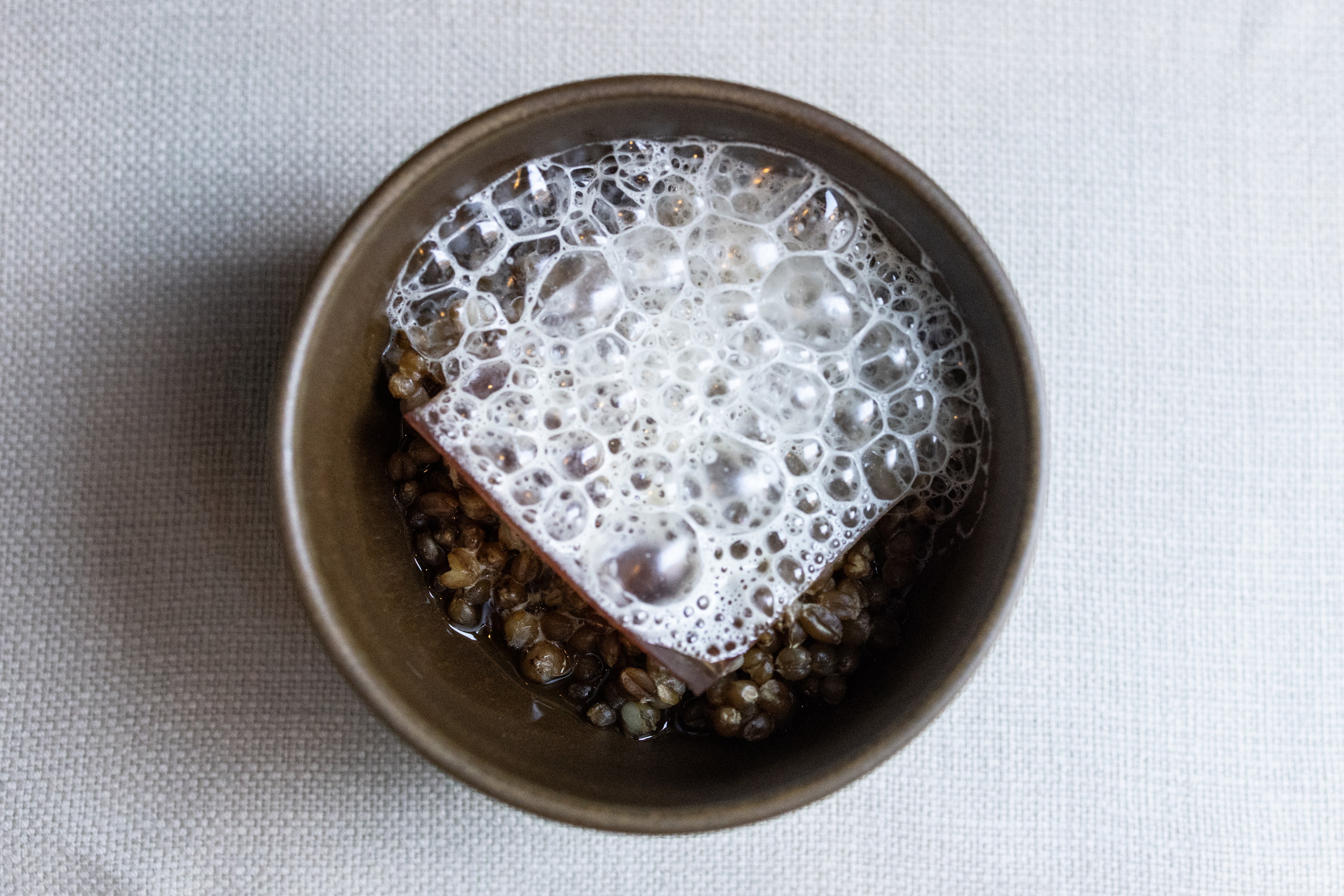
Jul created a dish with old Scandinavian whole grains, kuglehvede, prepared like biryani rice, boiled in a stock of katsuobushi (Japanese simmered, smoked and fermented skipjack tuna) made from Danish mackerel. It was served with 24-month cured ham from Danish black-spotted pig, redfish broth foam, and lobster butter: a dish that spoke fluently in several dialects without losing its northern accent.
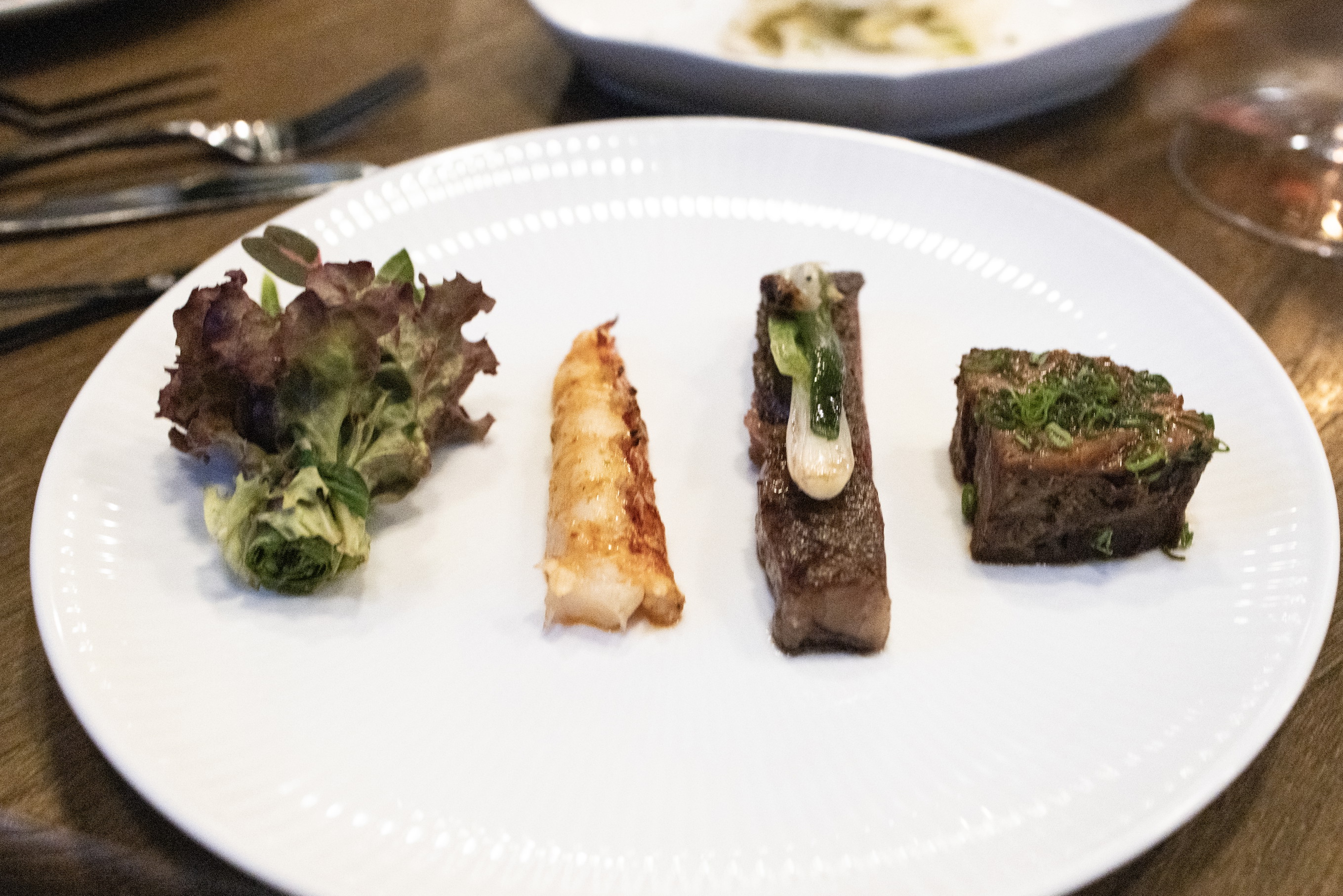
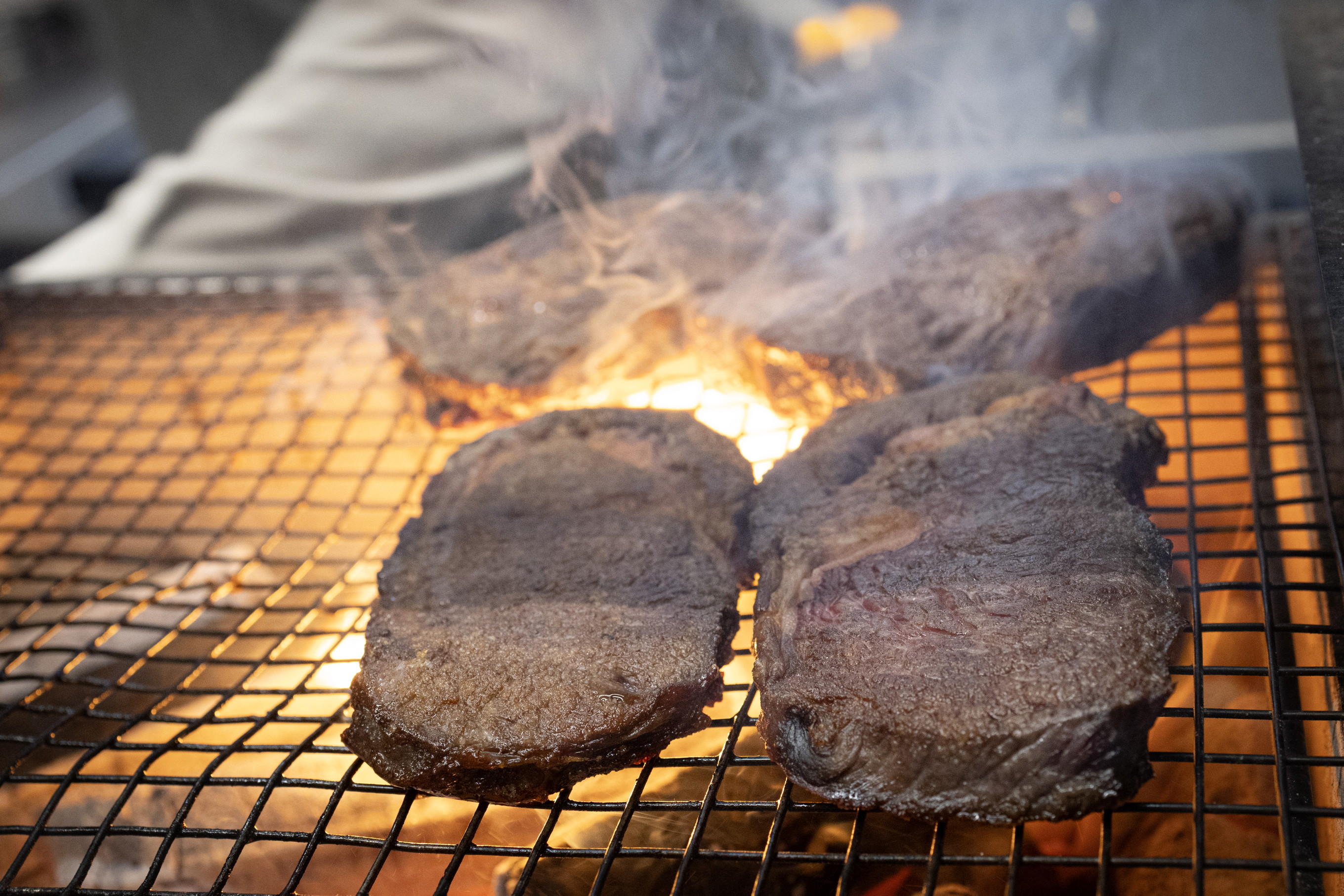
Later came banchan (small Korean side dishes) with vinegar, Korean barbecue-glazed short rib, grilled Danish rib eye, and langoustine.

What made the evening compelling was not fusion for its own sake, but the ease between two chefs thinking aloud together. Jul brought knowledge gathered from Korea and Japan – Busan, Hokkaido, traditional vinegars, rice, fermentation, yakitori kitchens – while Nurup translated the inspiration into the rhythm of Bach & Nurup. Their collaboration suggested that Korean cuisine in Scandinavia is not a trend arriving from outside, but something already present, waiting to be understood.
In Northern Jutland, where tradition often means meat, potatoes, and brown sauce, Bach & Nurup’s journey feels quietly ambitious. Jul calls it “admirable”, not only a search for Nurup’s own identity as a chef, but an attempt to make a broader culinary language feel natural in this part of Denmark.
For one evening, that language was spoken clearly: detailed, generous, curious, and deeply collaborative.