Why Irish pubs are so popular worldwide
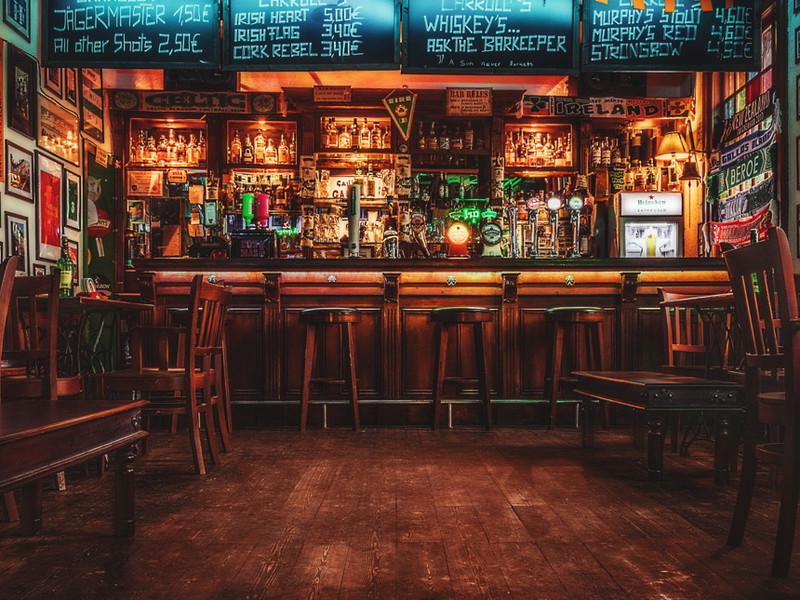
There is at least one Irish pub in practically every medium-sized city in the world. But why is the concept so popular and why did Irish drinking culture, of all places, capture the collective imagination?
A famous Irish saying goes "There are no strangers here; only friends you haven't met yet". The hospitality of the Irish is legendary. Coming and going, separation and reunion are deeply rooted in the Irish soul – and the pub plays a key role in this. Many people want to experience Irish hospitality again and again – whether on a trip to Ireland, at home or in a foreign city. The Irish themselves also love to quench their homesickness with pints of freshly tapped Guinness.
Beyond clichés
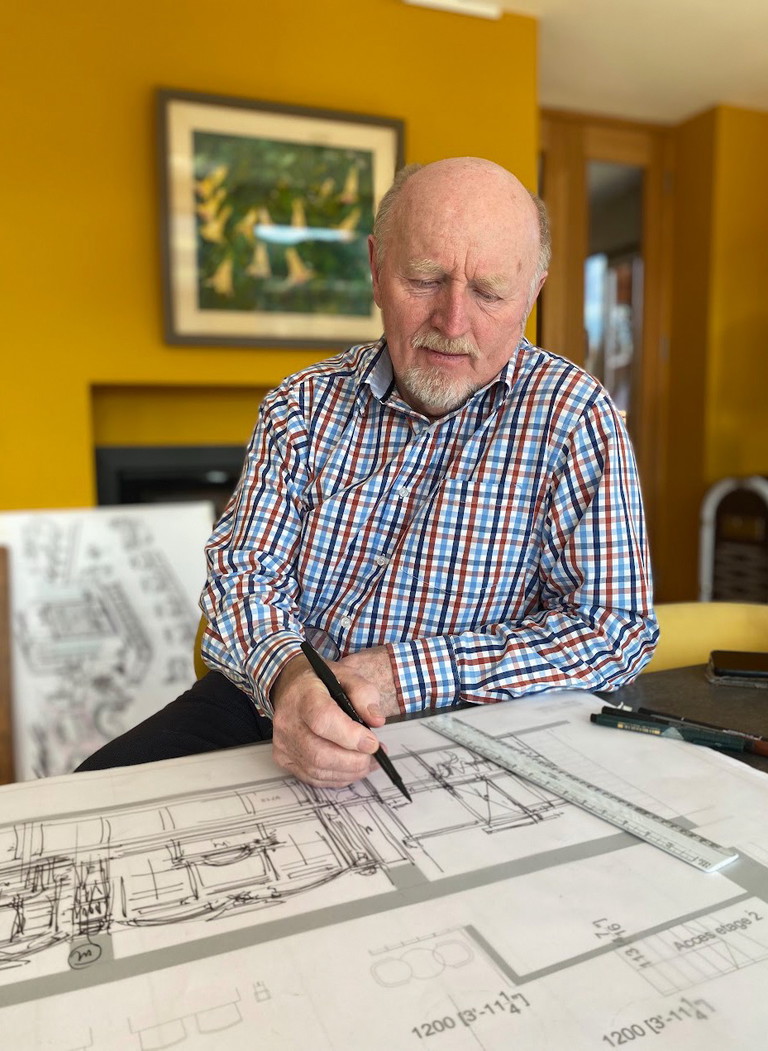
However, the popularity of Irish pubs is not simply based on homesickness; to a not insignificant extent, it's thanks to the business acumen of Irish architect Mel McNally. McNally is the best-known designer of Irish pubs in the world. Since the 1990s, he has built more than 2,000 with his Irish Pub Company – starting with the design, which is always customized to fit the client, to the production of the individual parts in Ireland and finally, installation on site. According to the Irish Pubs Global Federation, there are at least 6,500 Irish pubs worldwide. The pubs designed by McNally are always immaculate: from the woodwork and upholstery to the layout, the always prominently placed bar, the golden lettering and the carefully selected signs and accessories.
We asked McNally what the secret of a good Irish pub is, and his answer is surprisingly non-technical: "A great Irish pub embodies everything that is special about Irish culture," he says. "It brings together our love of conversation, music and craic." Craic – this quintessentially Irish term describes, shared enjoyment and joie de vivre. A pub with a lot of "craic" is therefore a place where things are lively, fun and sociable. It's as simple as that!
Guinness Ambassador
As an architecture student in Dublin in the early 1970s, McNally visited over 200 pubs with his fellow students and analyzed their architecture, layout, and atmosphere. He built his first pubs in the British Isles before developing the Guinness Irish Pub Concept with the famed stout brewer in the early 1990s. "Germany and Italy were our main markets at the time," says McNally. "The partnership with Guinness created momentum and they knew we could take the Irish pub concept to a level that made these pubs iconic venues."
And its success is still unbroken today. The Irish Pub Company is currently working on nine pubs simultaneously around the world – some are still in the planning phase, others are nearing completion. So despite the difficult economic situation, the Irish pub is here to stay. "The Irish Pub has a purpose beyond what it offers; it has a community and a soul! It has outlasted many other concepts and a good quality Irish pub gets better with age, so investors see it as a long-term investment," McNally explains.
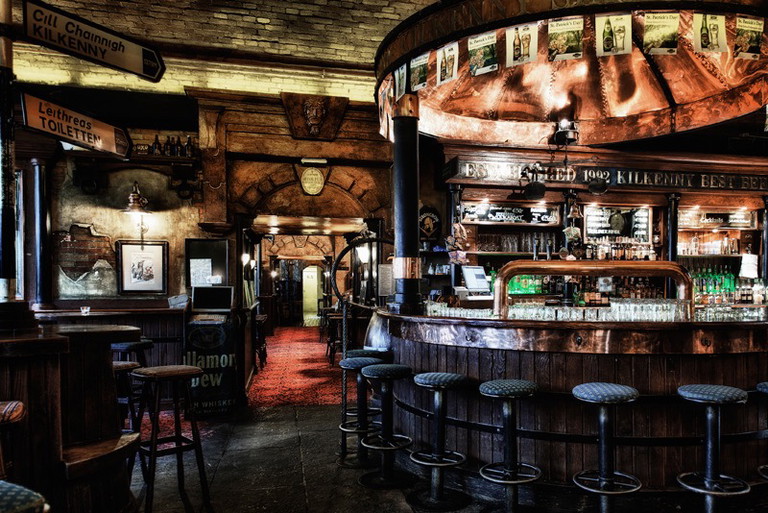
The best proof of this is the Kilkenny in Berlin, which opened in 1992. The Irish Pub Company built the pub under the viaducts of the Hackescher Markt S-Bahn station. Jennifer and Till Haffner, who have been running it since 2022, also see the Irish pub concept as more or less crisis-proof. "In a pub, you get a lot more than just beer or food," says Till Haffner. "With us, everyone knows what to expect: Warmth, friendliness, sport," Jennifer Haffner adds. The Irish pub is something you can afford, but also something you want to afford.
Two pubs - two souls
In addition to the Kilkenny, the Haffners also operate Murphy's on Schiffbauerdamm. Both Irish pubs, but both with their own soul. "Murphy's is a quieter place," says Jennifer Haffner. "It's more like an Irish living room." The Kilkenny, however, is full of action, with pub quizzes, live music and sports broadcasts. "Now the hurling season is about to start," says Till Haffner happily, adding that they really do show everything you would expect from a pub in Ireland, including local sports coverage.
The Irish are not only a welcome group at the Haffners, but also an important pillar of the team. "If we change something, our Irish employees have to like it first," says Till Haffner. For example, they source the bacon and sausages for their Full Irish Breakfast directly from Ireland. "If our Irish staff say it tastes like home, then it's good enough."
But continuity does not mean stagnation. Changes are difficult to implement in a pub that is over 30 years old – especially in the structural area. You can adapt and implement many things in a pub – as in any other restaurant – the Haffners explain, but there is one thing that cannot be changed: The pint of Guinness. That always has to be first rate.
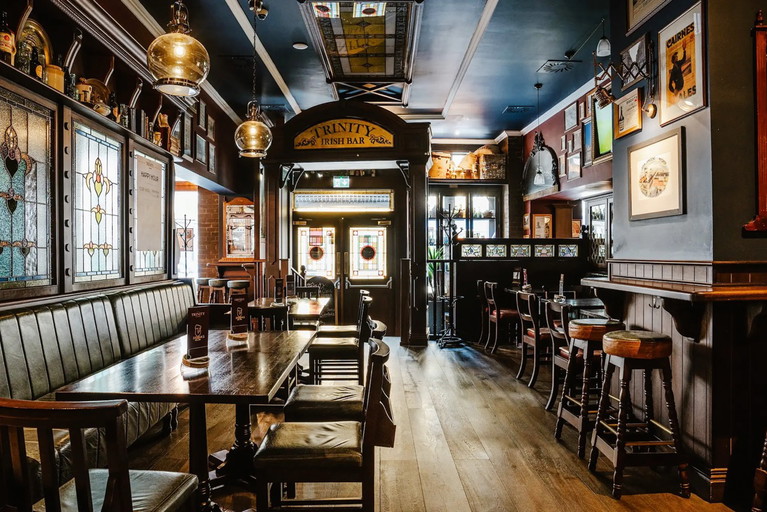
As natural as the perfect pint may be, Irish pubs are always caught between authenticity and commercialism. This is confirmed by Gerald Schedl, who took over Vienna's Trinity pub at the beginning of the year. The Irish Pub Company completely lined the pub with Irish timber – every detail is just right here too. "The woodwork alone cost €1.5 million," says Schedl. The previous owners wanted to establish a high-end pub concept in Vienna. "But such a concept was difficult to introduce, especially after COVID." In Vienna, too, an Irish pub represents coziness, authenticity and a "homey feeling" – luxury, not so much.

The Zurich premium pub
Schedl has thus taken the emphasis off upmarket offerings and invested in the menu instead. He now even opens his pub at lunchtime. Even if Vienna does not seem to be the right city for the premium Irish restaurants, there are certainly other examples that prove the contrary. For example, the James Joyce in Zurich, which is not just a pub, but also a restaurant with fantastic food and a good wine list. The Victorian interior is not from the Irish Pub Company, but was originally the bar of the former Jury's Hotel"in Dublin's historic city center. The James Joyce shows that Irish pubs can indeed meet high standards without selling their soul. In the city on the Limmat, where the clientele is wealthier and the willingness for premium experiences is greater, the mixture of traditional pub atmosphere and upscale gastronomy obviously works very well.
In the end, McNally's original insight is confirmed: an Irish pub is far more than just a pub – it's a vibe, an experience, a piece of transposed culture. Whether in Berlin, Vienna or Zurich, whether simple or upmarket: as long as the "craic" is right, the atmosphere remains authentic and the Guinness is poured perfectly, Irish pubs will continue to attract people from all over the world. Because as the Irish saying goes: "There are no strangers here; only friends you haven't met yet" – and that's exactly what makes a real Irish pub.