Skip to content
Unsplash

World Health Resort Davos: From Alpine Village to World Stage

Travel
wellness
Destinations

Thomas Mann’s The Magic Mountain turned Davos into a legend, and the World Economic Forum draws the world’s political elite to the city. But its true magic reveals itself far from the conference halls and security zones – in the untouched mountain idyll.

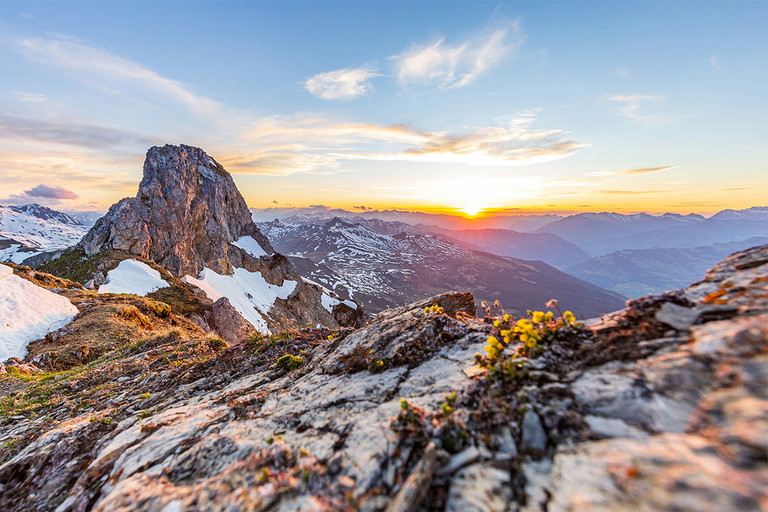
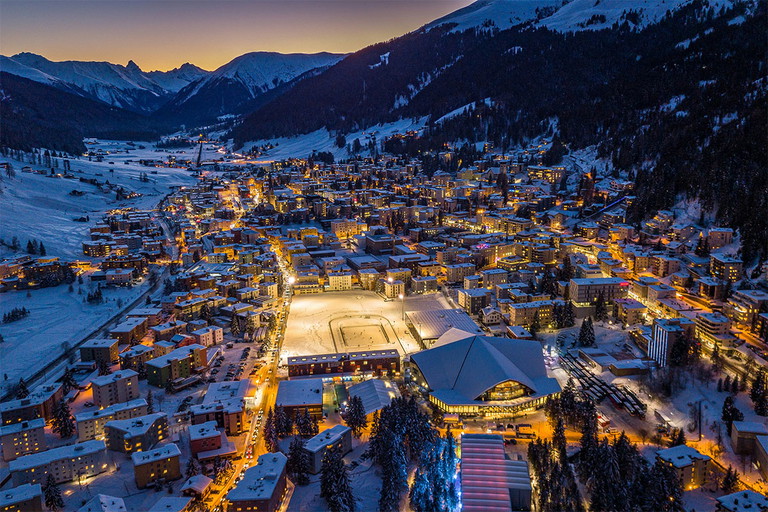
Davos is world-famous—as a winter sports mecca with endless slopes, a hiker’s paradise, and, above all, as the stage for the annual World Economic Forum. But those who visit the sophisticated Alpine town outside of peak season discover a different side: a place nestled in the wide Landwasser Valley, framed by towering peaks—serene, almost sleepy.

Aesthetes often turn up their noses at Davos’s architecture: an eclectic mix of buildings from various eras, more functional than picture-perfect alpine. But hidden among the lookalike facades are architectural gems—like the iconic Sanatorium Schatzalp, a relic of the golden age of Davos’s mountain clinics, or the Kirchner Museum, one of the most influential examples of 1990s Swiss-German architecture. The museum was built specifically to showcase the works of Expressionist Ernst Ludwig Kirchner, whose art often centers on the dramatic mountain landscapes of the Grisons region.

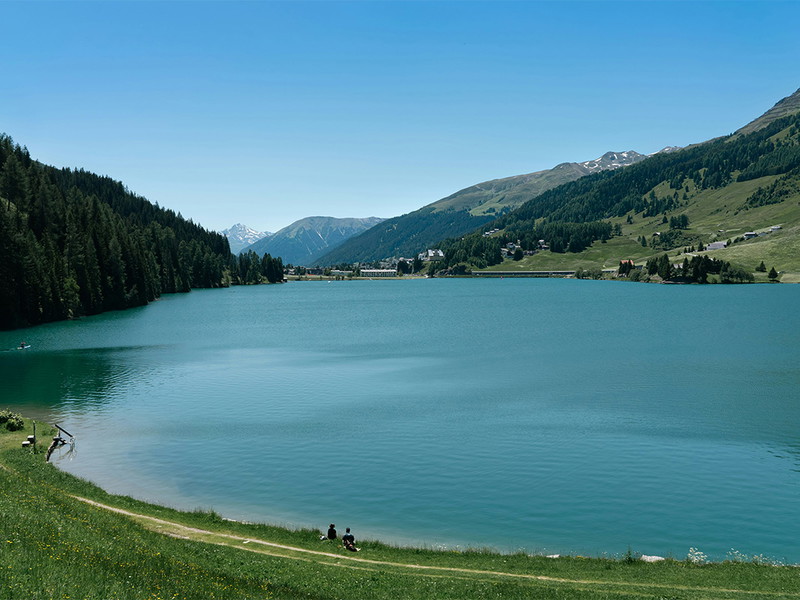
What’s truly spectacular, though, is the nature surrounding Davos. In summer, visitors hike through lush alpine meadows and dense forests. Just beyond the town’s edge lies Lake Davos, a turquoise jewel that draws sailors, windsurfers, and strollers alike. It’s this striking contrast between global stage and majestic mountain stillness that makes Davos so captivating.

© Unsplash

Pioneer of high-altitude medicine

Over the past two centuries, the once-humble mountain farming village has undergone a radical transformation. Today, Europe’s highest-altitude city is a world-renowned destination for tourism and wellness. Its rise from remote settlement to international hotspot is thanks to the vision of two remarkable men: German physician Alexander Spengler and Dutch entrepreneur Willem Jan Holsboer.

Spengler fled to Switzerland in 1849 after participating in the 1848 revolution in Baden, which led to a police warrant for his arrest. In Zurich, he studied medicine and later accepted a post as a country doctor in Davos. There, he made a surprising discovery: the residents of the Landwasser Valley appeared to be remarkably resistant to illness—while tuberculosis was raging across Europe, the deadly lung disease seemed to have little impact here. Spengler attributed this to the high-altitude air, which he believed had powerful healing properties. In 1868, together with Dutch businessman Willem Jan Holsboer, he opened the village’s first official sanatorium, Spengler-Holsboer Sanatorium—and Davos soon became a magnet for patients from across Europe.

In 1900, Spengler’s dream project became a reality: Schatzalp, the most luxurious health resort the world had ever seen. It set new standards: clawfoot bathtubs with heated rims, pre-warmed toilet seats, and food lifts connecting each room directly to the kitchen, ensuring that even bedridden guests received freshly prepared meals. Every balcony was designed to receive maximum sunlight—a masterclass in light-focused architecture. The hotel remains in operation to this day. Since 2007, Schatzalp has been part of Swiss Historic Hotels, a group dedicated to preserving culturally and historically significant properties. In 2008, it was named Historic Hotel of the Year, a lucrative myth.

© Unsplash

Starting in the late 1940s, the development of streptomycin as an effective antibiotic against tuberculosis led to a decline in Davos’s importance as a health resort. But by the early 20th century, the town had already established a second identity—as a winter sports destination. In 1894, Sherlock Holmes creator Arthur Conan Doyle took part in a ski tour in Davos and wrote about the experience—his account served as glowing publicity for the region. But it wasn’t just skiing that drew visitors; sled races, ice skating on the lake, and hockey also stirred up excitement. In 1923, Lucius Spengler, son of Alexander Spengler, founded the first Spengler Cup—a hockey tournament that continues to take place annually to this day.

Over time, many of the former sanatoriums were transformed into cutting-edge hotels. Today, you can still spend the night in the former Waldsanatorium, which inspired Thomas Mann’s literary masterpiece The Magic Mountain—now known as Waldhotel & Spa. Meanwhile, the futuristic AlpenGold Hotel stands as a modern architectural landmark overlooking the valley. From these striking locations, the mountains are yours to explore year-round. Along the way, you’ll trace the rich and storied history of Davos—while enjoying a present that is, thankfully, completely free of tuberculosis…

TO THE BEST TRAVEL TIPS FOR DAVOS

Larissa Graf
Find out more
1 / 12