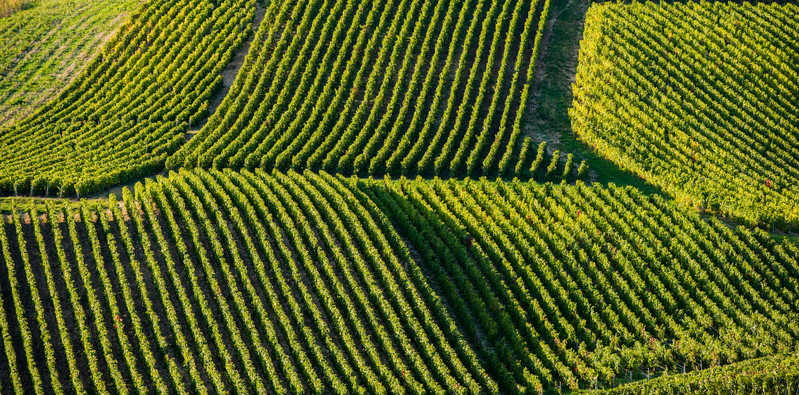
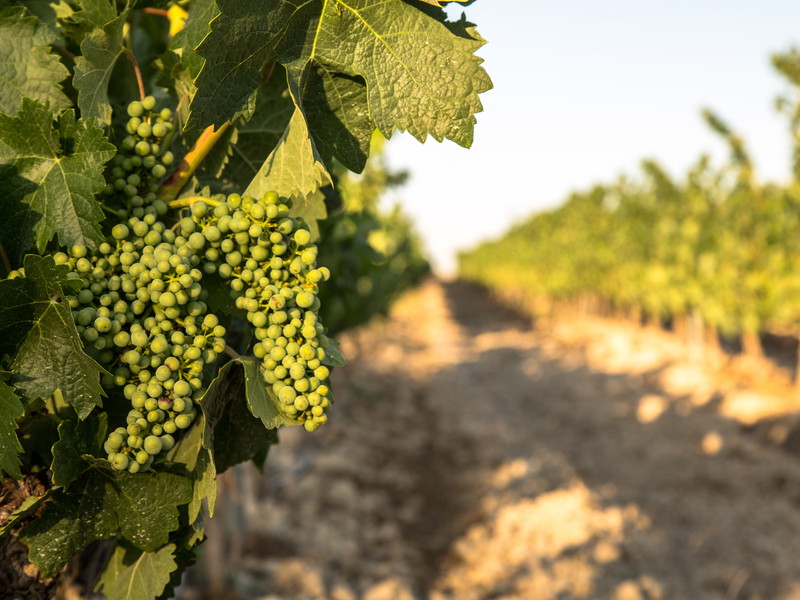
Roditis is a very widespread, long-established grape variety in Greece and takes second place in the grape variety list behind Savatiano. It is believed to have originated on the island of Rhodes, as the name would suggest. However, this could also come from the word "rodon", which means "pink" in translation and could be a reference to the rose-colored grape skins. There is also confusion caused by several different clones in the vineyards, which differ not only in quality but also in the color of the grapes, with the spectrum ranging from green to a darker rosé. The berries of Roditis are small and come together in medium to large clusters. Little is known about vine diseases, but it shows good resistance to Phylloxera infestation (phylloxera infestation) and winter frosts. A strength of the variety is the retention of a distinctive acidity while reaching high sugar levels. Roditis sprouts late and only reaches full maturity late. The variety is planted from the north of Greece through central Greece to the Peloponnese. Depending on its origin, it is blended with other grape varieties, such as Savatiano, Athiri or Assyrtiko. It also forms a basis in the blend for the resinous wine of Greece, Retsina. The quality of the wine depends very much on the clone and the extent of the yield limitation. In most cases, Roditis wines do not have any great ripening and storage potential. There are no known occurrences outside of Greece.
This grape variety is also known by the name of:
Alepou, Kanellato, Kokkinostaphulo, Kokinara, Kokkinara, Kokkinostaphylo, Lisitsines, Litsitsines, Rhoditis, Rhodites, Rhoditi, Rodea Stafyli, Roditi, Rodites, Roditis kokkinos, Roïdo, Roigditis, Roditis rosé, Rogdites, Sourbiotes, Sourbiotis, Rogditis, Roidites, Roiditis