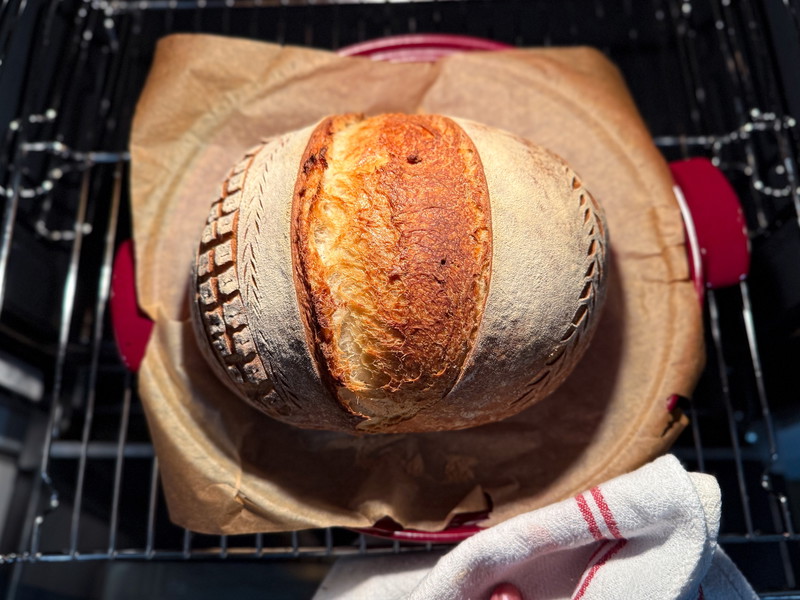
Anyone who has ever baked sourdough bread knows this to be true: No two loaves are ever the same. Shape, crumb, aroma—each baked good has its own personality. A range of factors can explain these variations, from hydration levels and baking temperature to the sourdough starter itself, which drives fermentation and rise.
Now, a research team at North Carolina State University suggests that one factor matters more than many bakers realize: the type of flour used. In a study published in Microbiology Spectrum, the scientists found that even when yeast levels remain constant, the type of flour used significantly influences which bacteria thrive in the starter—and, ultimately, how the bread tastes. For home bakers and professionals alike, this opens up an easy way to fine-tune flavor simply by changing the flour.
A Look Inside the Lab
To better understand how microorganisms develop in sourdough, the researchers created 18 separate starters using three types of flour: all-purpose flour, wheat flour, and whole grain wheat flour. Six starters were made with each flour. Half were fed daily, while the others were fed every other day, over a 28-day period. The feeding schedules were designed to closely mirror real-life sourdough routines.
Throughout the month-long experiment, the team used DNA analysis to monitor how yeast and bacterial populations evolved. Over time, clear patterns emerged, showing which microorganisms dominated under different conditions—and how strongly flour choice shaped those outcomes.
Link not Clearly Identifiable
While the study stopped short of establishing a direct, one-to-one link between specific bacterial strains and distinct flavor notes, it did reveal meaningful differences. Some microbial communities produced higher acidity, others resulted in milder profiles, and some contributed deeper, more complex aromas. Taken together, the findings strongly suggest that flour-driven bacterial diversity plays a key role in defining a loaf’s final taste.
There’s also good news for anyone worried about strict starter schedules. Over the full 28 days, feeding frequency made no measurable difference to the dominant microorganisms. Whether refreshed daily or every other day, the starters developed in much the same way—proof that great sourdough is as much about smart choices as it is about discipline.