What do you offer that you can’t get elsewhere in New York?
We go out of our way to find ingredients that are exciting to use, and we believe in zero waste—working with products others would discard, and building dishes you won’t get elsewhere, or at least won’t get cooked the same way. Sourcing-wise, yes, we’re in North America so some things originate from, say, California such as kelp from Santa Barbara. But for the most part we stay within about 50 miles, with fish from Montauk, seafood from Maine, dairy from New Jersey, and wild boar from Pennsylvania. We forage a lot and that’s unusual here, and we carefully plan season to season, for instance to make sure we have preserves from previous seasons such as pine shoots.
So: New Nordic thinking, right?
Sure, and you could say that is the “new normal” in a lot of ways, but it is not “normal” in New York. A lot of food is flown in here, and when faced with making a profit most will choose making money. Sticking to the New Nordic principles is costly. The core idea is cooking from what’s right there. Take Noma relocating to Los Angeles for instance. Despite its new location, you still recognize the unique Noma culinary approach. For me, it’s a tool. Everything in the kitchen is a tool, but some tools matter more than others. Foraging is one of those tools, it’s baked into my DNA.
You’ve also talked a lot about going back in time to the roots of cooking, combining hunting and gathering with modern culinary techniques. What does that mean at ILIS?
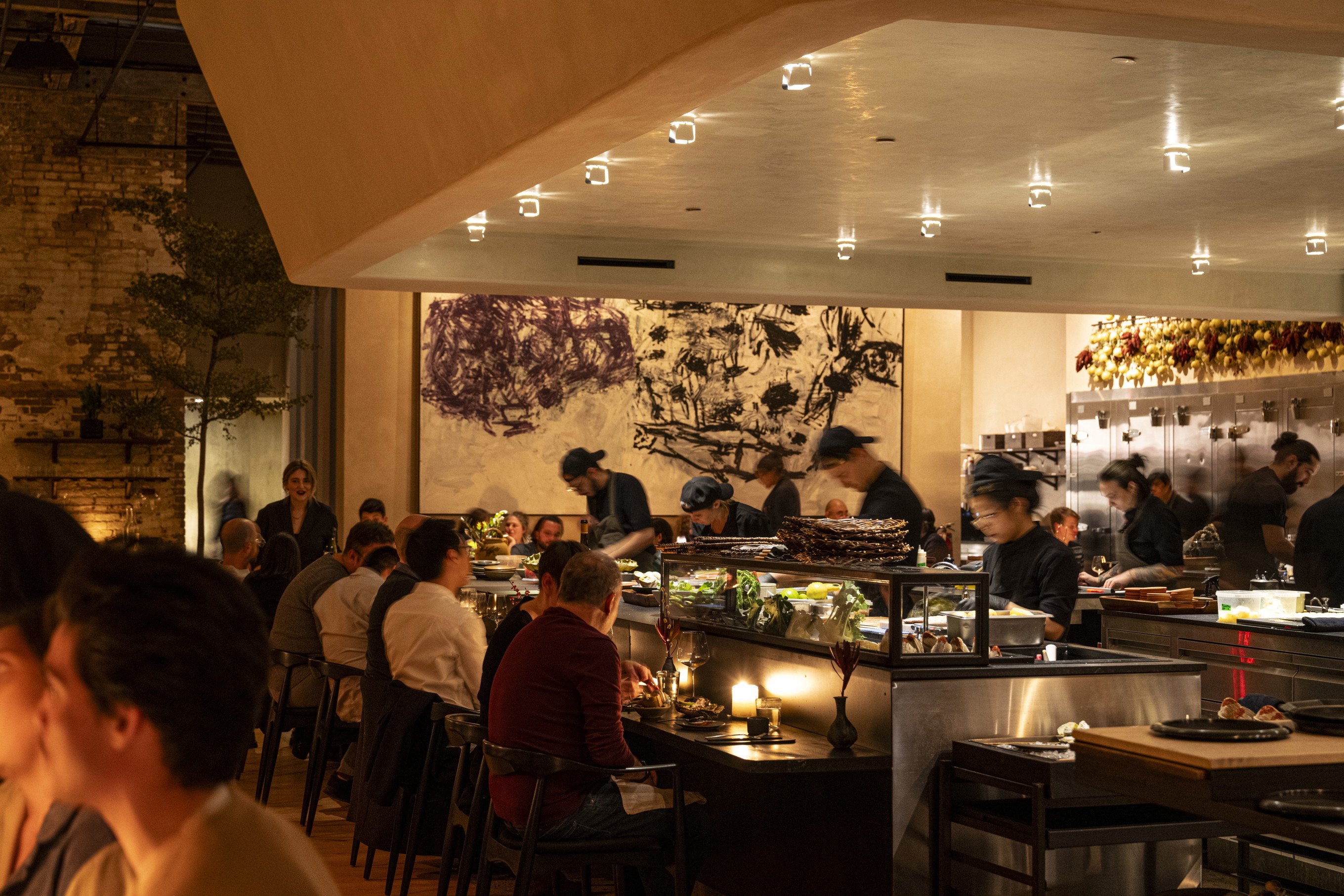
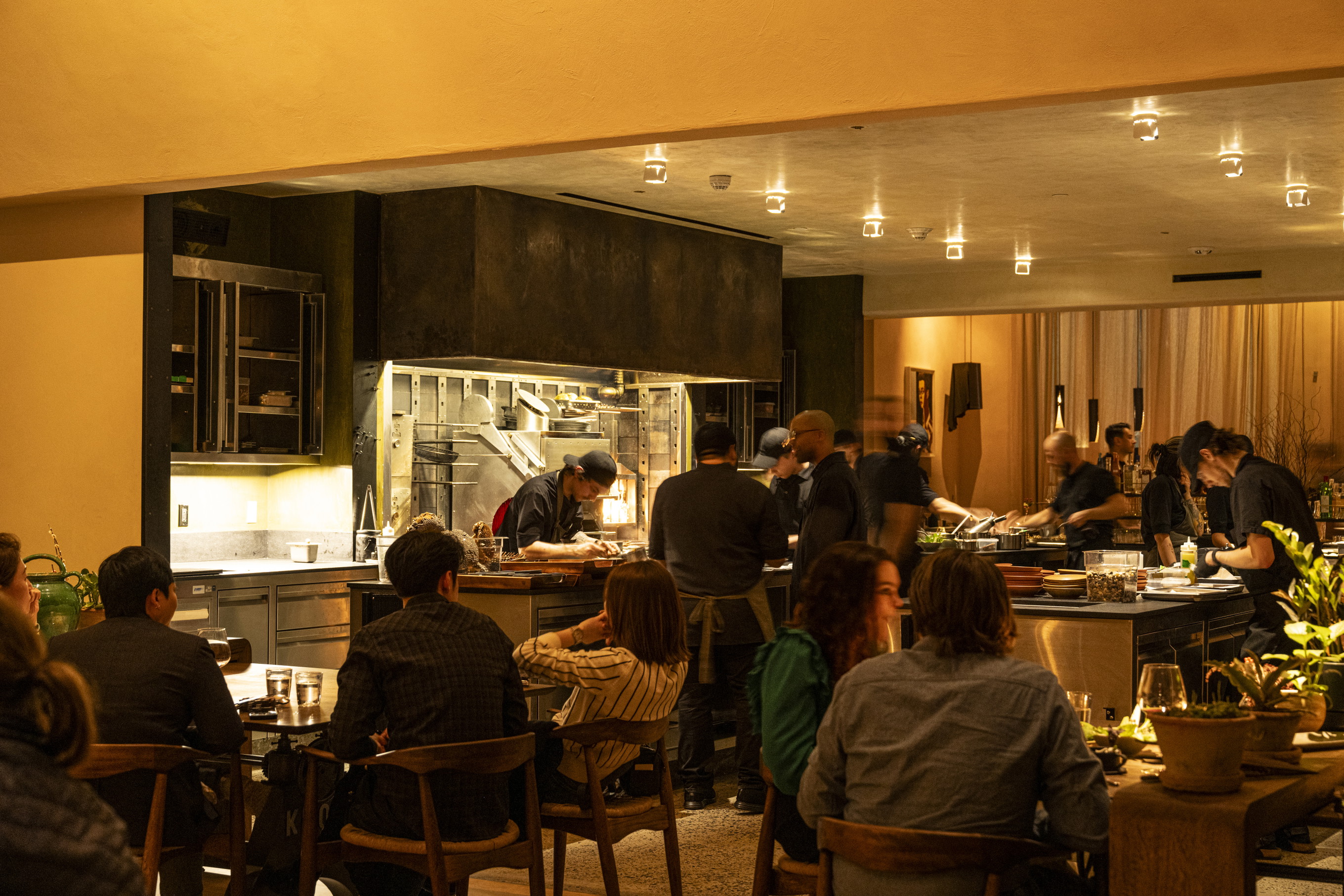
It’s how I like to cook—and eat. I love barbecues, contrast in food, and lots of elements. It took years of research to understand the flavor profiles I’m drawn to. We love steak and sushi, and at ILIS we’ve built our kitchen around that same contrast, with a fire pit and an ice pit. The fire-and-ice approach lets us play with different expressions of an ingredient: Ice is built into the techniques, so we serve plenty of dishes cold. For example, we’ll serve tuna or oysters both raw and cooked to show two sides of the same product. On the fire side we go quite extreme: We have no gas and only a small induction hob for keeping things like sauces warm at low temperature. Even boiling water or stock has to be done over a wood fire. It’s a bit like Swedish chef Niklas Ekstedt’s London restaurant Ekstedt at The Yard—and it’s not easy to find cooks for it.
What are you most excited about on the menu right now?
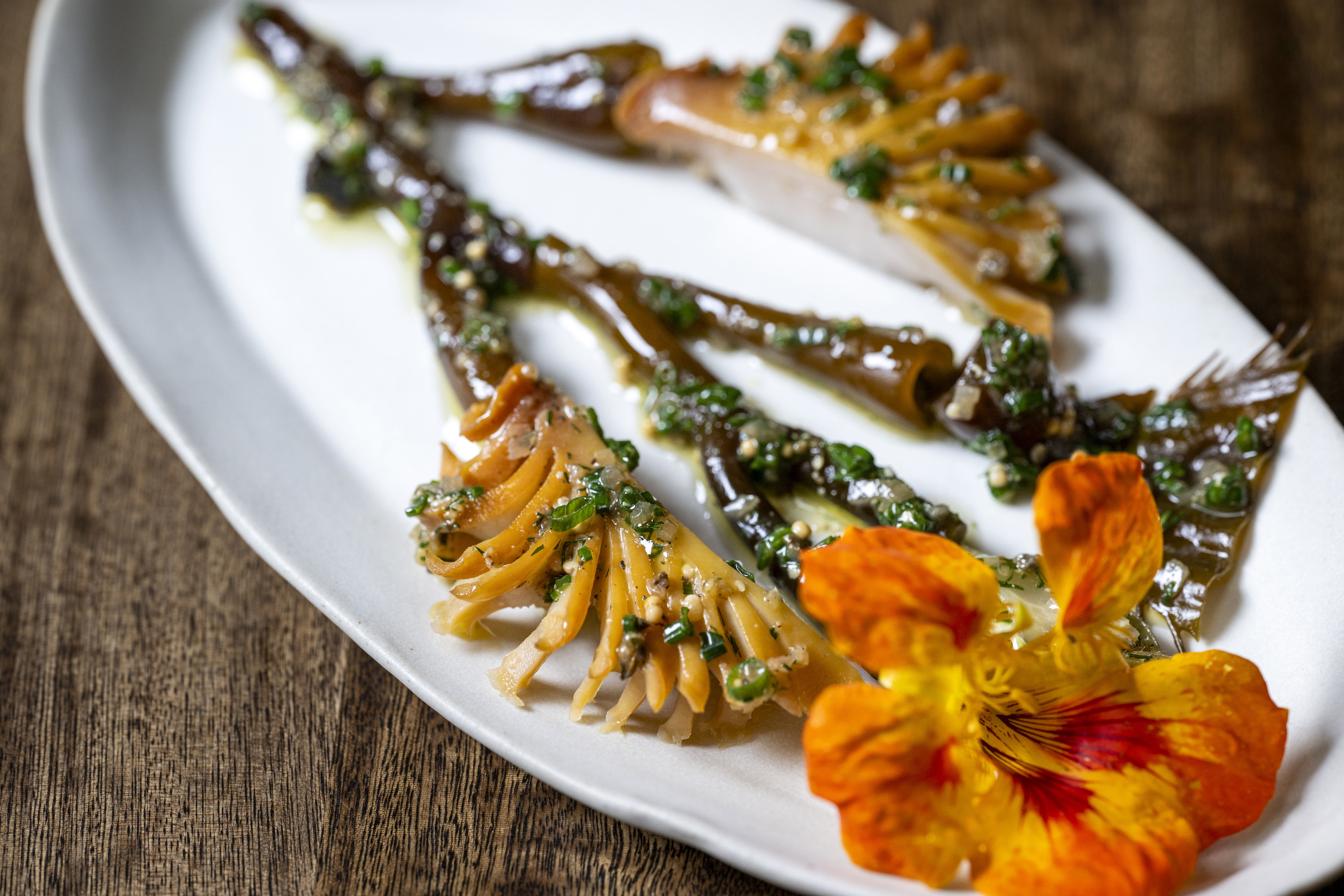
I really like the tuna bone marrow dish. It’s a caramelized onion soup, and when we serve it, we bring out a big tuna bone to the table, saw it to scoop out the marrow, and stir it in, finished with toasted barley oil. We’ve also just added wild oysters. They’re huge, about 200 grams, and we steam them with pickled ramps and make a kimchi out of it, then put it back in the shell with a bit of chlorophyll. I also love the quail with pine that you eat with your hands.
ILIS has no strict front/back split, a service style you’ve dubbed “One House”. What’s the thought behind this?
It started because I wanted cooks to earn more and be part of the tip pool. In Europe, it’s a choice, but here in New York you have to tip and, in practice, tips mostly go to the people waiting tables. Guests add 20–25% in tips plus almost 9% tax, so what you see isn’t the real bill—and the restaurant never sees that extra amount; it goes to the government and straight into the pocket of the house staff that works in the front. It can also create situations where the food is great but the service isn’t, and the tip still goes to the person in front of you. That feels deeply unfair to me, and it divides teams. That’s what I’m trying to change: to ensure that we all get a share.
What might change at ILIS going forward?
We’re building more structure. R&D is constant, and I’m still getting to know the landscape here. Even after 14 years in New York I am still figuring out what grows here, what’s actually in our backyard. Format-wise we’ve simplified things: two menus, which are really a larger menu–the Field Guide–with a smaller version of it, called the Market Menu. We have further plans for the year, but nothing I can reveal yet.
How should a first-time guest approach ILIS?
Come with an open mind and choose according to your appetite! Pick the Market Menu if you’re not that hungry, and the Field Guide for the full experience.
Lastly, congratulations on being a 2026 James Beard Award semi-finalist. How does it feel?
It means a lot! It’s almost like being shortlisted for an Oscar. First and foremost, what’s important to me is that I love to cook and I want to run a great restaurant. And you can’t run a great restaurant without great staff, and you can’t inspire them if you’re not there. I don’t want to remove myself from the restaurant and I’m happy with where ILIS is heading. Numbers are up. The first year was amazing, the second year was not as good, but now we’re starting to feel like year one again.