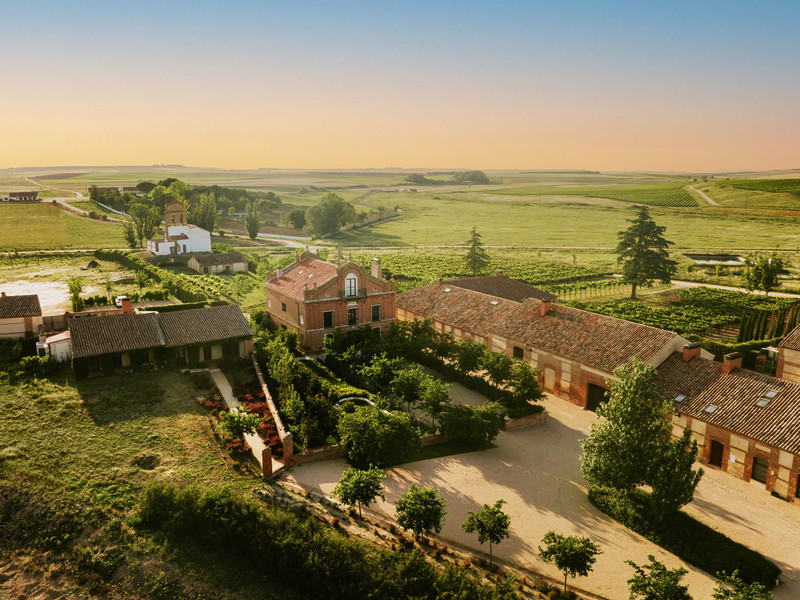
To taste the full range of wines of the Domaine Marquis d’Angerville is to stroll through Volnay, albeit with a step over the invisible border with Pommard and an accidental stumble on the pathway to Meursault. Volnay’s two neighbouring villages are well within the ambit of a post-prandial saunter. The Meursault Santenots vineyard could in any case be considered more of a Volnay vineyard than a Meursault one since, apart from the 1.05ha/2.59 acres of Chardonnay cultivated by Marquis d’Angerville, it is otherwise entirely planted to Pinot Noir. Pommard Combes Dessus, likewise, being on the Volnay side of Pommard, is not a vineyard that particularly expresses the rougher, gruffer, tougher character that Pommard is known for. It’s more like another stray Volnay.
A grand tour of a little village
The Volnays of Marquis d’Angerville meanwhile are everything of Volnay, from the light and graceful Bourgogne Rouge to the gorgeously silky and disembodied fragrance of the Village, to the wafting, chic elegance of the premier cru. The lieux-dits are of course the pinnacle, especially when tasted side by side. It is a grand tour like no other of the little village of Volnay in all its glory. Other wines in Burgundy may be more intense, more showy, and more renowned than the lieux-dits of Volnay, but this is not to say they are better. Volnay, with its lacy, ethereal weightlessness has a claim to being the most distinctive of the famous villages.
An early harvest
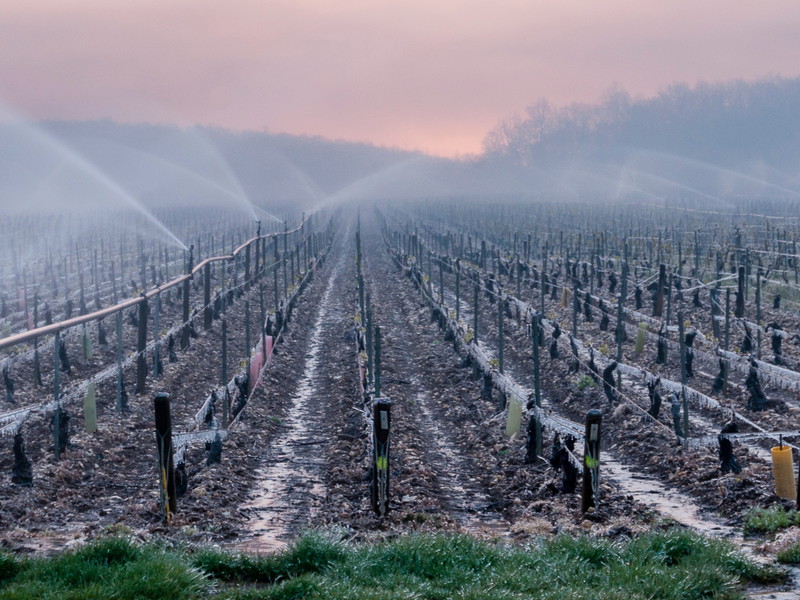
The d’Angerville 2020s, in particular, express all of the beautiful characteristics of Volnay to the utmost. Guillaume d’Angerville claims it is the best vintage he has ever made, an accolade he previously granted to the 2010s, which, in his opinion, have been superseded by this year’s release. “The choice of the harvest date was so important,” Guillaume explains. “Based on when the flowering happened in May, I had decided the harvest should start on August 25, but then I had to move it forward and I began on the 19th of August. I was first, when usually I am last.”
Paradoxical and incomparable
As Guillaume puts it, this anomalous vintage is characterised by a lack of phenolic ripeness together with alcohol that reaches 13.5-14%. The overall effect is not, however, what one would have expected, but something paradoxical and incomparable. “I saw ripening happening so fast in this dry and solar vintage. From one day to the next the speed of change was like nothing I had ever witnessed. Since I wanted to avoid very high alcohol, I made the decision to sacrifice the ripening of the seeds, and the result has vindicated me.” Guillaume continues: “If you tasted these wines blind you would never think this was the highest sunshine and lowest rainfall in years. I believe the vines are adjusting to the new situation.”
The Domaine has recently converted to biodynamic cultivation in the vineyard and Guillaume thinks this has made a difference in the wines that is particularly evident in the 2020 vintage.
Unfathomable precision
The great wines of Burgundy’s Côte d’Or have a sense of place consistently expressed across vintages, centuries and millennia. This identity is not just that of a region or a grape variety but can be traced down to each individual lieu-dit, which means a “named place.” At Domaine d’Angerville it is each individual place that speaks.
It is this almost unfathomable sense of precision that makes Burgundy’s wines so fascinating, miraculous almost, and so precious an experience for those who return to them time after time, like pigeons to a roost, not only for the hedonistic pleasure that they undoubtedly give, but to witness this phenomenon first hand; to try to understand, and in some small way commune with this mystery, this hidden pattern, which is so public and open to view on any map, but also inexplicable and impossible to pinpoint.
The unique identity of a wine, the lieu-dit revealed year after year, imparts its historical and living DNA to the wine it produces. This is what makes a stroll through the vineyards a metaphysical experience, traversing every dimension of time and space. And the more so when this happens without going anywhere, and it all takes place in your glass.
READ THE TASTING NOTES HERE