Falstaff: You describe yourself as a "protector of traditional food" – how did you get into this line?
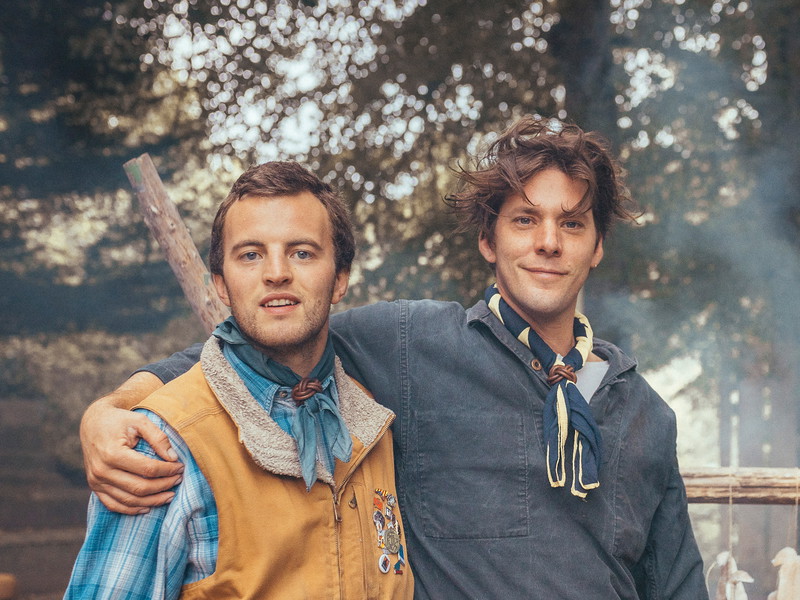
Max Jones: Food has always played a big part in my life. As a child, I was fascinated by the family fridge, full with all the delicacies that my Italian mother had brought back to England from her vacation. As a young man in London, I worked for cheesemongers. I was fascinated by these traditional methods of food production and wanted to tell the stories behind them so that the knowledge would not be lost. In 2018, I came to West Cork in Ireland to learn how to smoke wild salmon with Sally Ferns-Barnes, the last practitioner of this art. Wild salmon used to be a staple. Today, the salmon population has declined drastically. But instead of criticizing this, we resort to fish sourced with questionable farming practices.
What other culinary traditions are in danger of disappearing in Ireland?
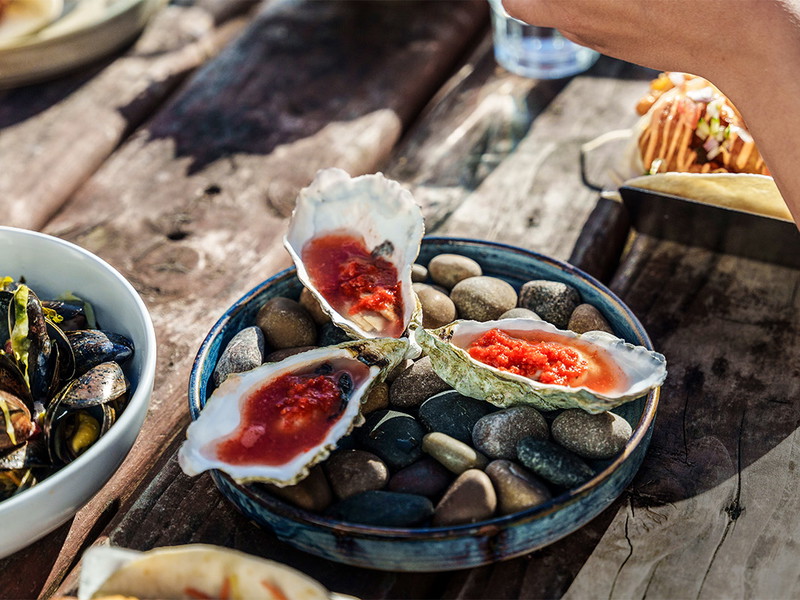
Butter churning. I know of no other country with such a proud dairy industry. In the past, everyone had a few cows, and butter was made from fermented cream. Delicious! Such products also provide emotional nourishment because you know where and how they were made. Today, we eat pasteurized butter, produced with lab cultures; it is homogeneous and the taste is always the same. In my workshops, we make butter from hand-milked dairy from local cows. Brown bread and smoked salmon - that's the taste of Cork for me! But the area offers much more. I regularly dive for spider crabs, lobsters and scallops. Everything is here. You just have to know where. If you eat the landscape, you become part of it. This used to be a matter of course, and for me it is the future.
Only a fraction of the Irish population eats this way. Fast and convenient food are also on the rise.
There are certainly many challenges. Much of the local food culture disappeared during over 700 years of British colonial rule. But pessimism is not very helpful. A dynamic movement of young chefs is currently emerging in Ireland who are committed to local ingredients. They want to revive the Irish culinary identity. I think the preservation of old ways strengthens the collective self-confidence of the Irish. I try to get as many people as possible interested in these methods. This is because the value system of consumers is changing and with it, the demand for traditional products.
uptherethelast.com