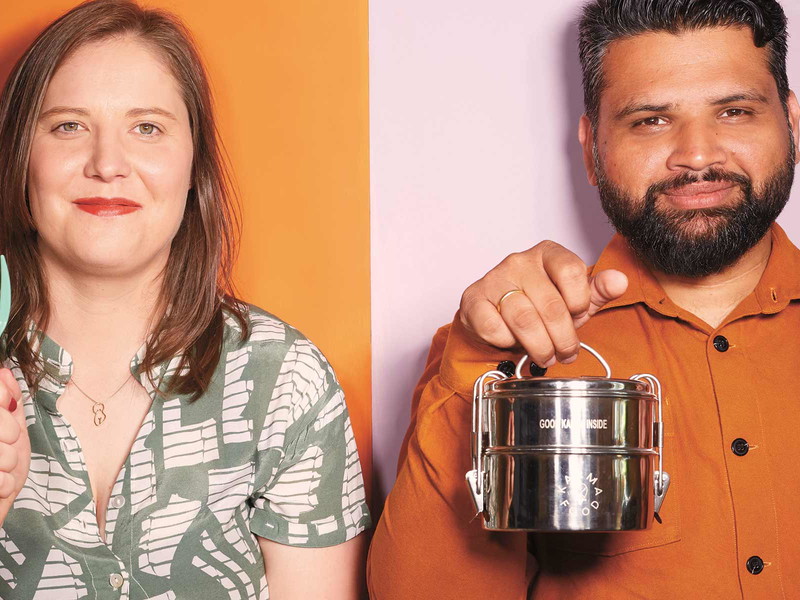
Being a guest sounds easy. You say "yes", maybe bring a bottle of wine, and that's it. But anyone who often has people over knows that they exist: Good guests – and those who see themselves as the main protagonists of the evening. Simone and Adi Raihmann, the brains behind Karma Food and Maison Buffet, describe the art of being a gracious guest for Falstaff: "It's not about the takeaway, not about perfect behavior, but about attitude."
Falstaff: How do you recognize a "good guest"?
When someone with good energy comes through the door. A good guest senses the mood and blends in – regardless of whether the evening is quiet or lively.
As a host, which gesture is particularly close to your heart?
When someone says at the end: "Thank you for sharing." That doesn't just mean the food, but the time spent together. Such words are worth more than any "Very tasty".
The eternal question is: Should I bring something? – What is your favorite answer?
The best thing is: "Bring yourself – I look forward to seeing you." If you bring a bottle of wine that you really love, you'll reveal a bit of your personality.
How does a considerate guest behave at the buffet?
They make sure that everyone gets something. What is annoying are guests who rush to fill their plates or carelessly leave the buffet in a mess.
And how do you deal graciously with things you don't want to eat?
Clear and uncomplicated: "Thank you, I don't eat gluten, but I'm really looking forward to the vegetables." No drama, no discussion.
Have there been any gifts that have surprised you?
Oh yes! A cucumber – fresh from the garden, still covered in morning dew. I cut them almost reverently.
And a funny anecdote?
A friend once cut the whole cake as if it were his birthday cake. Of course it was mine. But he did it with so much enthusiasm that we all had to laugh.
Which hosting myth is untrue?
That guests always have finish everything on their plate. That is nonsense. Hosts want their guests to be full and happy – not forced to stuff themselves.
How important is it that guests are curious and open to new flavors?
Very important – as long as it is authentic. You don't have to like everything, but a small bite shows openness and curiosity. After all, food is also culture.
Do you notice any differences between people who often host themselves and those who never do?
Yes. Hosts pay attention to details: candles, mood, timing. The others simply enjoy it. Both have their appeal.
Which is worth more: polite words or genuine interest?
Quite clearly: genuine interest. A "How did you do that?" is worth more than a hundred polite phrases.
And in a restaurant – how do you be a good guest there?
Firstly: Appreciate the service team. Secondly, look them in the eye when you order. Thirdly: tip generously.
You host many international guests – are there cultural differences?
Of course. In Japan, you never stick your chopsticks in the rice. In Italy, serving cappuccino after eleven o'clock is sacrilege. And in Vienna? There should never be a lack of humor at the dinner table.
What can we learn from children?
Their authenticity. If they like something, they shine. If not, they say: "I don't like it." No judgement, but with sincerity.
If you could wish for something from your guests – what would it be?
Time. Not just for eating, but for staying, talking and sharing stories.
And your most important piece of advice to all guests?
Remember: you are part of the atmosphere. Brings joy and openness – and if something goes wrong, save it with a laugh.