Bubbly diversity
To understand the world of Prosecco, it helps to imagine its appellations as a pyramid. At the base is Prosecco DOC, followed by the historic production regions of Prosecco DOC Treviso and Prosecco DOC Trieste, both of which have played a key role in Prosecco’s success. These two regions, ideally suited for cultivating the Glera grape, stand out from the wider plains.
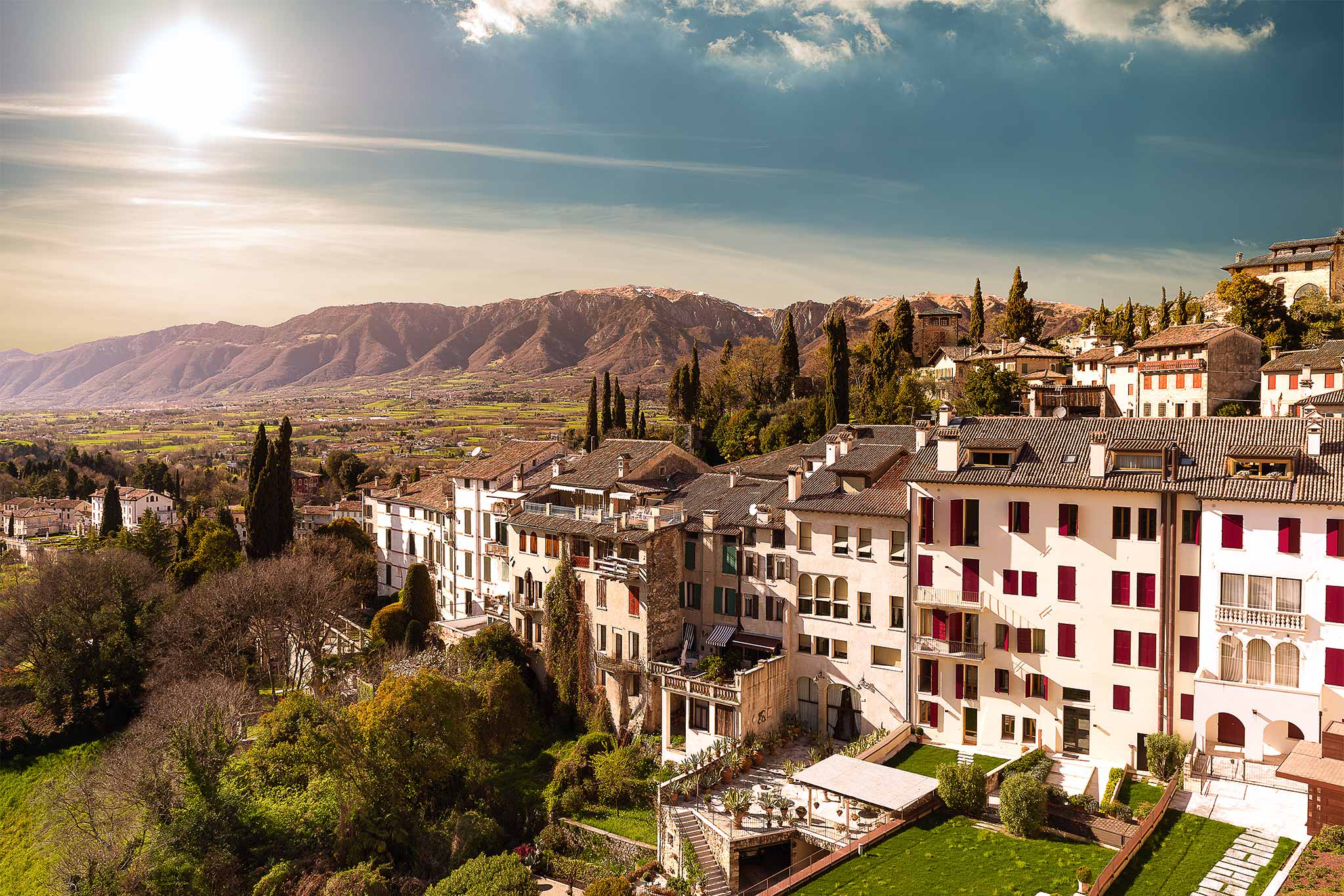
Further up the pyramid lies Asolo Prosecco DOCG, produced in the hills surrounding the village of Asolo, where vineyards stretch across breathtaking landscapes. In recent years, production here has grown rapidly, making it Italy’s fourth-largest sparkling wine denomination. Its success is driven by diverse terroirs, rich biodiversity, expressive fruit character, and a clever market strategy.
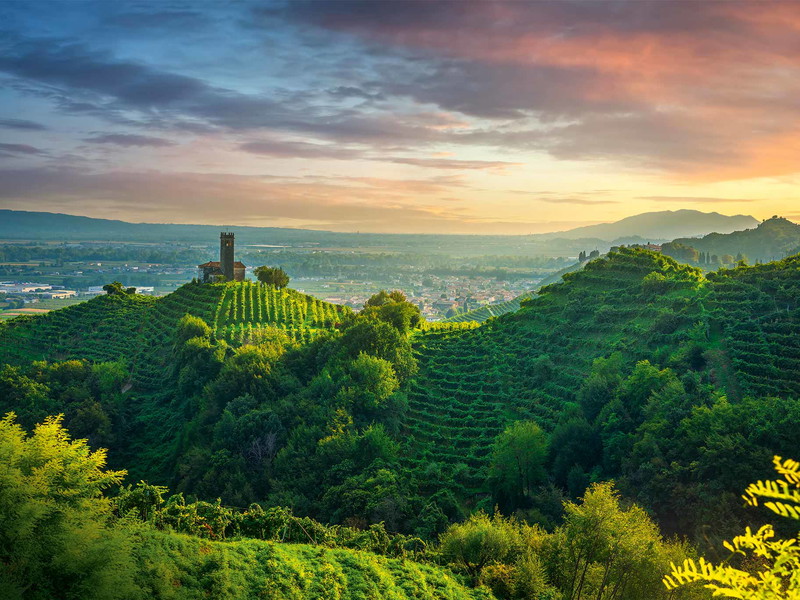
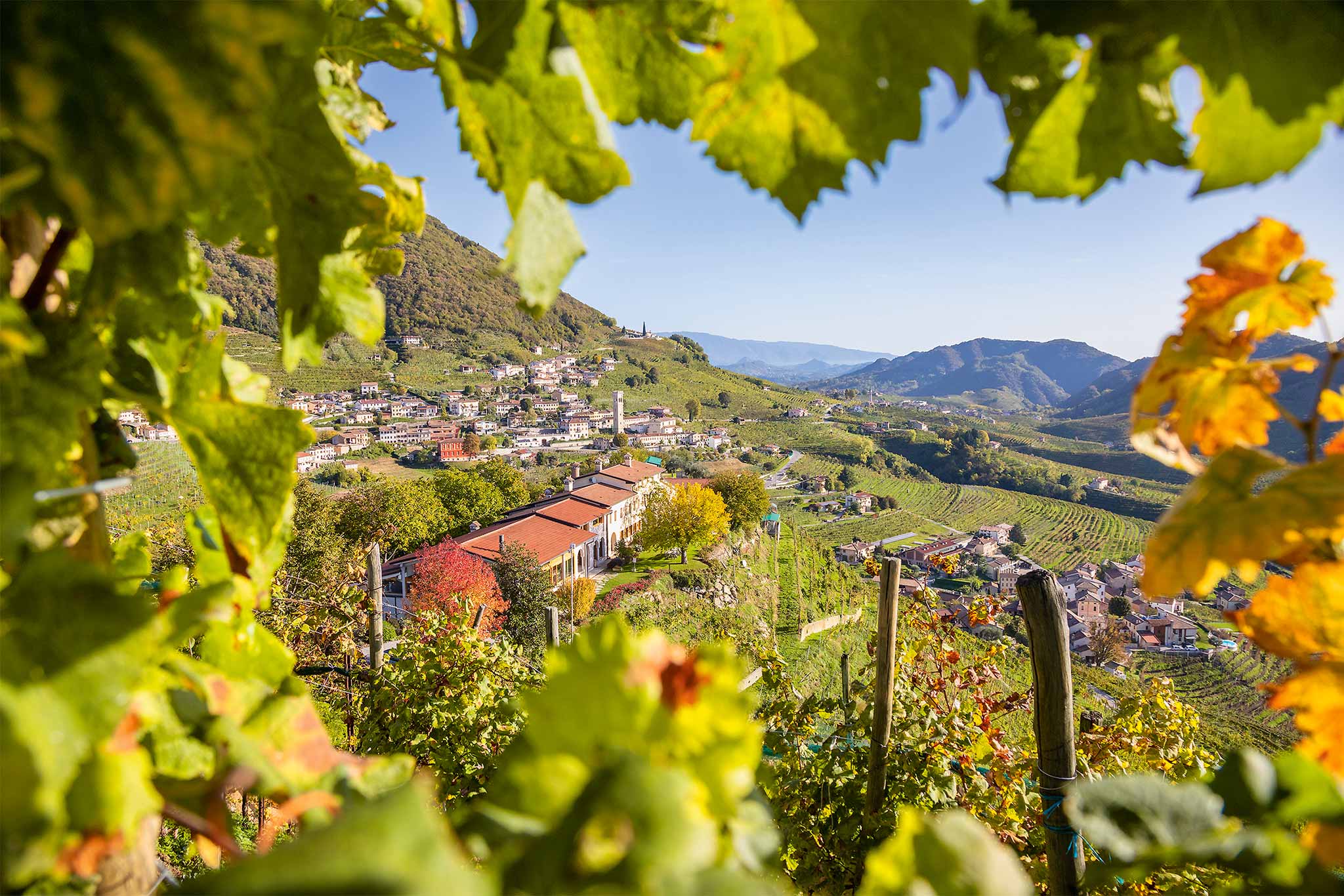
The denomination Conegliano Valdobbiadene Prosecco Superiore DOCG represents the historic heart of Prosecco’s fame and was recognized as a UNESCO World Heritage Site in 2019. On the hills of Conegliano and Valdobbiadene, the celebrated Conegliano Valdobbiadene Prosecco Superiore Spumante DOCG is produced. Its pinnacle expression is the “Rive”, 43 single-vineyard crus on the steepest slopes, where grapes are hand-harvested and wines vividly reflect their terroir.
At the very top of the quality pyramid is Cartizze, the jewel of the DOCG. Cultivated on just 108 hectares of steep hillside, it delivers sparkling wines of the highest quality, shaped by a unique microclimate and ancient soils.
Beyond geography, Prosecco also differs in production methods. In 2019, the “Sui Lieviti” category was added in Conegliano Valdobbiadene, reviving the original style of Prosecco Superiore. Here, the second fermentation takes place in the bottle, and the wine is sold undisgorged with a natural deposit (fondo), giving it a cloudy appearance. This traditional style is popularly known as “Prosecco Col Fondo.”
By regulation, all Prosecco must contain at least 85% Glera grapes, with the remaining 15% permitted from varieties such as Verdiso, Bianchetta Trevigiana, Perera, Glera Lunga, Chardonnay, Pinot Bianco, Pinot Grigio, or Pinot Nero. These rules apply to both DOC and DOCG wines.
How Prosecco is made
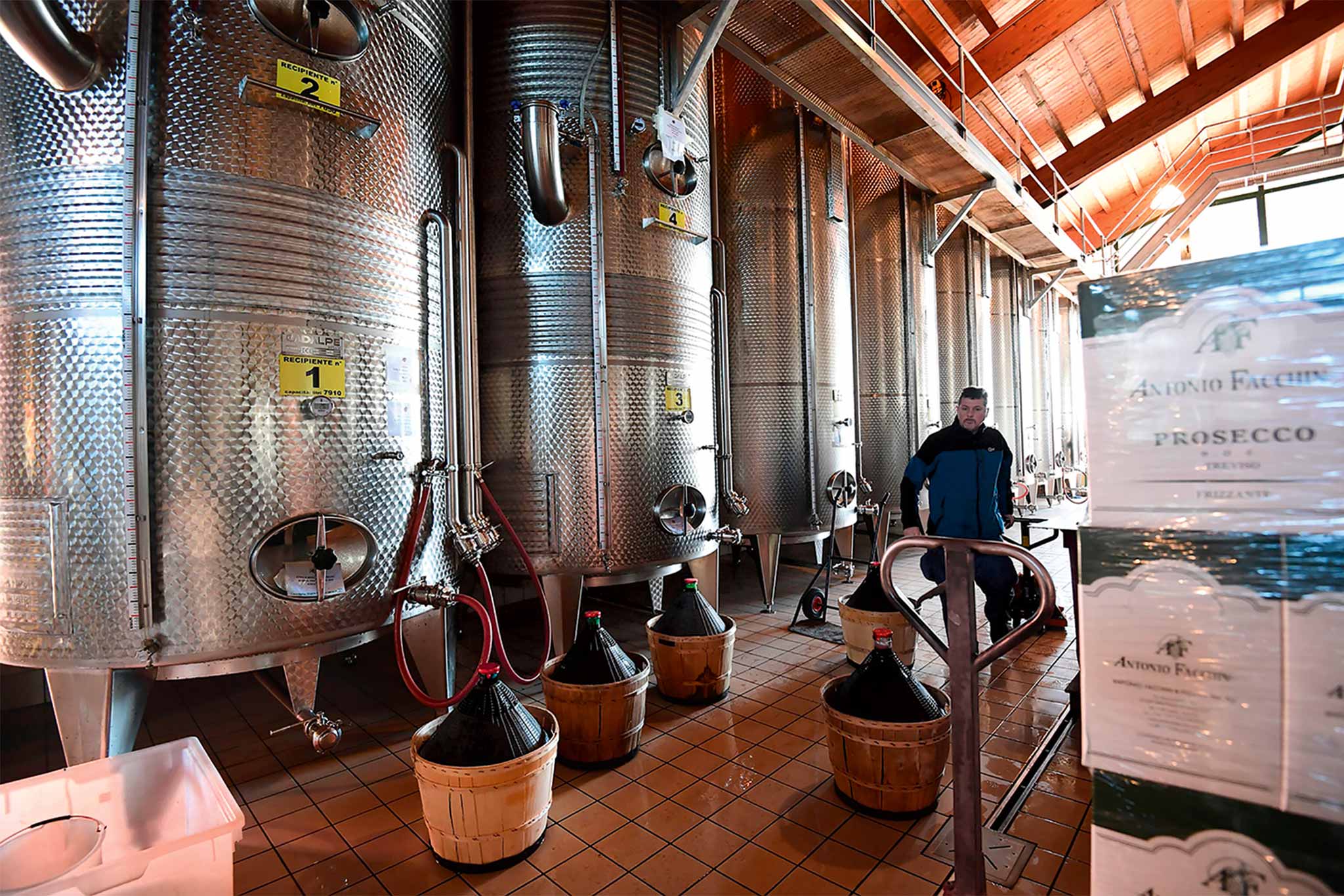
Prosecco is primarily produced using the Martinotti method (also known as Charmat). In this process, the base wine undergoes a second fermentation in large, pressure-resistant stainless steel tanks, or autoclaves, for at least 30 days. Fermentation is halted by cooling, depending on the desired dosage and residual sugar level. While Extra Dry remains the traditional favorite, Brut and Extra Brut styles with lower sugar content are more popular in export markets.
The Martinotti method is perfectly suited to highlight Prosecco’s signature character – its fruity, floral aromas and vibrant freshness – which is why it remains the most widely used production technique.