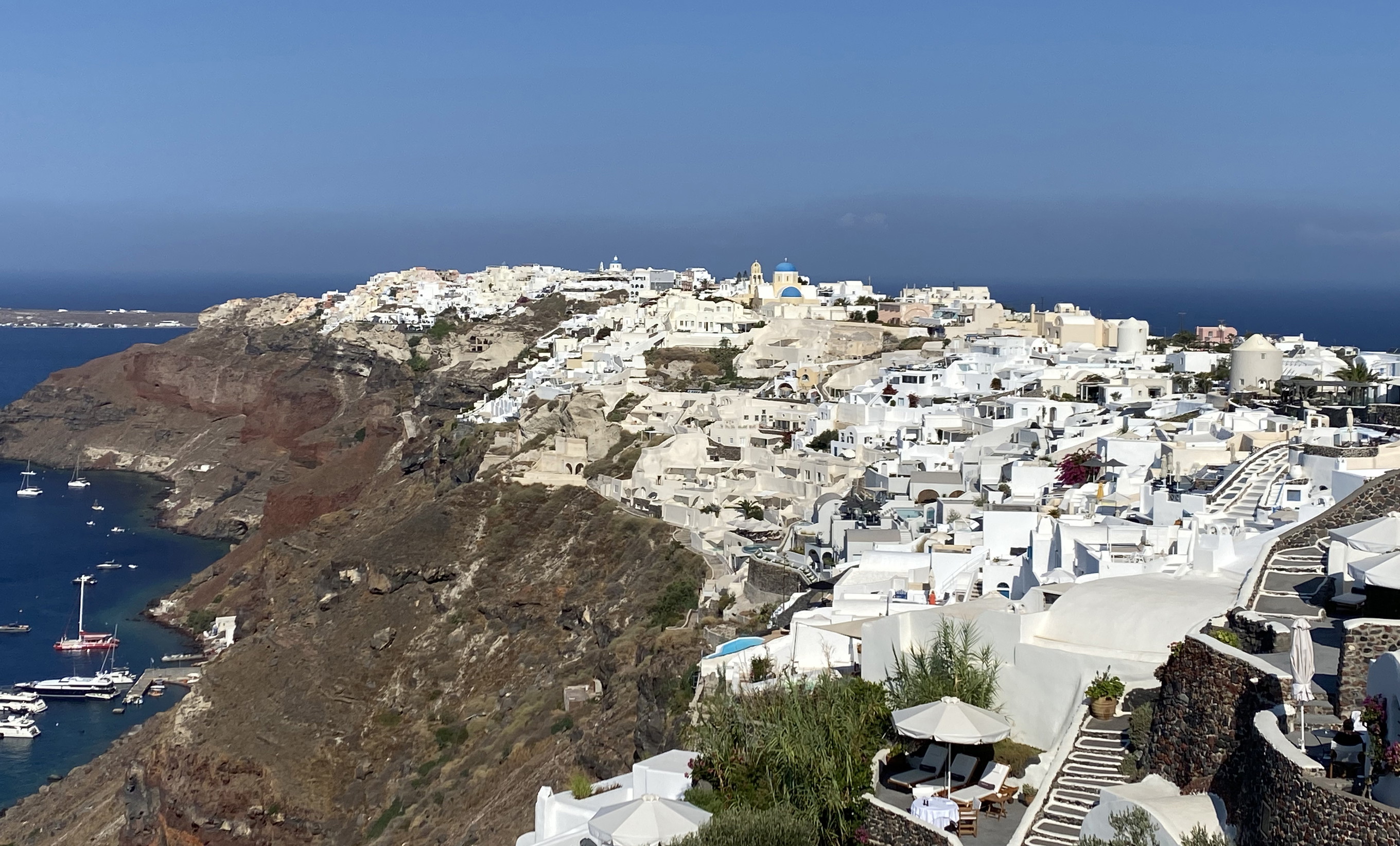
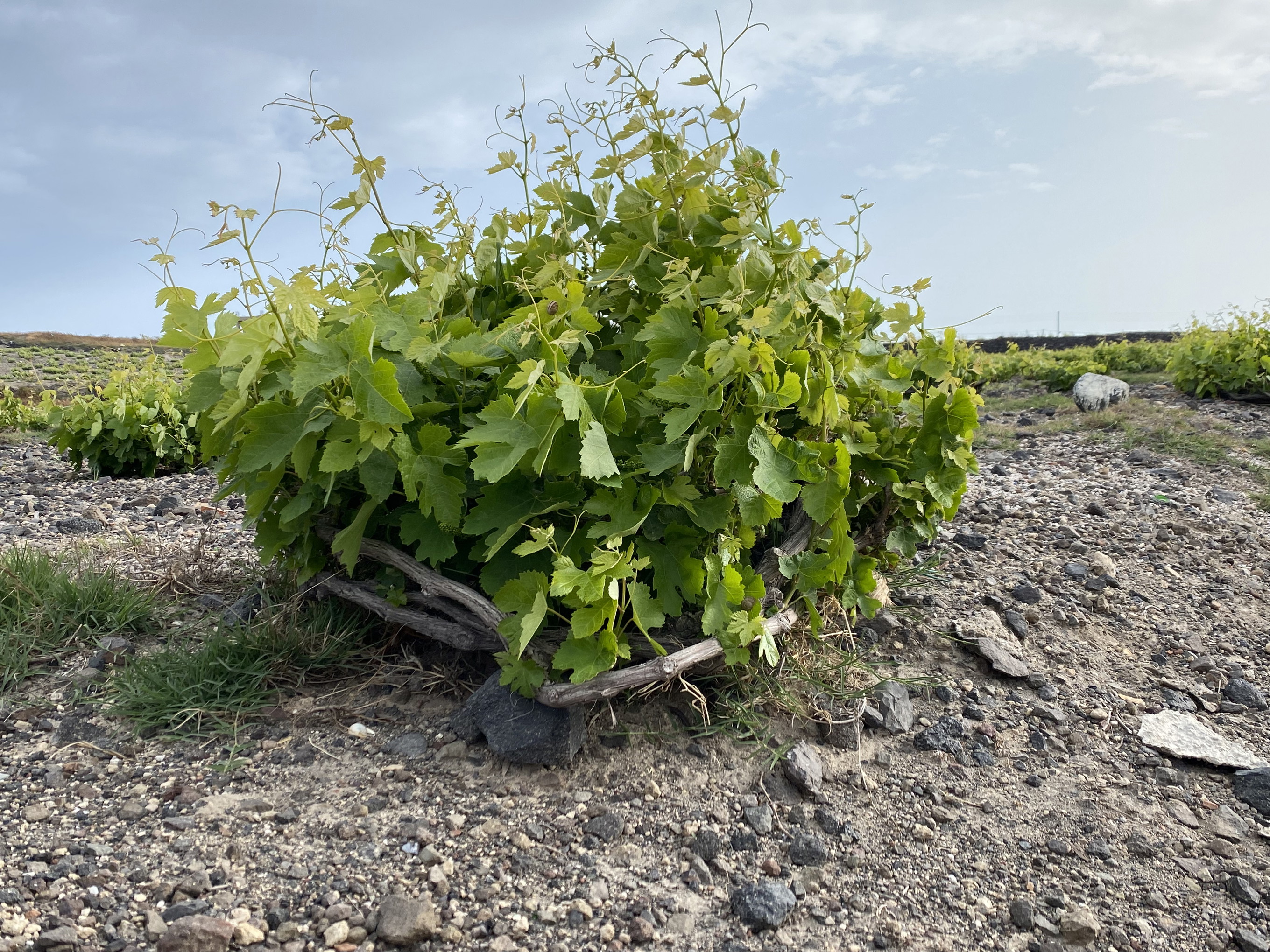
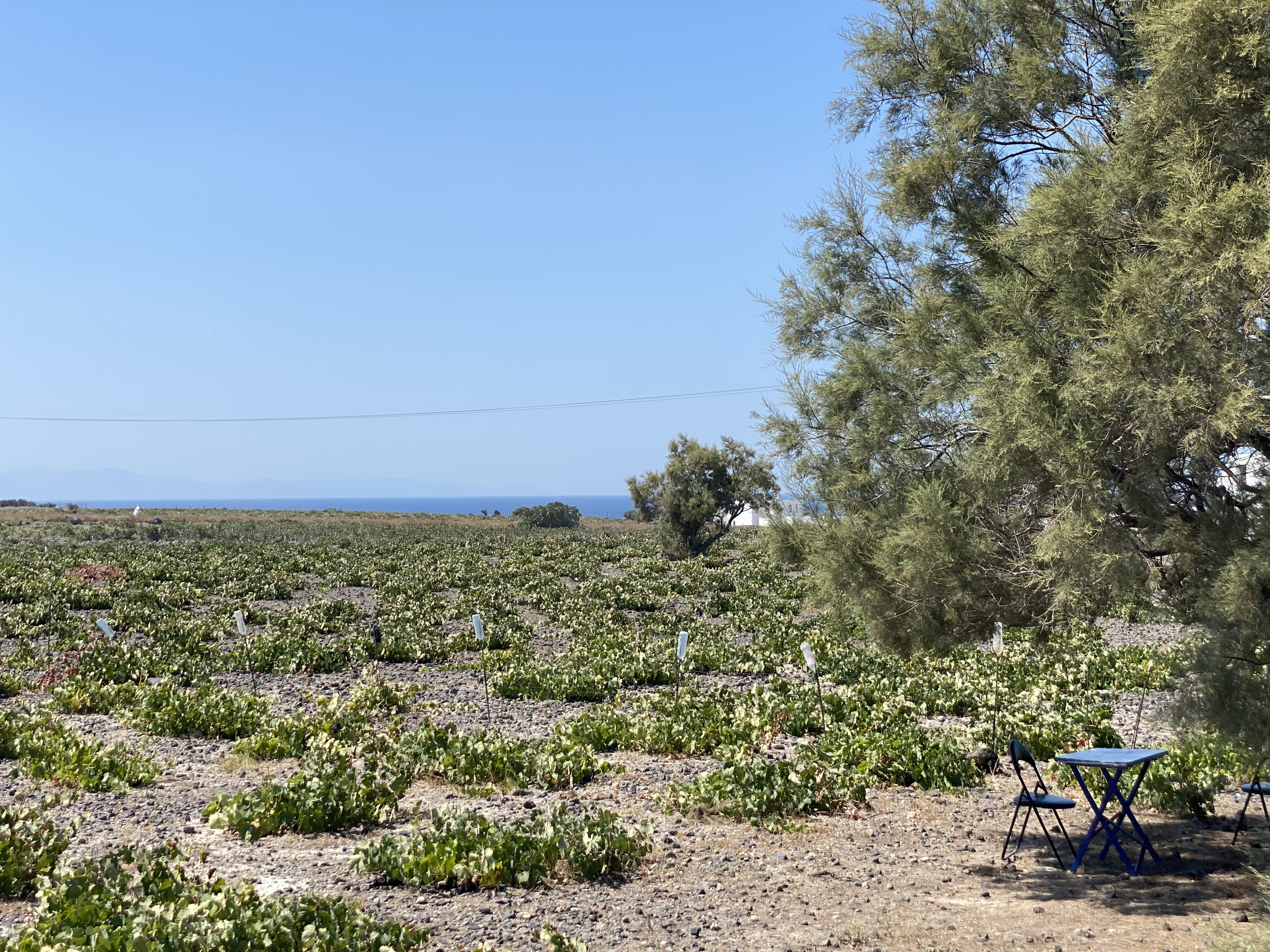
It all started with an earthquake and then the tension kept rising. At least that’s the impression you get when you first see the rugged beauty of Santorini. The impressive caldera, ripped open by a catastrophic volcanic explosion in ca. 1600 BC that destroyed the Minoan civilisation and was felt as far away as China, also created the perfect habitat for the grapevine.
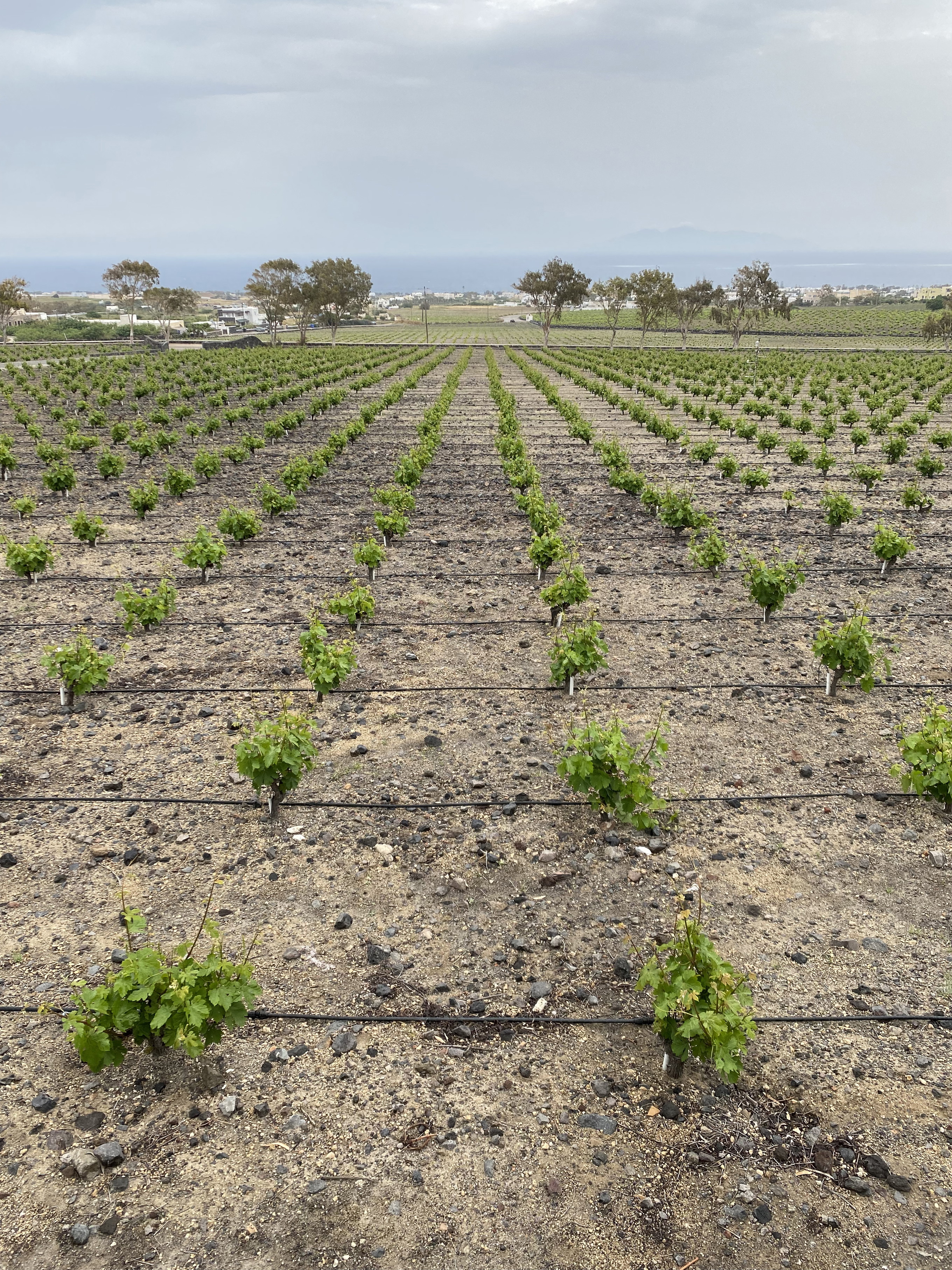
Fertile volcanic ash soil, strong sea breezes to keep diseases away, traditional bush vine training to retain precious moisture, and old, deeply-rooted vines combine for the quintessential Mediterranean terroir, yielding wines of striking concentration and intensity. Sometimes as dense as olive oil, Santorini whites also have a vivid salty, spicy expression of their volcanic soil.
Add to that Assyrtiko, Santorini’s grape of choice, which is perfectly adapted to this harsh Cycladic habitat; it has outstanding resistance to drought and a priceless ability to retain lip-smacking acidity even at record ripeness, with wines of 15% alcohol and over 7g/L tartaric acid not uncommon. Laden with ripe Mediterranean fruits such as lemon and peach, Assyrtiko offers a fine blueprint for terroir expression. It has become widely planted throughout continental Greece and Crete, and is increasingly trialled by winemakers around the globe (Jim Barry in Australia being a pioneer). But only Assyrtiko from Santorini tastes so vividly of both the sea and the volcano.
Santorini was held in high esteem for its wine in Antiquity, and the breathtaking ancient Thira mosaics preserved at the Athens Archaeological Museum show several scenes related to the vine and wine. The record ripeness possible to achieve in the scorching August sun made it a great blending material in the 20th century. Then tourism invaded Santorini and the terrain suddenly became more needed for hotels than vineyards, with a consequent drop in the cultivation area. Wineries such as Boutari and the local Santo Wines cooperative fought hard to preserve viticulture, and were joined in the 1980s by a handful of pioneers who bet everything on high quality: Gaia, Sigalas, and Argyros, later joined by the Greek wine Midas Haridimos Hatzidakis, a star of the island’s wine industry until his untimely death in 2017.
Fast-forward to the mid-2010s and Santorini became the fashion prodigy of the wine world. The mystique of its terroir, Greece’s buoyant tourism, and a renewed interest in unique Mediterranean wines have boosted the island’s wine sector. The price of grapes (most leading estates rely at least partly on purchases) soared to €5/kg, unheard of in Greece, with vineyard prices following. While financial sustainability is not an issue anymore for Santorini wine, drought, a disappearing experienced manpower, and real estate pressure on vineyard land remain challenges.
Nonetheless, Santorini is undoubtedly enjoying its moment of vinous glory. The wines are easy to sell, and as the island raises its cachet in vinous circles, the push for premiumisation continues. An upper tier of Santorini wines was added in the 1990s with Vareli / Barrel, a take on Burgundian vinification of Assyrtiko in French oak, pioneered by Sigalas. The next one was Nichteri / Nykteri, and inspired by ancient writings referring to night harvest or vinification, these late-picked wines have a higher alcohol content, broader mouthfeel enhanced by oak ageing, and they explore Santorini’s powerful, sun-ripened nature.